This year, the real question isn’t just about buying a tank. It’s about whether on-site fuel tanks will make your operation faster, safer, and more cost-effective. Before you decide, ask yourself these five straightforward questions.
1) How many minutes are you losing to fuel runs?
Be blunt with the math. Leaving the site and returning with fuel takes between 15 and 25 minutes, resulting in 13 to 23 crew hours wasted each week for 18 assets that perform this task three times per week.
Multiply by your loaded labor rate, and it’s real money. The on-site tank enables refueling during non-operational hours and tank swap periods, allowing machines to begin their shift with full capacity and maintaining efficient route operations. Recovering 10 minutes per unit each day will produce measurable improvements in production output by the end of the week.
2) Is your “price per gallon” the real number?
Retail fuel might seem cheap at first, but hidden costs add up. These include detours, driver time, waiting in line, and extra fees for last-minute services. With on-site fuel storage, you can buy in bulk and schedule deliveries during slow periods, helping you lock in stable prices. This setup also reduces unnecessary travel, which means less wear on tires, brakes, and engines. When comparing options, make sure to include all costs such as time, distance, and extra fees, not just the price at the pump.
3) Do you have the footprint and the permits to do it right?
If a tank isn’t set up correctly, it can cause problems later. Make sure you check all setback requirements, fire codes, and environmental rules before building the foundation. The area should be safe for trucks, with good lighting, adequate turning space, and clear paths for hoses. Your tank system should have double walls or containment, overfill protection, and proper vents. Add security features such as lockable cabinets, cameras, and lighting to deter theft. Your site should be ready for basic operations before you move forward or use a temporary setup.
4) Will real-time visibility modify your operational methods?
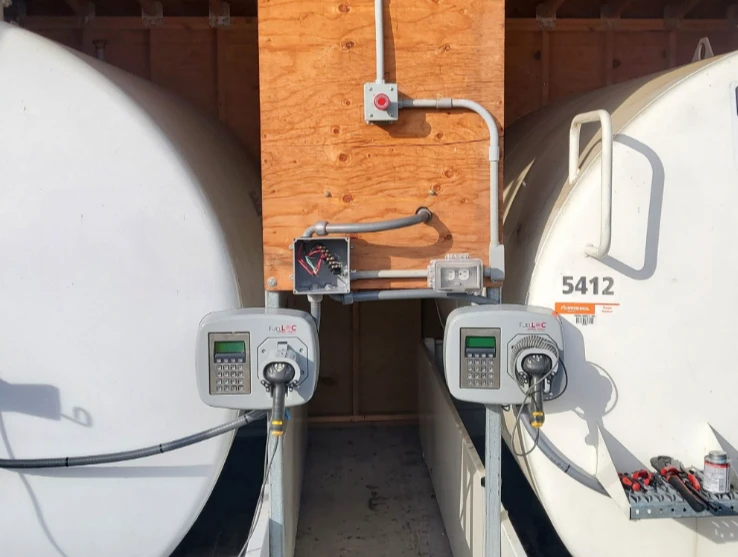
Using dipsticks and spreadsheets hasn’t given you clear answers. The telemetry-based monitoring system for modern tanks enables users to track water levels, temperatures, and water status. Users can set a reorder threshold between 35% and 40% that triggers automatic delivery of products before stock depletion. It also generates digital tickets through asset-based metering, which produces timestamped records containing unit identification and gallon measurements for both financial reconciliation and maintenance fuel consumption analysis.
5) Are you ready for the upkeep,or do you prefer service only?
Owning a fuel tank requires you to handle water management, filter replacement, meter adjustment, system inspection, and security maintenance. Your team needs to perform monthly water draws through desiccant breathers with water-blocking filters to protect both fuel quality and engine health. You should add the tank to your mobile refueling system after you have established an organized yard and workflow.
Purchasing a tank is worthwhile if it saves time, stabilizes costs, and improves resource management. Wait if your site is not ready or maintenance cannot be sustained. When conditions are right, you will recover lost time, reduce costs, and meet operational and regulatory requirements. On-site tanks become valuable assets that strengthen your business.