
Beginning chakra yoga is a lovely approach to blend mindful movement, breath awareness, meditation and personal contemplation. But when you are just beginning to practise it’s easy to get overwhelmed with all kinds of chakra systems, yoga positions, breathing techniques and promises about energy.
If you are new to the practice, a beginner’s guide to building a chakra yoga practice can help you understand how to structure your routine.
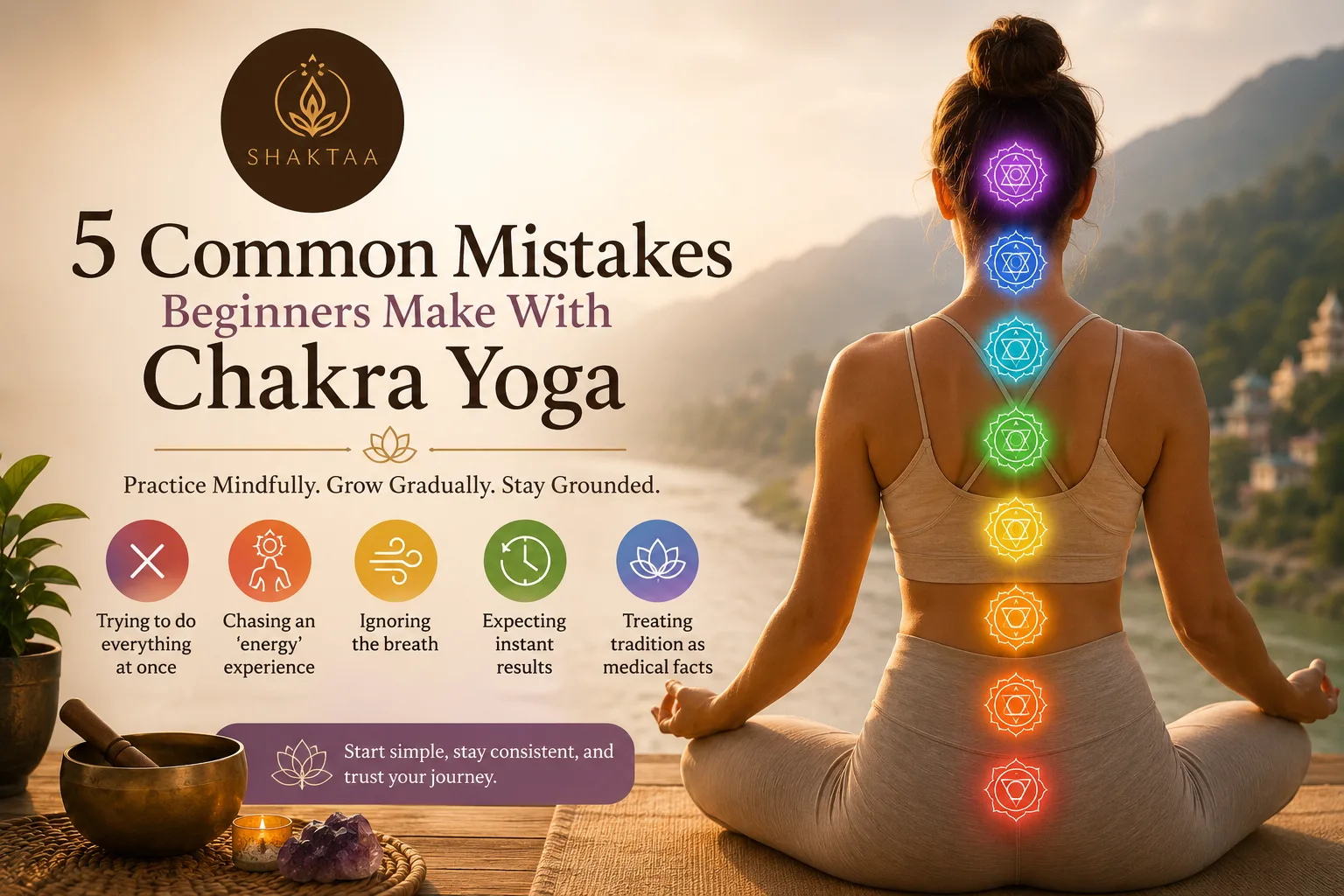
Here are five frequent mistakes that novices can avoid when learning about the chakra yoga.
1. Trying to Work With Every Chakra at Once
One common mistake is trying to focus on all seven chakras in every session of yoga. This can make a basic practice feel complex rapidly.
You could look at one chakra or one attribute instead. Begin with foundation and stability and then go into themes such as creativity, confidence, compassion, communication, intuition or reflection.
This is not to tick off a list of chakras.
Taking time to investigate one theme can lead to deeper understanding of your body, thoughts, and feelings.
If you are new to the conventional chakra system, it may be good to learn about the seven chakras and their traditional connotations before creating your own practice.
2. Chasing a Particular “Energy” Experience
A mistake is expecting to get a tremendous sensation during chakra yoga.
Some people may experience warmth, tingling, emotional release, visualisations or other experiences.
Some may feel relaxed, focused or more conscious of their breathing. There isn’t ONE experience that will demonstrate your practice is effective.
Don’t try to create a feeling of energy but concentrate on what you can genuinely feel.
Notice your breathing, posture, physical sensations, thoughts, feelings and level of focus.
Curiosity is more valuable than anticipation.
It doesn't have to be a fantastic experience to be meaningful in your practice.
3. Neglecting the Breath
While chakra yoga is often done using physical postures, being aware of your breath can help you practise more mindfully.
If you forget to breathe and rush from one pose to the next, it can feel like a workout rather than a time to be conscious.
Try to slow down.
Keep breathing easy and natural when you move. You can notice how your breath changes in different postures and utilise that as an anchor when your focus wanders.
You don’t necessary need to learn intricate breathing methods if you are a novice. Just becoming more conscious of your normal breathing can be a good beginning point.
4. Wanting Instant Results
Another typical mistake is to expect fast transformation with chakra yoga.
One yoga or meditation session can seem peaceful, energising or enlightening, but effective habits are usually built with persistent practice, not one experience.
Ask yourself, “Did I balance my chakras today?” No. Instead, ask:
Did I become more aware of my own body?
Did I realise I was breathing?
Did I pause for a few moments of stillness?
Did I hit the mark I was aiming at?
These questions can help you shift your attention from immediate results to long term self-awareness.
Start with a real life regimen. Even 10-20 minutes can be enough to create a habit that you can build on gradually.
5. Taking traditional chakra ideas as scientific facts
The chakra systems are described in diverse ways in the various traditions, however chakras have been part of several yogic and tantric traditions for a long time.
Hence the seven-chakra model frequently offered should be seen as one influential model, and not a universal model common to all traditions.
It is also vital to differentiate between spiritual instruction and scientific claims. Chakras are not technically anatomical structures.
You can still practise chakra yoga as a meditative tradition of symbolism, meditation, mindful movement, and self-reflection without presenting traditional beliefs as medical realities.
How to Begin with Chakra Yoga for Beginners
Frequently the simplest approach is a balanced one.
Begin with a modest movement. Become conscious of your breathing. Select an intention. Take a few minutes to sit in meditation. Next, observe how this feels without evaluating the event.
The more comfortable you get you can slowly explore different disciplines.
In Rishikesh, at Shaktaa, you will find chakra-centered practices in a women’s wellness context, with meditation, mindful movement, and traditional yogic views.
This isn’t about being an overnight expert. It’s to create a practice that feels coherent, intentional, and personally relevant.
A Simple Reminder for Your Practice
If you’re just getting started, keep these five principles in mind:
- Keep it simple.
- Don’t run after experiences.
- Just breathe.
- Allow yourself time.
- Keep it in the conventional context.
Chakra yoga offers an opportunity for curiosity, not pressure. You don’t have to accomplish it all at once. Start where you are. Practice continuously. Let your comprehension grow naturally.
Practice with awareness. Slow grow. Keep it real.