
Everything looks fine on paper.
You pay competitive salaries, offer a decent benefits package, and even install that kombucha tap in the breakroom.
However, you keep losing talents.
That is one of the signs of the employee engagement crisis. It is not a hiring problem.
If you base your guess on why your team is unhappy, then you will most likely waste your resources.
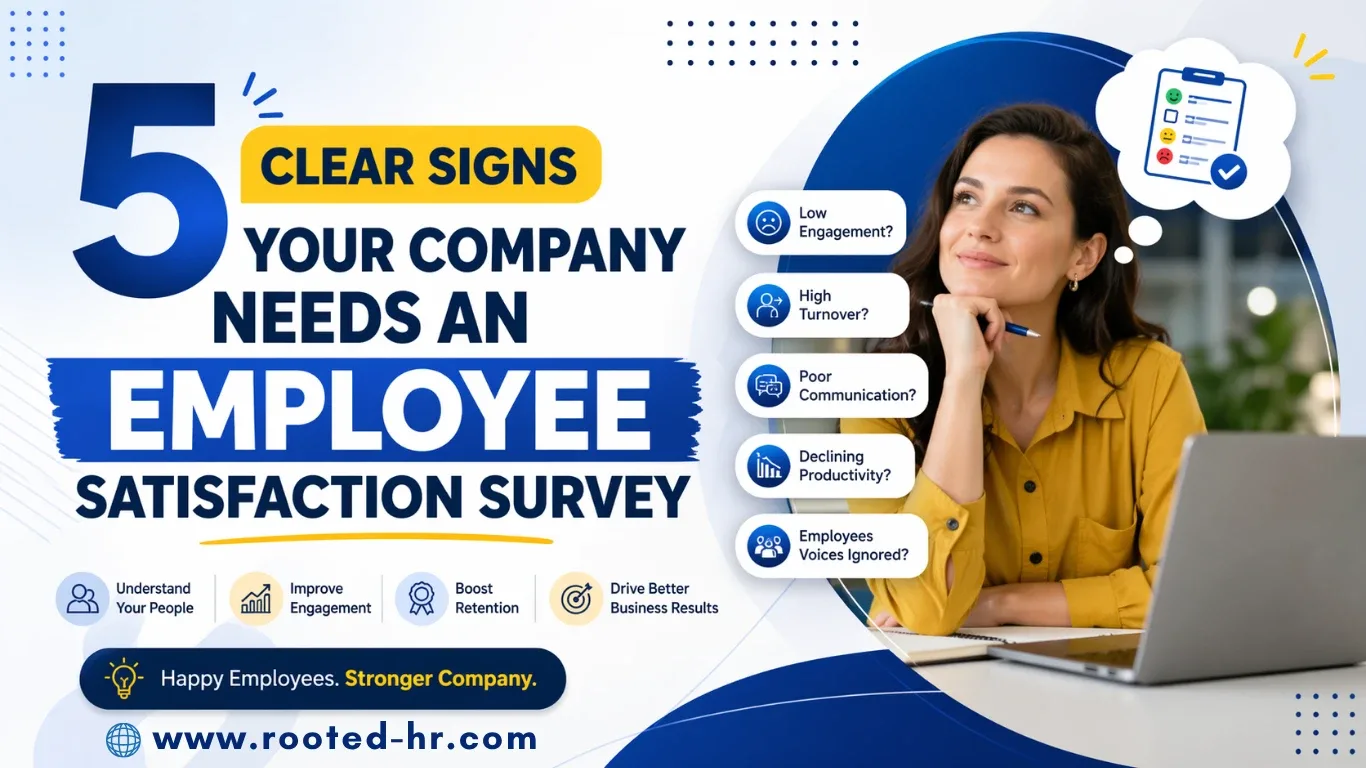
To fix a root cause, you need raw, unfiltered employee feedback. If you are wondering whether it is time to hire an employee satisfaction survey consultant to do a comprehensive workplace culture assessment, then here are five obvious signs the answer is a big yes.
Sign 1 : Your Turnover Rate is Spiking (And You Don't Know Why)
People don't really quit their jobs; they quit bad cultures, poor managers, and dead-end careers.
A sudden or gradual elevation in high turnover will fundamentally signal the highest level of an urgent problem.
It is the loudest cry of your employees telling you that there is something very wrong with the system.
When pursuing other opportunities is the standard phrase in exit interviews, you are not getting the necessary information to fix the problem.
Understanding the real impact of losing skilled employees
The problem of turnover extends far beyond a simple HR issue, it is a serious depletion of finances.
- Financial hurt : On average, hiring the replacement for a departing employee may require you to spend between half and two times their yearly earnings.
- Loss of output : It may take a number of months before new employees are as efficient as their experienced counterparts.
- Cascade : The departure of the best people usually means that their colleagues have to cover their tasks, a situation that often results in exhaustion and more resignations.
Hint : Do not limit yourself to the exit interview. An anonymous professionally created survey is an excellent tool to diagnose flight risks before employees begin to update their CVs.
Sign 2 : The Rise of Quiet Quitting and Presenteeism
Not all unhappy employees will quit their jobs. Some of them may decide to stay and just give up trying.
Quiet quitting is a term that's been thrown around a lot lately. Actually, it is a fancy label for low morale and detachment. Presenteeism, or being physically present at work while mentally absent, may be even more harmful than turnover because it destroys the culture from within.
Spotting Disengagement Before It Spreads
So how do you determine if your team members are quietly quitting without raising any alarms ?
Here are some signs that you should be on the lookout for :
- Meeting silence : Nobody is willing to challenge new ideas or volunteer for extra projects.
- Clock-watching : An absolutely inflexible refusal to stick around even for a minute past 5:00 PM (when earlier they were showing some signs of flexibility).
- Minimum effort : Doing only what is mentioned in the job description and absolutely nothing extra.
When employee engagement drastically drops, a well-structured employee survey can help you identify whether the problem lies in employee burnout, lack of recognition, or poor leadership skills.
Sign 3 : Glassdoor Reviews Are Keeping You Awake at Night
Think of your employer brand as a delicate asset. Nowadays, if there is any internal disorder, it will not remain hidden for long since people publish their reviews publicly.
If your company's Glassdoor or Indeed pages are suddenly flooded with negative reviews from one-star reviewers who warn potential candidates about micromanagement or lack of work-life balance, then you must be facing a crisis.
Candidates don't just blindly accept offers; they research your company culture thoroughly. So, these negative reviews will lead to a downfall of your talent acquisition pipeline immediately.
Taking Control of Your Employer Brand
Employees resort to online rants when they think they have no voice within the company. When they lack a safe and well-structured way of giving feedback, they will air their complaints on the internet. To counter this, you have to keep the ears open, and employees must be confident that the management is really listening to them by conducting regular employee surveys.
Sign 4 : Productivity and Innovation Have Hit a Wall
Employees who are happy are very productive. This is not only a corporate slogan; it is supported by very strong data.
A team, which is recognized, heard, and one with the business purpose, will come up with new ideas.
However, if team members feel that they are neglected or that their efforts are not appreciated, the level of output will fall dramatically.
The Link Between Employee Engagement and Output
In case you have observed that your employees are missing deadlines, their work is becoming lower in quality, and there is a total absence of new ideas, the way you are managing your work is not the problem. The culture of your place of work is.
MetricEngaged TeamsDisengaged TeamsProfitability+21% higherBelow industry averageAbsenteeism41% lowerChronically highDefect Rate (Errors)40% lowerHigh rate of rework
A specialist in employee satisfaction surveys can work with you to determine your Employee Net Promoter Score (eNPS) and identify the exact locations of your primary issues in the human element of frustration and bottlenecks of operation.
Sign 5 : Communication Feels Like a One-Way Street
When was the last time a junior employee challenged a leadership directive and came up with a better solution?
If your internal communication is just about making announcements from the top, having town halls where only the leadership talks, and having suggestion boxes that no one reads, then you are missing a big part of the picture.
A lot of times leadership teams have this ivory tower mentality. They think that everything is fine because nobody is complaining directly to them.
Why Top-Down Directives Aren't Enough
Educated organizations can't thrive without receiving feedback from their lower ranks. Conducting a well-planned survey can remove the restrictions set by the chain of command.
This way, even the introverted employees, remote workers, and frontline staff can offer their views without fearing any kind of punishment.
How to Fix It Why You Need an Employee Satisfaction Survey Consultant
Recognizing these signs is just the first step. The second step is to take some action on it.
You could be tempted to quickly put together 10 questions on Google Form and send it to your team.
Don't do it. Most self-made surveys fail because :
- Employees don't trust them : If it is sent from the HR manager's email, employees will not believe it is truly anonymous. They will sugar coat their answers to not expose themselves.
- Poor question design : Asking leading or biased questions (e.g. How much do you love our new snack bar?) will only give you rubbish data.
- Lack of benchmarking : Even if you are scored 7/10 on leadership effectiveness, you won't be able to judge if that is good or bad in your specific industry.
Working with an employee satisfaction survey consultant on the other hand, will ensure that anonymity is respected, the question style is scientifically validated and most importantly, you will be furnished with tangible, data-based strategies to remedy your work culture rather than merely a list of gripes.
FAQ’s
Q : How often should we conduct an employee satisfaction survey?
Annual surveys set a great baseline, but the most advanced companies go for shorter pulse surveys quarterly or even monthly to monitor the mood changes over time.
Q : Will surveying employees make them expect immediate changes?
Definitely. And that happens to be the right thing. The worst you can do is to conduct a survey and then discard the results. Therefore, sharing the findings openly and describing a 90-day action plan for the top two or three issues is the right way to go.
Q : We are a small business. Do we really need a consultant?
Actually, smaller teams are even more vulnerable to the negative effects of turnover and low morale. A consultant can serve as a neutral, third party, which is very important in small setups where people's writing styles and specific grievances are known to everyone.
Why Not Change Your Workplace Culture?Turning your back on the symptoms of low morale will only pile up your costs. If you are witnessing a high rate of staff leaving, productivity going down, or your team is just not speaking, then it's time to quit guessing and start hearing.
You would be throwing away your top performers if you don't check what they require.
Talk to an employee satisfaction survey expert now in order to deliver a thorough workplace culture assessment and make a business where folks would want to work.