Introduction
As automation continues to reshape modern manufacturing and industrial operations, the integration of tracks and actuators has become important. These systems work together to deliver precise controlled motion across a variety of applications including assembly lines, packaging systems, material handling equipment, robotics, and inspection stations. By combining efficient track designs with advanced actuation technologies, manufacturers can achieve greater productivity, accuracy, and operational flexibility.
In recent years, groundbreaking developments have transformed how tracks and actuators interact within automated environments. Improvements in motion control smart monitoring modular design, and precision engineering have enabled businesses to optimize performance while reducing maintenance requirements and operating costs. These developments are helping organizations meet the growing demands of high-speed production, customized manufacturing, and Industry 4.0 initiatives.
Understanding the latest advancements in track and actuator integration is necessary for companies looking to improve automation productivity and maintain a competitive edge. The following four developments are among the most impactful trends shaping the future of integrated motion systems.
Smart Motion Systems Powered by Real-Time Data
One of the most groundbreaking developments in track and actuator integration is the implementation of smart motion systems that use real-time data and sensor feedback. Traditional systems often rely on preset operating parameters and reactive maintenance practices. Today's integrated solutions are far more intelligent.
Modern actuators can collect data related to position, speed, load, temperature, and vibration. This information is analyzed to monitor system performance and detect abnormalities before they become serious operational issues. Because of this, maintenance teams can adopt predictive maintenance strategies that reduce unexpected downtime and improve equipment reliability.
To illustrate, an automated production line can use sensor-equipped actuators to identify increased resistance along a track of signaling potential wear or contamination. Maintenance personnel can then address the issue to prevent production interruptions.
Real-time monitoring also improves process optimization. Operators can adjust based on performance metrics to ensure smoother motion and more consistent output. As manufacturing environments become connected, smart integrated motion systems play a key role in maximizing productivity and operational effectiveness.
Improved Precision Through Advanced Drive Technologies
Precision remains one of the most essential requirements in automated motion applications. Recent developments in actuator drive technologies have improved the accuracy and repeatability of integrated track systems.
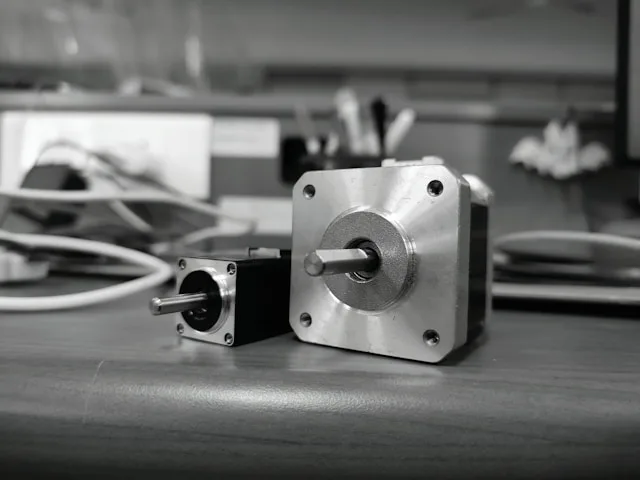
Manufacturers adopt sophisticated drive mechanisms that deliver smoother movement and tighter positioning tolerances. In many high-precision applications, engineers rely on ball screws for automation projects because they provide exceptional positioning accuracy with high load capacity, and reliable repeatability. When integrated with track systems, these components can support demanding processes such as semiconductor manufacturing, electronics assembly, and medical device production. Advanced motor controls and closed-loop feedback systems further enhance precision by comparing commanded positions to actual movement. This allows for instant corrections when deviations occur, ensuring optimal accuracy even during high-speed operations.
The result is better product quality, less waste, and more confidence in automated processes. For industries where precision affects performance and profitability, advancements in driving technology continue to be a major catalyst for new ideas.
Modular Integration for More Flexibility
Modern manufacturers face constant pressure to adapt to changing customer demands for shorter product lifecycles, and increased customization requirements. As a result, modularity has become a key development in track and actuator integration.
Modular motion systems allow organizations to scale or reconfigure their equipment with minimal disruption. Tracks, actuators, controllers, and supporting components can be added removed or rearranged to accommodate evolving production needs. This flexibility reduces the time and expense associated with system upgrades while helping businesses respond more to market opportunities.
For example, a packaging facility may deploy a simple linear transport system but later expand it by integrating additional actuator modules to handle increased throughput. Instead of replacing the entire system, the facility can build its existing infrastructure.
Modular designs also make maintenance and installation simpler. Standardized components are easy to replace and reduce downtime and improve long-term serviceability. As manufacturing environments continue to put agility, first modular integration will remain a valuable strategy to maximize automation investments.
Improved Energy Efficiency and Sustainability
Energy efficiency has become a key consideration in industrial automation. With rising energy costs and growing environmental expectations, manufacturers seek motion systems that deliver high performance while consuming fewer resources. Recent advancements in track and actuator integration have focused on reducing energy consumption without compromising functionality. Modern electric actuators are more efficient than many traditional hydraulic and pneumatic alternatives and provide precise control while using power when motion is required.
Better track designs also boost efficiency by reducing friction and mechanical resistance. When paired with advanced control algorithms, these improvements help systems run more and use less energy. Some integrated solutions now include regenerative technologies that capture energy produced during deceleration and redirect it to use later. This method can cut power consumption in facilities that run high-speed automated equipment.
Beyond cost savings, energy-efficient systems support broader sustainability objectives by reducing environmental impact and helping organizations meet corporate responsibility goals. As sustainability becomes a more pressing priority across industries, efficient track and actuator integration will continue to provide long-term value.
Conclusion
Track and actuator integration has evolved considerably in response to the demands of modern automation. Smart motion systems, precision drive technologies, modular architectures and energy-efficient designs transform how manufacturers approach movement and positioning tasks.
These developments enable organizations to improve accuracy, enhance flexibility, reduce downtime, and support operations that are sustainable. Moreover, they provide a foundation for future breakthroughs as connected technologies, and advanced automation continues to expand across industries.
Companies that embrace these advancements can optimize performance today while they prepare for the sophisticated manufacturing environments of tomorrow. By investing in modern integrated motion solutions, businesses position themselves for greater effectiveness, productivity and long-term success.