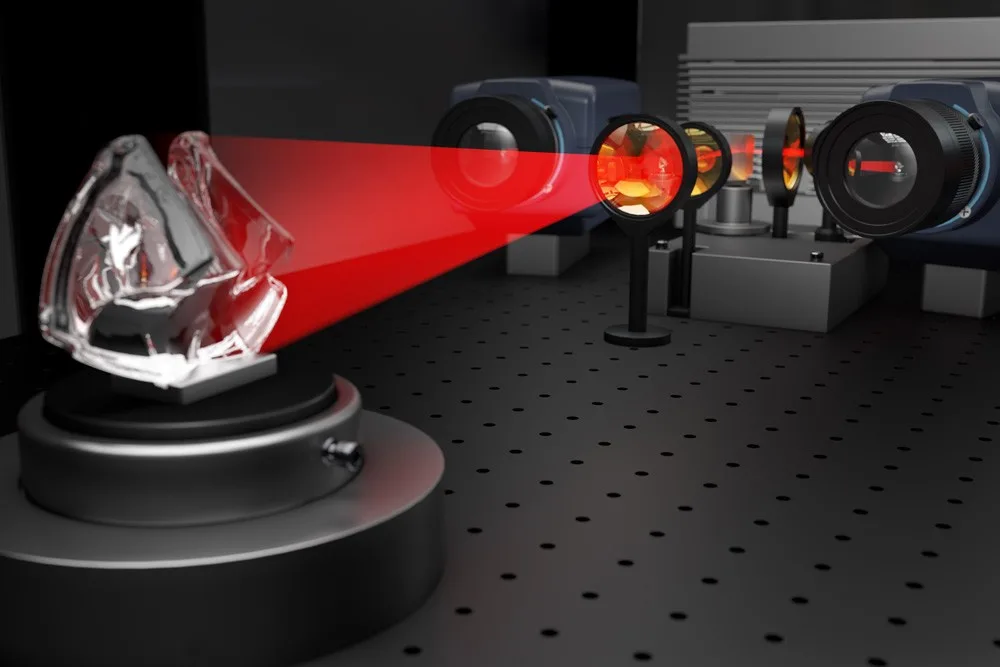
Introduction to the 3D Sensors Market
The 3D Sensors Market Impacting Factors reflect the technological, economic, and industrial developments influencing the adoption of three-dimensional sensing solutions across multiple sectors. These sensors capture depth, distance, shape, and spatial information, enabling machines and devices to understand their surroundings more accurately than conventional two-dimensional sensing technologies. Their growing role in automation, consumer electronics, automotive safety, healthcare, and industrial inspection is reshaping the demand for advanced sensing systems.
As businesses pursue greater operational efficiency and intelligent automation, 3D sensors are becoming increasingly important. Improvements in optical components, semiconductor manufacturing, artificial intelligence, and image-processing algorithms are expanding their capabilities. However, production costs, environmental limitations, integration complexity, and privacy concerns continue to influence market development.
Understanding these factors helps manufacturers, technology providers, and end users identify opportunities while addressing challenges that may affect adoption.
1. Technological Advancements and Sensor Innovation
Technology development is one of the most influential factors shaping the 3D sensors industry. Modern sensing systems use technologies such as time-of-flight (ToF), structured light, stereoscopic vision, and LiDAR to collect depth information for different applications.
Improvements in resolution, measurement accuracy, processing speed, and operating range are making these solutions more useful in demanding environments. Miniaturization is also allowing manufacturers to integrate sophisticated sensing capabilities into smartphones, wearable devices, autonomous machines, and compact industrial equipment.
The integration of artificial intelligence further strengthens sensor performance. AI-enabled systems can interpret spatial data, recognize objects, distinguish between environmental features, and support real-time decision-making. These developments encourage adoption in applications requiring accurate perception and rapid responses.
Nevertheless, continuous innovation requires substantial investment in research, testing, and product development. Companies must balance performance improvements with power consumption, affordability, reliability, and manufacturing feasibility.
2. Growing Demand for Automation and Robotics
Industrial automation is another major factor influencing the 3D sensors market. Manufacturing facilities increasingly depend on robots, machine vision systems, and automated inspection equipment to improve productivity and reduce manual intervention.
Three-dimensional sensing enables robotic systems to identify object positions, measure dimensions, detect surface irregularities, and navigate complex workspaces. These capabilities are particularly valuable in electronics assembly, automotive manufacturing, packaging, warehousing, and material handling.
The expansion of collaborative robots and autonomous mobile robots is creating additional opportunities. Unlike conventional automated equipment operating in fixed environments, these systems often need to recognize changing surroundings and respond to unexpected obstacles.
However, successful implementation depends on compatibility with existing machinery, software platforms, and production workflows. Businesses may delay adoption when installation costs are high or when employees require specialized training. Consequently, vendors that offer easy integration, dependable performance, and scalable solutions are better positioned to attract industrial customers.
3. Expansion of Automotive Safety and Autonomous Driving
The automotive industry is an important source of demand for advanced depth-sensing technologies. Modern vehicles increasingly incorporate driver-assistance systems, automated parking, collision detection, pedestrian recognition, and environmental monitoring.
Three-dimensional sensors can help vehicles estimate distances, identify obstacles, and interpret surrounding traffic conditions. LiDAR and other depth-sensing approaches are particularly relevant to applications that require spatial awareness beyond conventional camera-based perception.
Electric vehicle development and investments in autonomous driving technologies may further support demand. Automotive manufacturers are also exploring advanced in-cabin sensing for occupant monitoring, gesture recognition, and improved passenger safety.
Despite these opportunities, automotive applications impose demanding requirements for durability, reliability, and consistent performance under changing weather and lighting conditions. Manufacturers must also address regulatory requirements, system validation, and cost constraints before deploying sensors at scale.
The pace of vehicle electrification, autonomous driving development, and safety-system adoption will therefore influence future market expansion.
4. Consumer Electronics and Smart Device Adoption
Consumer electronics represent another significant growth area. Smartphones, tablets, gaming systems, and augmented reality devices increasingly use depth information for facial authentication, photography, gesture controls, and immersive digital experiences.
Compact 3D sensing modules allow devices to distinguish foreground objects from backgrounds, measure spatial relationships, and respond more naturally to users. These functions can improve usability while enabling new applications in entertainment, communication, and digital interaction.
The adoption of smart home devices also contributes to demand. Intelligent appliances, security systems, and home robots may use depth sensing to recognize people, detect obstacles, and navigate indoor environments.
Nevertheless, consumer demand is strongly influenced by device prices, product replacement cycles, battery efficiency, and perceived usefulness. If advanced sensing features fail to provide clear benefits, manufacturers may struggle to justify their additional costs.
Privacy concerns also matter, particularly when sensors collect facial, behavioral, or environmental information. Strong data protection practices can help improve consumer confidence and encourage wider acceptance.
5. Cost Structures and Manufacturing Economics
The cost of manufacturing and integrating 3D sensors directly affects their commercial accessibility. High-performance sensors may require specialized optical components, precise calibration, advanced processors, and sophisticated manufacturing processes.
These requirements can increase production expenses, particularly for applications demanding high accuracy or operation in challenging environments. Smaller businesses and cost-sensitive industries may find these investments difficult to justify without measurable improvements in productivity or safety.
At the same time, semiconductor advances, component standardization, production automation, and manufacturing scale can reduce unit costs. As technology becomes more affordable, applications previously limited to premium equipment may become commercially viable for broader customer groups.
Supply chain stability is another important consideration. Shortages of specialized components, fluctuations in material prices, and dependence on particular suppliers can affect production schedules and pricing.
Manufacturers that improve component sourcing, optimize production yields, and develop flexible product architectures may gain a competitive advantage.
6. Artificial Intelligence and Data Processing Capabilities
The usefulness of a 3D sensor depends not only on data collection but also on the ability to interpret that information. Artificial intelligence, edge computing, and advanced processing software are therefore important market-impacting factors.
AI algorithms can transform depth maps and point clouds into actionable information for inspection, navigation, object recognition, and spatial analysis. Edge processing can reduce latency by allowing devices to analyze data locally instead of transmitting everything to remote servers.
These capabilities are especially valuable in robotics, smart manufacturing, healthcare equipment, and autonomous systems, where delayed responses can reduce operational effectiveness.
However, complex algorithms may require greater computing resources, careful calibration, and extensive testing. Poor-quality training data or difficult environmental conditions can also reduce recognition accuracy.
The development of efficient algorithms and interoperable software platforms will remain essential for extracting greater value from 3D sensing hardware.
7. Regulatory Requirements, Privacy, and Environmental Conditions
Regulatory compliance and data protection policies can significantly affect adoption. Applications involving facial recognition, workplace monitoring, healthcare information, or vehicle safety may be subject to strict requirements concerning data handling, product reliability, and operational security.
Organizations must consider whether sensor data is stored, transmitted, or processed locally. Transparent data policies, secure system design, and privacy-conscious product development can help address concerns surrounding misuse or unauthorized access.
Environmental performance is equally important. Bright sunlight, reflective surfaces, dust, vibration, temperature fluctuations, and poor visibility can influence the accuracy of certain sensing technologies.
Different applications require different solutions, making sensor selection and calibration critical. Manufacturers that demonstrate dependable performance under real-world conditions can strengthen customer confidence and expand their addressable markets.
8. Competitive Landscape and Emerging Opportunities
Competition among sensor manufacturers, semiconductor companies, software developers, and system integrators encourages continuous product improvement. Businesses compete through accuracy, operating range, energy efficiency, size, price, and integration capabilities.
Partnerships between hardware developers and application specialists can accelerate commercialization by combining sensor expertise with industry-specific knowledge. Opportunities are emerging in healthcare imaging, agricultural automation, logistics, smart infrastructure, and quality inspection.
The 3D Sensors Market Impacting Factors also include changing customer expectations and the growing need for connected, intelligent systems. Companies that align product development with measurable operational benefits are likely to improve their market position.
For emerging suppliers, specialization in particular industries may provide an effective alternative to competing directly with established manufacturers across every application.
Conclusion
The 3D sensors market is influenced by a combination of technological progress, industrial automation, automotive innovation, consumer electronics demand, manufacturing economics, and regulatory considerations. Artificial intelligence and improved processing capabilities are expanding the practical value of three-dimensional sensing, while lower production costs could make the technology accessible to additional industries.
However, successful market development will depend on overcoming integration challenges, ensuring reliable performance, addressing privacy concerns, and demonstrating clear returns on investment. Companies that combine technical innovation with affordability, dependable supply chains, and application-specific solutions can strengthen their competitive position as three-dimensional sensing becomes increasingly important across modern industries.