
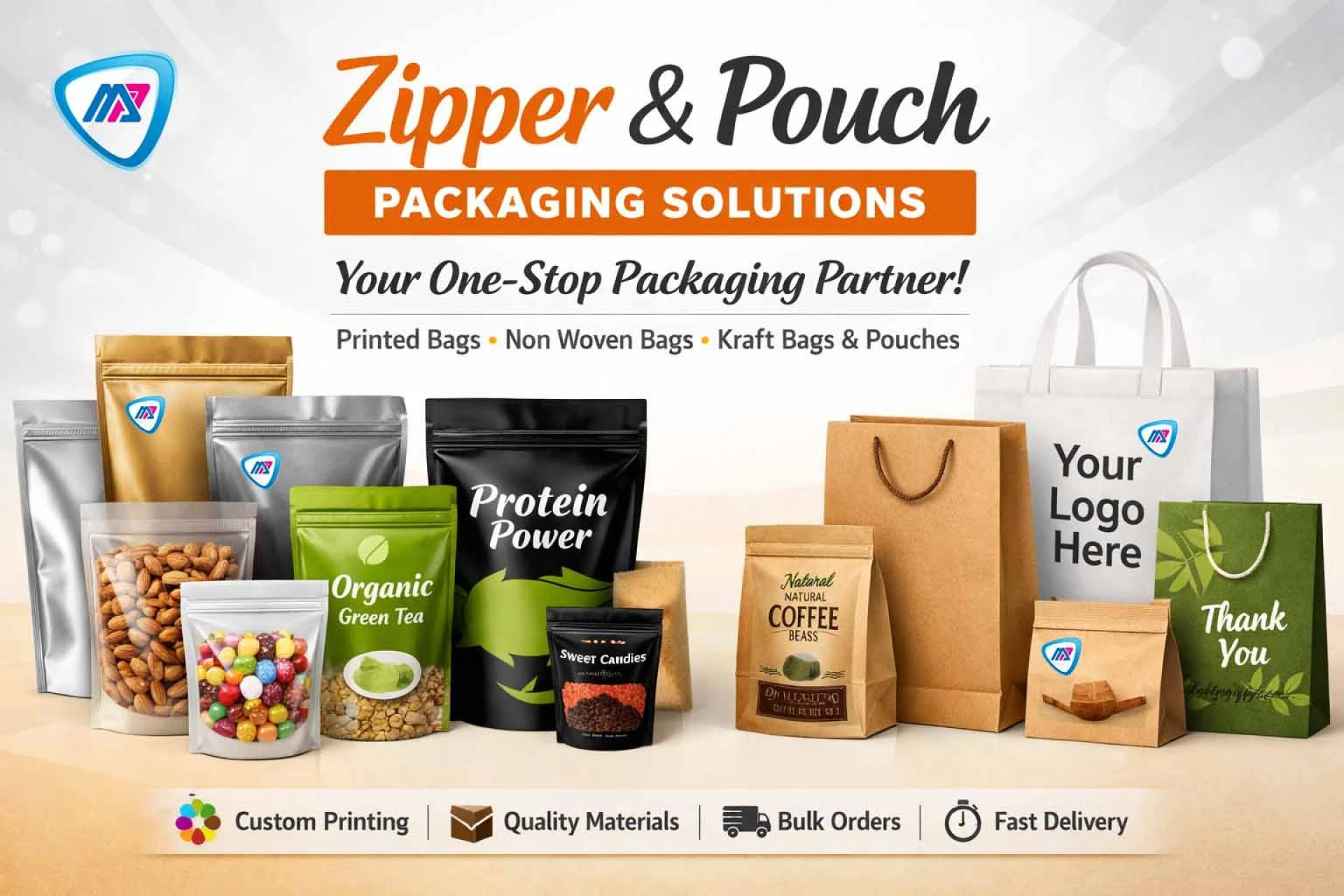
You notice it the moment you hold a product. The way it opens. The way it seals. That small detail often decides if a customer trusts what’s inside. Zipper & Pouch Packaging sits right at that moment of decision, where function meets feeling.
Most businesses think packaging comes last. That’s a mistake. When you choose Zipper & Pouch Packaging early, everything else starts to align better, from storage to shelf display to repeat sales.
And here’s the thing. This format doesn’t belong to one niche. It works across food businesses, cosmetics brands, and even subscription box businesses. That flexibility is why more companies are shifting toward Zipper & Pouch Packaging instead of rigid containers.
Where most packaging choices quietly go wrong
Many buyers chase the lowest price first. It feels safe. It looks efficient on paper. But cheap packaging often fails in the exact moment it matters.
Think about seal integrity. If the zipper fails after two uses, the product feels unreliable. That single flaw can damage brand trust faster than any bad review. Zipper & Pouch Packaging only works when the closure holds up under real use.
Now consider logistics. Lightweight pouches reduce shipping costs. They take less space in storage. They simplify supply chain management. But poor material thickness can lead to damage in transit. So you save on shipping, then lose on returns.
A quick definition helps here. Zipper pouches are flexible packaging formats with a resealable closure. They protect contents while allowing repeated access. Pouch packaging includes stand-up pouches, flat pouches, and side-gusset bags designed for storage and display.
Here is what most people miss. Not all flexible packaging is built the same. Barrier properties matter. Moisture-resistant packaging matters. And food-grade packaging matters even more when safety is on the line.
I have seen businesses switch suppliers just months after launch because the initial choice could not meet packaging regulations. That delay costs time, money, and customer confidence.
The moment packaging turns into a sales tool
You don’t need louder ads. You need better first impressions.
That is where Zipper & Pouch Packaging starts to pull its weight. The visual appeal, the texture, the way the pouch stands on a shelf. These details shape the buying decision before the product is even tested.
Branded packaging plays a direct role here. A clean custom color palette, sharp typography on packaging, and high-resolution printing create a premium packaging feel. Customers notice it instantly.
But let’s push back on a common idea. Many guides say more design equals better results. That’s not always true. Minimalist packaging often wins because it feels honest and easy to trust. Overdesigned pouches can confuse buyers.
Packaging psychology is simple. Clear design builds confidence. Confusion creates doubt.
Another short definition helps. Branded pouch packaging uses custom-designed packaging elements like logo printing, labels, and color customization to create a consistent product identity.
So what actually drives customer engagement?
People ask simple questions. Is it easy to open. Will it stay fresh. Does it look worth the price. Those answers come from design choices, not marketing claims.
When done right, Zipper & Pouch Packaging becomes a packaging as marketing tool. It boosts shelf presence. It improves social media shareability. And it creates a better unboxing experience that leads to repeat purchases.
Can this packaging really meet strict safety and compliance needs?
Yes. And in many cases, it performs better than rigid formats.
Zipper & Pouch Packaging can meet food safety certification standards when built with the right materials and processes. That includes FDA compliant films, non-toxic inks, and controlled production methods.
Food-safe materials are not optional. They are the baseline. Moisture-resistant and tamper-evident packaging adds another layer of protection, especially for food businesses and skincare brands.
Let’s break this down clearly. Food-grade pouch packaging uses materials tested for direct contact with consumables. It prevents contamination and keeps product quality intact.
That said, not every supplier meets international compliance. You need to check for ISO 14001, FSC certified sourcing, and REACH compliance where applicable. These are not buzzwords. They are proof of quality assurance.
Here is a quick reality check. Some businesses assume all pouches are safe because they look sealed. That assumption can lead to serious issues. Seal integrity testing matters. So does print quality when using water-based inks or soy-based inks.
And yes, there are exceptions. Certain products still need rigid containers due to pressure or sensitivity. But for most dry goods, powders, and even liquids, Zipper & Pouch Packaging handles the job well.
Why sustainability claims need a closer look
Sustainability sells. Everyone knows that. But not all claims hold up under scrutiny.
Many brands switch to Zipper & Pouch Packaging thinking it solves environmental impact overnight. It doesn’t. The real story depends on materials, sourcing, and disposal.
Flexible packaging reduces carbon footprint during transport. It uses less material than rigid alternatives. That supports waste reduction initiatives. But if the pouch is not recyclable or compostable, landfill contributions remain a concern.
Here is a simple definition. Sustainable pouch packaging uses recyclable materials, biodegradable materials, or compostable materials designed to reduce long-term environmental impact.
But there is nuance here. Biopolymers like PLA sound promising. Bagasse and bamboo options exist. Yet access to proper composting facilities is limited in many regions.
Most guides ignore this gap. They focus on the material, not the system around it.
So what should you actually look for?
Recyclable LDPE films and HDPE films with clear disposal instructions. Minimalist packaging that reduces excess fillers. Eco-friendly tape and kraft paper for secondary packaging.
Eco-conscious consumer behavior is growing. Environmentally aware shoppers check labels more closely now. They care about sustainability goals, but they also expect honesty.
If your packaging claims don’t match reality, brand trust drops fast.
The real cost story no one explains properly
At first glance, Zipper & Pouch Packaging looks like a cost-saving move. And in many cases, it is. But the full picture takes a bit more thought.
Lower material weight cuts shipping costs. Storage efficiency improves because pouches take less space. Bulk ordering reduces per-unit pricing. These are clear wins.
But here is where things get tricky.
Custom-designed packaging, high-resolution printing, and low minimum order quantity options can increase upfront costs. Especially for startups and small businesses.
So does that mean you should avoid customization? Not at all.
The thing is, perceived value often rises faster than cost. A well-designed pouch can justify a higher price point. That improves margins over time.
Another definition helps clarify. Cost-effective packaging balances material cost, production cost, and the value it adds to the final product.
Let’s address a common question directly.
Is it cheaper than boxes? Often yes. Does it always save money? Not always. It depends on volume, design complexity, and supply chain setup.
Can small businesses afford it? Yes, with flexible production runs and the right packaging partner.
Reliable suppliers make a difference here. Consistent delivery and fast turnaround keep operations smooth. Without that, even the best packaging choice can create delays.
What changes when you actually get this right
Everything starts to click. Products move faster. Customers come back. Complaints drop.
Zipper & Pouch Packaging improves the unboxing experience in a way that feels natural, not forced. The resealable feature adds convenience. The lightweight design makes it easy to handle. These small details build customer satisfaction over time.
And there is something else. Brand storytelling becomes easier. A pouch gives you space to communicate clearly through design, labels, and packaging inserts like thank-you cards.
But let’s challenge another assumption. Some believe packaging alone drives sales. That’s not true. It supports the product. It does not replace quality.
Still, when product quality meets strong packaging, the result is powerful. You get stronger brand recognition. You build an emotional connection. You increase repeat purchases.
Future-focused packaging is also evolving fast. Smart packaging technology like QR code packaging and NFC-enabled packaging adds interaction. Refillable systems support zero-waste packaging goals. These are not trends for later. They are already shaping buying behavior.
And yes, this does not apply to every situation. Some niche markets need highly specialized formats. Some luxury brands still prefer rigid boxes for perceived value.
But for most use cases, Zipper & Pouch Packaging offers a balance that is hard to beat.
It protects the product. It supports sustainability efforts when done right. And it turns everyday packaging into a quiet but effective sales driver.