
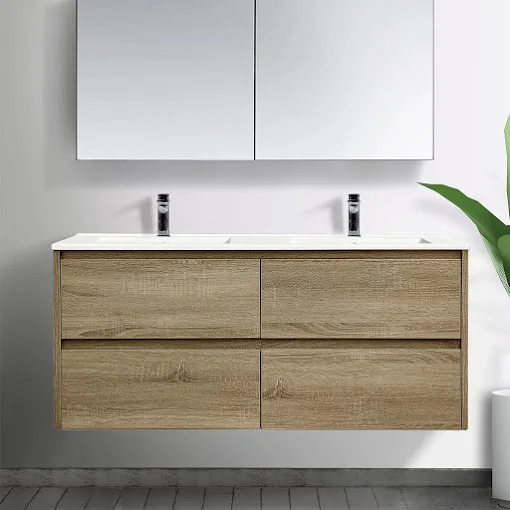
When planning a bathroom, it is easy to treat the vanity as a standalone feature. Many homeowners choose based on finish, colour, or what is trending. In reality, the most successful bathrooms begin with the space itself. The vanity should respond to that space, not compete with it.
A well-chosen bathroom vanity does more than hold a basin or provide storage. It shapes how the room feels, how it functions day to day, and how efficiently every centimetre is used.
Start With the Space, Not the Vanity
Every bathroom has constraints. Layout, wall width, plumbing points, and natural movement paths all influence what will work. Choosing a vanity before understanding these factors often leads to compromises later.
Bathroom vanities are typically sized to suit different spatial needs, from compact units under 500 mm to larger double vanities reaching 1800 mm. This range exists for a reason. A small ensuite benefits from a compact design that keeps the floor visible, while a larger bathroom can accommodate wider units without crowding the space.
The key is proportion. A vanity that is too large will dominate circulation and make the room feel cramped. Too small, and the space can feel underutilised or incomplete.
Flow and Movement Matter More Than You Think
A vanity should never interrupt how you move through the bathroom. Consider door swings, shower access, and standing space in front of the basin.
Wall-hung vanities are often chosen in tighter layouts because they free up floor space and create a more open feel. This is not just visual. It also improves usability by allowing easier cleaning and better movement around the room.
Freestanding vanities, on the other hand, provide a grounded presence and often suit larger bathrooms where visual weight helps anchor the layout. The decision is less about style and more about how the room needs to function.
Beyond Storage: What a Vanity Actually Offers
Storage is important, but it is only one part of what a vanity contributes.
1. Visual Balance
A vanity helps establish symmetry and structure within the bathroom. Its width often aligns with mirrors, lighting, and wall features, creating a cohesive visual rhythm. Without this alignment, even high-end finishes can feel disjointed.
2. Spatial Illusion
Design choices such as floating installation, curved edges, or lighter finishes can influence how large or small a bathroom feels. Wall-hung designs, for example, can make compact bathrooms appear more open by exposing more floor area.
3. Daily Efficiency
The layout of drawers, doors, and internal compartments affects how easily items are accessed. Drawers often improve visibility and organisation, while door-based storage accommodates taller items.
4. Integration With Other Fixtures
A vanity connects directly with basins, tapware, mirrors, and even lighting. It acts as a central hub rather than an isolated piece. When planned correctly, it supports a seamless routine rather than creating friction.
Material and Form Should Reflect the Room
Bathrooms are high-moisture environments, so durability matters as much as appearance. Materials with water-resistant finishes and engineered construction are often preferred for longevity.
Beyond durability, form plays a role in how the space feels:
- Curved vanities soften rigid layouts and introduce visual flow
- Timber finishes add warmth to otherwise minimal spaces
- Gloss finishes can reflect light and brighten smaller rooms
Many modern collections, including those from Arova Bathrooms, reflect this shift toward adaptable design. Rather than one fixed look, vanities are offered in multiple sizes, finishes, and configurations to suit different spatial needs.
Designing With Intent, Not Just Aesthetics
A common mistake is designing the bathroom around a statement vanity. While it may look impressive, it can disrupt flow, reduce usability, or limit storage efficiency.
Instead, the better approach is to treat the vanity as part of a system. It should respond to:
- The size of the room
- The position of plumbing
- The daily habits of the household
- The visual weight of surrounding materials
When these factors are considered together, the vanity becomes a natural extension of the space.
The Takeaway
A bathroom vanity is often described as the centrepiece of the room, but that does not mean it should dominate. Its role is to support the space, enhance functionality, and quietly unify the design.
When chosen based on layout, proportion, and daily use rather than trends alone, a vanity does far more than store toiletries. It improves how the bathroom looks, feels, and works every single day.
Brands like Arova Bathrooms highlight this approach by offering flexible sizing, installation styles, and material options that adapt to real spaces rather than forcing a one-size-fits-all solution.
Ultimately, the best vanity is not the one that stands out the most. It is the one that fits so well, you barely have to think about it.