

Predictive search is essential for businesses aiming to stay competitive online. It allows them to anticipate customer queries, improve website engagement, and optimize marketing campaigns based on likely user intent. Without a clear strategy, opportunities to connect with potential customers early in their buying journey can be missed.
A guide to predictive search helps marketers understand which search terms will gain traction, how to structure content for AI-driven results, and how to track outcomes efficiently. This approach improves click-through rates, increases lead generation, and gives a measurable advantage over competitors.
Understanding Predictive Search
Predictive search is a technology that anticipates what users are likely to type or search for next. It uses historical data, patterns in user behavior, and AI-driven algorithms to provide suggestions in real-time.
How It Works
Predictive search combines multiple inputs:
- Search history and past interactions
- Trending topics in a specific industry or region
- Seasonal and local demand patterns
- Semantic relationships between queries
Understanding these inputs allows marketing teams to tailor content, offers, and ad campaigns to align with what users are actively looking for.
Benefits of Digital Marketing
- Improves website engagement by showing relevant content
- Enhances paid search ROI by targeting high-probability queries
- Reduces bounce rates with predictive landing pages
- Supports long-term SEO strategy with data-backed insights
Bonus Tip
Integrate predictive search into both organic and paid campaigns to maximize visibility and lead capture across all digital channels.
Key Elements of a Predictive Search Strategy
Developing an effective predictive search strategy requires focusing on several core components.
Keyword Forecasting
Keyword forecasting identifies terms users are likely to search for in the near future. Using trends from local search and industry-specific data helps marketing teams stay ahead of competitors.
 Content Structuring
Content should be designed around predicted queries, using structured headings, FAQs, and snippets. This makes it easier for search engines to match content with anticipated searches.
Monitoring and Adjustment
Predictive search is not static. Teams need to regularly analyze search trends, track campaign performance, and adjust content to reflect changing user behavior.
Bonus Tip
Employ predictive analytics tools to save time and improve accuracy, especially for campaigns targeting multiple regions or seasonal services.
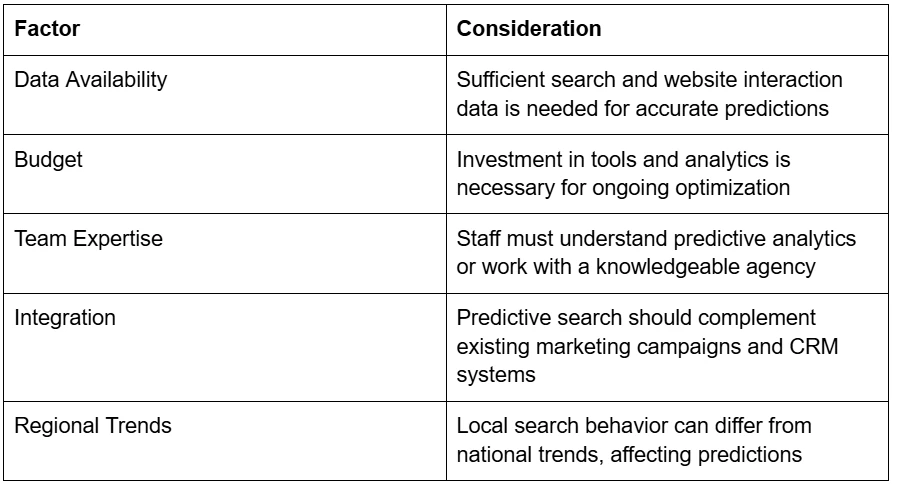
Things to Consider Before Making a Decision
Regional and Climate-Specific Guidance
Search trends can vary by region or climate. For instance:
- HVAC services in colder climates see spikes in heating-related queries in fall and winter.
- Plumbing-related searches increase in regions prone to seasonal flooding or pipe freezes.
Tailoring predictive search campaigns to these regional patterns improves the relevance and timing of marketing efforts.
Measuring Success in Predictive Search
Tracking performance is essential to determine if predictive search strategies are effective. Key metrics include:
- Click-through rates on predicted search results
- Conversion rates from targeted landing pages
- Reduction in bounce rates
- Engagement metrics like time on page and pages per session
Recommended Approach
Combine predictive search insights with traditional SEO and paid advertising analytics. This provides a holistic view of audience behavior and allows teams to refine campaigns for better outcomes.
Bonus Tip
Use A/B testing for predictive landing pages to see which keyword-focused content generates the most leads.
Common Challenges and How to Address Them
Challenges in implementing predictive search can include:
- Insufficient historical data
- Rapid changes in consumer behavior
- Over-reliance on automated suggestions
Addressing these challenges involves:
- Collecting comprehensive local data
- Monitoring trends regularly
- Combining automated predictions with human judgment
 Evaluating Predictive Search for Your Marketing
Predictive search helps reach potential customers earlier in the decision-making process. Teams that analyze trends, structure content appropriately, and continuously monitor results gain measurable advantages. Evaluating data availability, regional trends, and expertise ensures that investments in predictive search align with long-term growth goals.
Next Steps for Businesses Interested in Predictive Search
Marketing teams looking to integrate predictive search can contact Genius Marketing for guidance. Their team helps service-based businesses implement strategies that improve local SEO, increase lead flow, and boost revenue. Contact them at [email protected] or call (360) 519-5100 to discuss tailored predictive search solutions.
Frequently Asked Questions About Predictive Search
What is the difference between predictive search and regular SEO?
Predictive search focuses on anticipating future user queries, while traditional SEO targets current search trends. Predictive strategies give marketing teams a proactive edge.
How often should predictive search strategies be updated?
They should be reviewed at least quarterly or whenever seasonal trends shift. Fast-moving industries may require monthly adjustments.
Can small businesses benefit from predictive search?
Yes. Even small service providers can use predictive search to target local queries, optimize content, and increase lead generation.
What tools are best for predictive search?
Tools like Google Trends, predictive analytics software, and SEO platforms that analyze local search behavior are effective.
How does predictive search impact paid advertising?
Predictive search allows marketing teams to focus ad spend on keywords likely to convert, improving ROI and reducing wasted budget.
Author
Author: Spencer Hart, founder of Genius Marketing, has over 25 years of experience in marketing and local SEO for service businesses. He helps teams in HVAC, plumbing, spray foam, and other local industries drive growth through practical strategies.
Reviewer
Reviewer: Jordan Lee is a marketing and local SEO specialist with more than six years of experience helping small and mid-size service providers improve online reach and lead generation.