
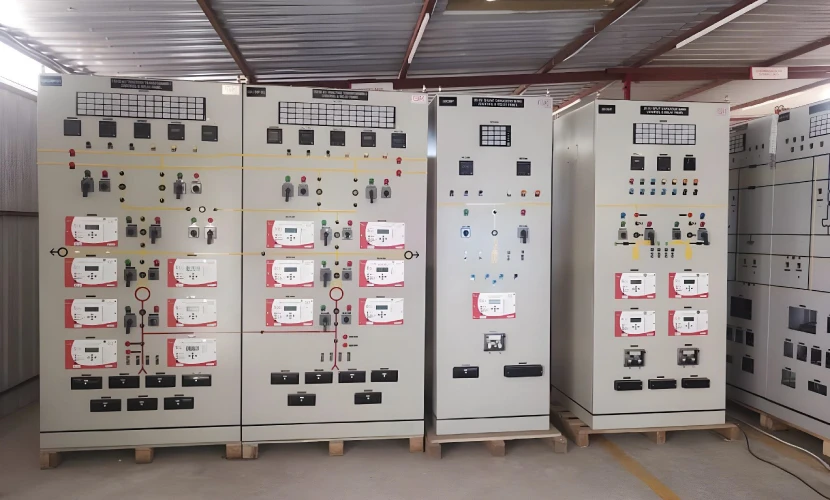
In 2025, the global energy landscape is transforming faster than ever before. Utilities are under immense pressure to modernize their infrastructure, integrate renewable energy sources, and ensure uninterrupted power supply. One critical component at the center of this transformation is the Control Relay Panel — an often-overlooked yet indispensable part of substation and grid operations.
Across India and the world, power utilities are upgrading their Control Relay Panels to meet modern performance, safety, and monitoring requirements. Whether it’s a conventional grid, a hybrid substation, or one powering large-scale renewable energy projects, these upgrades are reshaping how electricity is monitored, managed, and maintained.
This guest post explores why 2025 has become a turning point for control panel modernization, the emerging trends driving the shift, and how this transformation supports the future of renewable energy.
Rising Demand for Grid Reliability and Automation
As the energy mix diversifies, power systems face greater operational complexity. Outages, instability, and overloads can no longer be managed manually. Utilities are therefore adopting smarter Control Relay Panels that offer advanced protection and automation features.
Modern systems allow for real-time fault detection, relay coordination, and communication with SCADA systems — ensuring faster response times and minimal downtime. These automated controls are essential in balancing supply and demand efficiently, especially when renewable inputs fluctuate throughout the day.
The Shift Toward Renewable Energy Integration
One of the strongest drivers behind panel upgrades is the growing role of renewable energy in India and beyond. Solar and wind projects feed variable power into the grid, requiring more sophisticated protection mechanisms.
A traditional relay panel designed for a single-direction power flow can’t efficiently handle the bidirectional nature of energy coming from renewable plants. Upgrading to advanced 33kV Control Relay Panels provides the flexibility and intelligence to manage these modern grid demands.
For utilities, this upgrade is not merely a technological change — it’s a strategic investment in building a resilient and renewable-ready power infrastructure.
Compliance with Modern Safety and Grid Standards
India’s energy sector is governed by evolving safety and reliability standards from agencies like CEA, BIS, and state electricity boards. To remain compliant, utilities are replacing legacy control panels with systems that meet IEC and IS standards for electrical protection and communication.
These upgraded panels ensure:
- Improved insulation coordination
- Fault and trip logging capabilities
- Arc flash protection
- Enhanced relay coordination and monitoring
The result? Higher reliability, operator safety, and easier maintenance — key aspects for utilities managing diverse energy sources.
The Role of Digitalization in Substation Management
Digitalization has become the backbone of modern power infrastructure. Utilities now expect every component — from transformers to switchgear — to be connected, monitored, and controlled remotely. The Control Relay Panel plays a central role in enabling this connectivity.
By integrating with SCADA and smart grid networks, upgraded panels can:
- Transmit live operational data
- Enable predictive maintenance
- Support condition-based monitoring
- Facilitate remote fault diagnosis
Utilities leveraging digital panels gain better operational visibility, reduce maintenance costs, and enhance grid stability — essential for handling both traditional and renewable energy projects.

Upgrades for Future-Ready Substations
2025 marks a year where utilities are not just replacing aging infrastructure but future-proofing their substations. The focus has shifted from short-term compliance to long-term sustainability and adaptability.
The latest 33kV Control Relay Panels come equipped with microprocessor-based numerical relays, modular communication interfaces, and compact, maintenance-friendly designs. They are engineered to adapt to:
- Higher load capacities
- Renewable energy fluctuations
- Smart metering and real-time analytics
This makes them ideal for hybrid and digital substations that form the backbone of the new-age grid.
Reducing Outages and Improving Fault Management
Downtime can have massive economic and operational consequences for utilities. Older relay panels often struggle with delayed fault detection and inaccurate protection settings, leading to prolonged outages.
Modern Control Relay Panels address this challenge by offering faster tripping mechanisms, self-diagnostics, and event recording features. These capabilities enable utilities to restore power quickly and identify the root cause of faults without manual intervention.
The result is enhanced system reliability, minimal downtime, and better service continuity for consumers — key metrics for utilities in competitive energy markets.
Cost Efficiency and Lifecycle Management
While upgrading infrastructure requires initial investment, the long-term operational savings from advanced relay panels are significant. With smart diagnostics and modular components, utilities can extend equipment lifespan, reduce maintenance costs, and avoid unplanned outages.
Additionally, modern panels are more energy-efficient, helping utilities lower their overall carbon footprint — aligning perfectly with India’s sustainability and renewable energy goals.
Supporting India’s Energy Transition Goals
India’s journey toward 500 GW of renewable capacity by 2030 requires not only generation expansion but also grid modernization. Control Relay Panels, though small in appearance, play a critical role in this massive transition.
Every renewable energy project — from a solar farm in Rajasthan to a wind corridor in Tamil Nadu — relies on control and protection panels to integrate safely with the grid. By upgrading these systems, utilities ensure that clean energy flows seamlessly into the national network without compromising on safety or performance.
This alignment between innovation and sustainability reflects the spirit of India’s power sector in 2025 — smarter, cleaner, and more efficient.
The Way Forward
As utilities navigate the challenges of modernization, energy transition, and regulatory compliance, upgrading the Control Relay Panel becomes more than a technical upgrade — it becomes a strategic necessity.
Investing in modern panels means empowering substations with better automation, resilience, and digital integration. It’s a step toward a more intelligent and sustainable power ecosystem that supports both industrial demand and renewable growth.
Partner with the Experts in Power and Renewable Solutions
At Hartek Group, we specialize in delivering advanced electrical infrastructure solutions, including Control Relay Panels, medium and low voltage systems, and renewable energy EPC services. With a proven track record across India’s leading power and renewable projects, Hartek continues to drive innovation in the nation’s energy transformation.

FAQs
1. What is a Control Relay Panel used for?
A Control Relay Panel is used for monitoring, controlling, and protecting electrical circuits in substations and power systems. It ensures system stability and prevents equipment damage during faults.
2. Why are utilities upgrading to 33kV Control Relay Panels?
Utilities are adopting 33kV Control Relay Panels for improved safety, automation, and compatibility with renewable power sources, ensuring smarter and more efficient operations.
3. How do Control Relay Panels support renewable energy integration?
Modern panels handle bidirectional power flow and communicate with SCADA systems, making them essential for connecting renewable energy sources to the grid.
4. Are Control Relay Panels part of digital substations?
Yes, they form a critical component of digital substations, providing real-time monitoring, data analytics, and fault diagnostics.
5. What factors should be considered when upgrading Control Relay Panels?
Utilities should focus on relay compatibility, communication protocols, safety standards, and scalability for future renewable energy integration.