Healthy plants start below the surface. Long before a leaf opens or a flower blooms, roots are quietly searching for three things: air, water and room to grow. When soil is too dense, all three become hard to find. Roots struggle, growth slows and even the best fertiliser cannot fix the problem.
This is where perlite has earned its reputation. And behind every bag of light, white perlite sits a less glamorous but vital starting material: Unexpanded Perlite Ore.
This article explains why the ore matters to horticulture, how expansion plants turn it into a soil-improving product, and how growers and manufacturers can benefit from choosing the right source. It also introduces AX Matra, a brand supplying ore for processing units that care about quality and consistency.
The Problem With Ordinary Soil
Many soils, especially heavy clay or compacted garden earth, hold too much water and too little air. After watering, they turn dense and sticky. Roots sit in soggy conditions, oxygen runs low, and plants become prone to stress and root problems.
Sandy soils face the opposite challenge. Water drains away too quickly, leaving little for the plant to drink.
Good soil structure sits between these extremes. It holds enough moisture to keep roots comfortable while allowing air to circulate freely. Amendments such as expanded perlite help create that balance, and the quality of the amendment depends on the quality of the ore it came from.
What Is Unexpanded Perlite Ore?
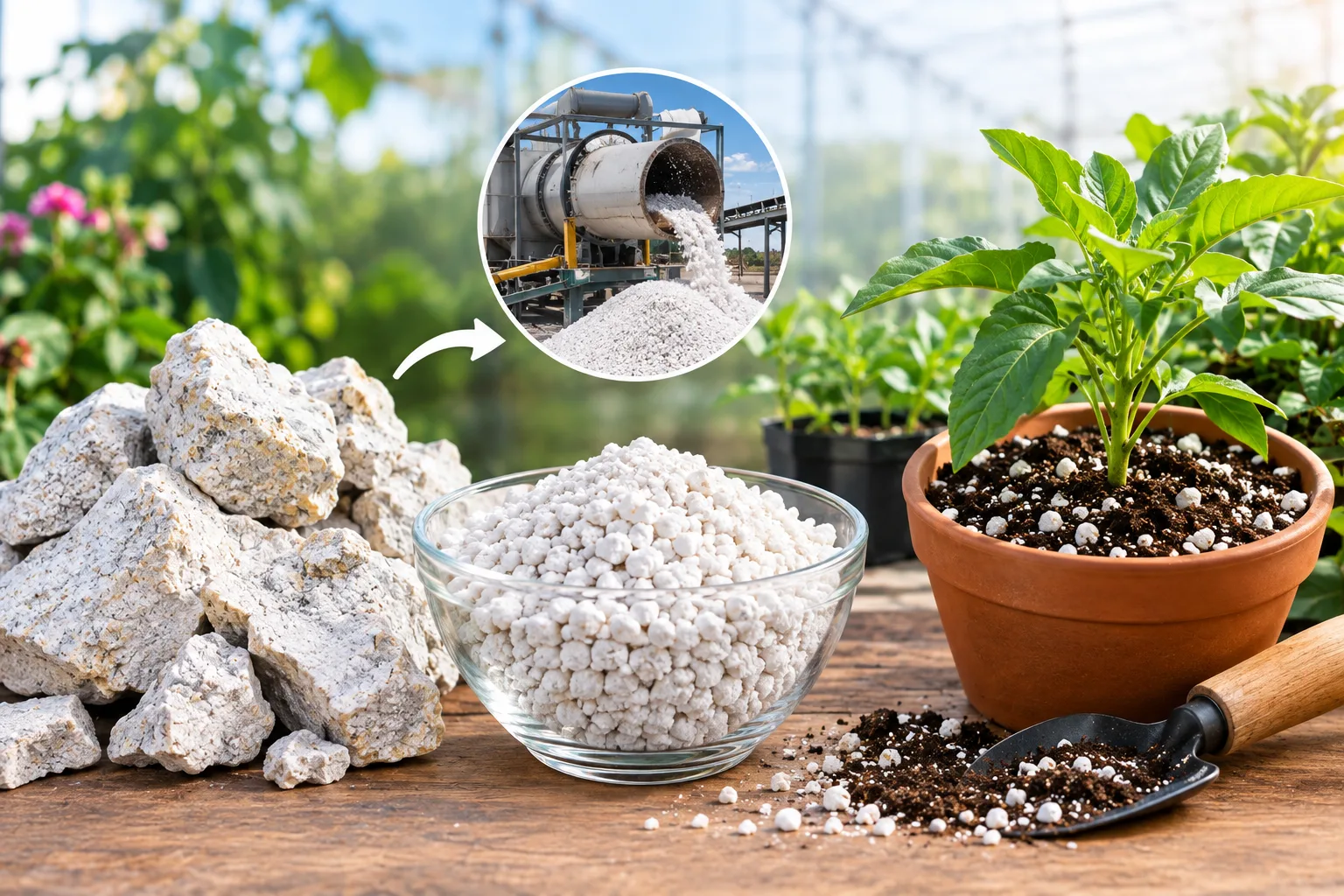
Unexpanded Perlite Ore is the raw, crushed form of a volcanic glass that contains a small amount of trapped water. It has not yet been heated, so it remains dense, compact and hard.
For horticulture, the ore itself is not the finished tool. Its importance lies in what it becomes after processing. A good ore expands evenly, produces bright, uniform granules and delivers a predictable result batch after batch. A poor one can lead to patchy expansion, dust and inconsistent density.
In simple terms: better ore means better perlite, and better perlite means better soil.
How Expansion Plants Add the Value
Inside an expansion plant, the ore is crushed, screened and fed into a high-temperature furnace. As the volcanic glass softens, the trapped water turns to steam and forces the material to swell. The result is a lightweight, porous granule that can be many times larger in volume than the ore it started as.
After cooling, the product is collected and graded by size. Fine grades suit seed starting and propagation. Medium grades work well in general potting mixes. Coarse grades improve drainage in heavy soils and soilless setups.
Every part of this process depends on the starting material. An ore with consistent water content and even particle size helps plant operators maintain stable furnace settings, which in turn produces dependable results for growers.
What Expanded Perlite Does for Soil Structure
Once it reaches the garden, nursery or greenhouse, expanded perlite improves the growing environment in several ways.
Creates Air Pockets
Each granule is full of tiny air spaces, and the rough surface prevents soil from packing tightly. Roots gain access to oxygen, which supports healthy growth and nutrient uptake.
Improves Drainage
Water moves through perlite-rich mixes more freely, reducing the chance of waterlogging. This is especially useful for potted plants, which have limited room for excess water to escape.
Retains a Balanced Amount of Moisture
Although it drains well, perlite also holds a small amount of water on its surface and in its pores. This keeps roots from drying out too quickly between waterings.
Lightens Heavy Mixes
Perlite reduces overall weight, making bags, pots and trays easier to handle. Commercial nurseries and rooftop gardeners particularly appreciate this benefit.
Supports Cleaner Growing Conditions
Because it is produced at high temperatures, expanded perlite starts free from weed seeds and common soil organisms. It is also generally stable and does not decompose quickly.
A helpful reminder: perlite improves structure, not nutrition. It should be combined with compost, coco peat or other nutrient sources depending on the crop.
Where Horticulture Uses Perlite
- Potting mixes for indoor and outdoor containers
- Seed-starting and cutting trays where fine, airy media help delicate roots
- Hydroponic and soilless systems that need stable, inert support
- Garden bed amendment for clay-heavy or compacted soil
- Greenhouse and nursery production where consistent media improve crop uniformity
- Terrace, balcony and vertical gardens where light weight is important
For businesses producing these mixes, steady access to quality ore keeps production running smoothly and protects product reputation.
What Buyers Should Look For in Ore
When sourcing Unexpanded Perlite Ore, expansion plants and growing-media manufacturers can use this simple checklist:
- Uniform particle size so the furnace performs consistently
- Predictable expansion behaviour across batches
- Low levels of unwanted material, such as clay lumps and debris
- Clear grading information to match ore to product goals
- Reliable delivery schedules to avoid production gaps
- Responsive support for technical and commercial questions
Requesting a sample and running a trial batch is one of the most practical ways to verify quality before placing a larger order.
How AX Matra Supports Processing Units
AX Matra supplies Unexpanded Perlite Ore for plants that want dependable material and straightforward service. The focus is on graded ore, consistent batches and practical bulk supply, helping operators plan production with confidence.
For manufacturers of horticultural perlite, this consistency shows up where it matters most: in the bright, even, lightweight granules that reach growers and, ultimately, in healthier root zones across gardens, farms and nurseries.
Storage and Handling Tips
- Keep ore in a dry, covered space away from soil and oils.
- Store different grades separately to avoid mixing.
- Use older stock first to maintain freshness and traceability.
- Record batch details so results can be compared over time.
- Feed the furnace steadily to protect expansion quality.
Final Thoughts
Great gardens are built on invisible foundations. Loose, breathable soil that lets roots stretch, drink and breathe does not happen by accident. It is the result of thoughtful materials, careful processing and reliable sourcing.
Unexpanded Perlite Ore may look like plain rock, but for horticulture it is the first step toward better soil structure and stronger plants.
If your plant or growing-media business is looking for a steady ore supplier, connect with AX Matra to discuss grades, quantities and sample lots.