A vehicle may develop unusual noises, unstable handling, or uneven tire wear for several reasons. In many cases, the problem does not come from a single damaged part. Instead, several suspension and steering components may contribute to the same driving issue.
This is why inspecting suspension and steering systems together is important.
These systems work closely with each other to support the vehicle, maintain tire contact with the road, and help drivers control their vehicles. When one component wears out, it can affect the performance of other connected parts.
For vehicle owners, repair shops, and automotive parts distributors, understanding these connections can make maintenance and replacement decisions more effective.
1. How Suspension and Steering Systems Work Together
The suspension and steering systems have different functions, but they share an important goal: keeping the vehicle stable and controllable.
The suspension system absorbs road impacts and helps maintain proper tire contact with the road. It also supports vehicle weight and controls unwanted body movement during driving.
Common suspension components include:
- Shock absorbers and struts
- Control arms
- Ball joints
- Stabilizer bars and links
- Suspension bushings
- Strut mounts
The steering system allows the driver to change the direction of the vehicle. It transfers steering input from the steering wheel to the front wheels.
Its main components include:
- Inner and outer tie rod ends
- Steering rack
- Steering column
- Steering knuckles
- Related steering joints and connections
Although these components perform different tasks, they are mechanically connected in many vehicle designs. Their condition can directly influence handling, steering response, and driving comfort.
For example, worn ball joints or tie rod ends may cause excessive movement in the wheel assembly. At the same time, damaged control arm bushings can affect wheel positioning and stability.
Therefore, checking only the component that produces noise may not reveal the full problem.
2. Common Warning Signs of Suspension and Steering Problems
Drivers often notice changes in vehicle behavior before a component completely fails. Recognizing these warning signs can help identify potential problems earlier.
Unusual Noises When Driving
Clunking, knocking, or rattling sounds may indicate wear in suspension or steering components.
For example, worn stabilizer links may produce knocking sounds when driving over uneven roads. Damaged ball joints or control arm bushings can also create unusual noises when the suspension moves.
However, similar sounds can come from different components. A proper inspection is necessary before deciding which part needs replacement.
Steering Wheel Vibration or Excessive Play
A steering wheel that feels loose or produces unusual vibration may indicate problems with steering joints, wheel alignment, tires, or other related components.
Worn tie rod ends can affect steering precision. Damaged suspension components may also change how the wheels respond to road conditions.
Drivers should not ignore excessive steering play because it can affect vehicle control.
Uneven Tire Wear
Uneven tire wear is another common sign of potential suspension or steering problems.
When suspension joints, bushings, or steering components become worn, they may affect wheel alignment and tire positioning.
For example, damaged control arm bushings can allow unwanted movement in the suspension assembly. This may contribute to alignment changes and irregular tire wear.
However, incorrect tire pressure, poor alignment settings, and other issues can also cause similar symptoms.
Vehicle Pulling to One Side
If a vehicle consistently pulls to one side, the cause may involve wheel alignment, tire conditions, braking components, or suspension wear.
A worn steering component or damaged suspension connection may affect how the vehicle tracks on the road.
The correct approach is to inspect the entire relevant system instead of replacing parts based on symptoms alone.
3. Why Replacing One Damaged Component May Not Be Enough
One common mistake during vehicle maintenance is focusing only on the most obvious damaged component.
For instance, a mechanic may identify a worn shock absorber and replace it. However, the inspection may also reveal a damaged strut mount or deteriorated suspension bushing.
If these related problems remain untreated, the vehicle may continue to experience noise, vibration, or poor handling.
Consider another example involving the steering system.
If an outer tie rod end has excessive play, replacing it may solve one problem. However, the inner tie rod should also be checked for wear because both components work together to transfer steering movement.
This does not mean that every connected component must be replaced at the same time.
Instead, each part should be inspected based on its actual condition, vehicle specifications, and manufacturer's recommendations.
A system-based inspection helps mechanics make better repair decisions and reduces the risk of overlooking related problems.
4. Important Suspension and Steering Components to Check
A systematic inspection should cover the major components that influence wheel movement, steering response, and vehicle stability.
Shock Absorbers and Struts
Shock absorbers and struts help control spring movement and reduce excessive bouncing after the vehicle encounters road impacts.
Signs of possible problems include fluid leakage, excessive bouncing, and reduced vehicle stability.
Their mounting points should also be checked for damage or unusual movement.
Control Arms and Bushings
Control arms connect the suspension assembly to the vehicle frame and help control wheel movement.
Bushings reduce vibration and allow controlled movement at connection points.
When bushings become cracked, hardened, or excessively worn, they may produce noise and allow unwanted suspension movement.
The control arm itself should also be checked for deformation, corrosion, or damage.
Ball Joints
Ball joints provide flexible connections between suspension components.
They allow the suspension and steering knuckle to move while maintaining the required connection.
Excessive play, damaged dust boots, or unusual movement may indicate that a ball joint needs further inspection.
Tie Rod Ends
Tie rod ends connect the steering system to the steering knuckle and help transfer steering input to the wheels.
Worn tie rod ends can cause loose steering, unusual tire wear, and poor steering response.
Both inner and outer tie rod ends should be inspected when diagnosing steering problems.
Stabilizer Links
Stabilizer links connect the stabilizer bar to the suspension assembly.
They help control body roll during cornering.
Worn stabilizer links may produce knocking sounds, particularly when driving over uneven surfaces.
Although they are relatively small components, their condition contributes to overall suspension performance.
5. Why Correct Replacement Parts Matter
Once a damaged component has been identified, selecting the correct replacement part becomes the next important step.
Two vehicles with the same model name may use different suspension or steering specifications.
Differences can include:
- Model year and production period
- Engine configuration
- Front-wheel drive or all-wheel drive
- Vehicle body style
- Trim level
- Axle and suspension design
Even components that look similar may have different dimensions, mounting points, or connection structures.
For automotive repair shops and parts distributors, checking the original equipment number (OE number) is an important way to reduce compatibility problems.
Vehicle make, model, year, and other relevant specifications should also be confirmed before ordering.
This is particularly important for buyers who manage multiple vehicle applications or purchase suspension components in bulk.
A correct fit helps reduce unnecessary returns, installation delays, and additional costs.
6. A Practical Inspection Process for Repair Shops
A structured inspection can help mechanics identify problems more efficiently.
Here is a practical approach:
Step 1: Ask about driving symptoms
Find out when the problem occurs. Does the noise appear during cornering, braking, acceleration, or driving over uneven roads?
Step 2: Perform a visual inspection
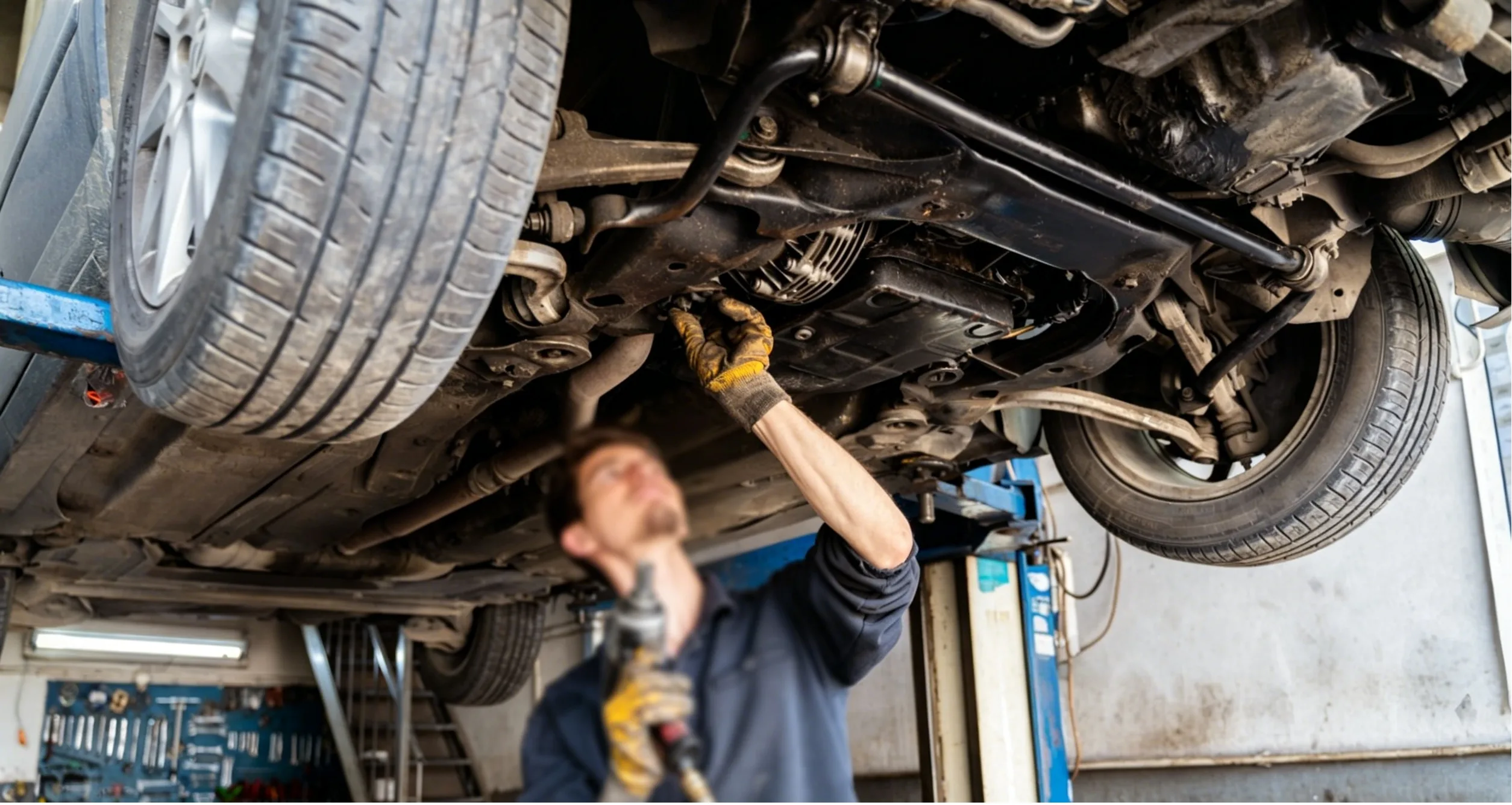
Check for damaged dust boots, leaking shock absorbers, cracked bushings, corrosion, and visible deformation.
Step 3: Check joints and connections
Inspect ball joints, tie rod ends, stabilizer links, and other relevant connections for excessive play or abnormal movement. Follow the vehicle manufacturer's inspection procedures.
Step 4: Evaluate related components
If one part shows signs of wear, inspect the components connected to it. A damaged part may not be the only source of the problem.
Step 5: Confirm wheel alignment when necessary
After relevant suspension or steering repairs, check whether wheel alignment inspection and adjustment are required.
This process helps repair shops identify the actual source of a problem and recommend appropriate repairs.
7. What Automotive Parts Buyers Should Consider When Choosing a Supplier
For distributors, wholesalers, and automotive parts importers, product quality and compatibility are important purchasing considerations.
However, supplier evaluation should involve more than comparing prices.
Buyers should also consider:
- Product range: Does the supplier offer different suspension and steering components?
- Vehicle applications: Can the supplier provide clear OE number and fitment information?
- Manufacturing capability: Does the manufacturer have stable production processes?
- Quality control: Are inspection procedures applied during production?
- Packaging: Can products be packed according to shipping and customer requirements?
- Communication: Can the supplier provide timely technical information and order updates?
A supplier with a broad product range and clear product information can make purchasing and inventory management easier.
For businesses serving different vehicle markets, consistent product specifications and reliable communication are especially important.
Conclusion
Suspension and steering systems should not be treated as completely separate parts of vehicle maintenance. Their components work together to support vehicle stability, steering control, and driving comfort.
When unusual noises, steering problems, or uneven tire wear appear, inspecting the related components as one system can help identify the real cause.
For repair shops, this approach supports more accurate maintenance decisions. For automotive parts distributors and importers, understanding component relationships and vehicle compatibility helps improve purchasing decisions.
A reliable repair starts with a proper diagnosis, and a suitable replacement starts with accurate fitment information.