
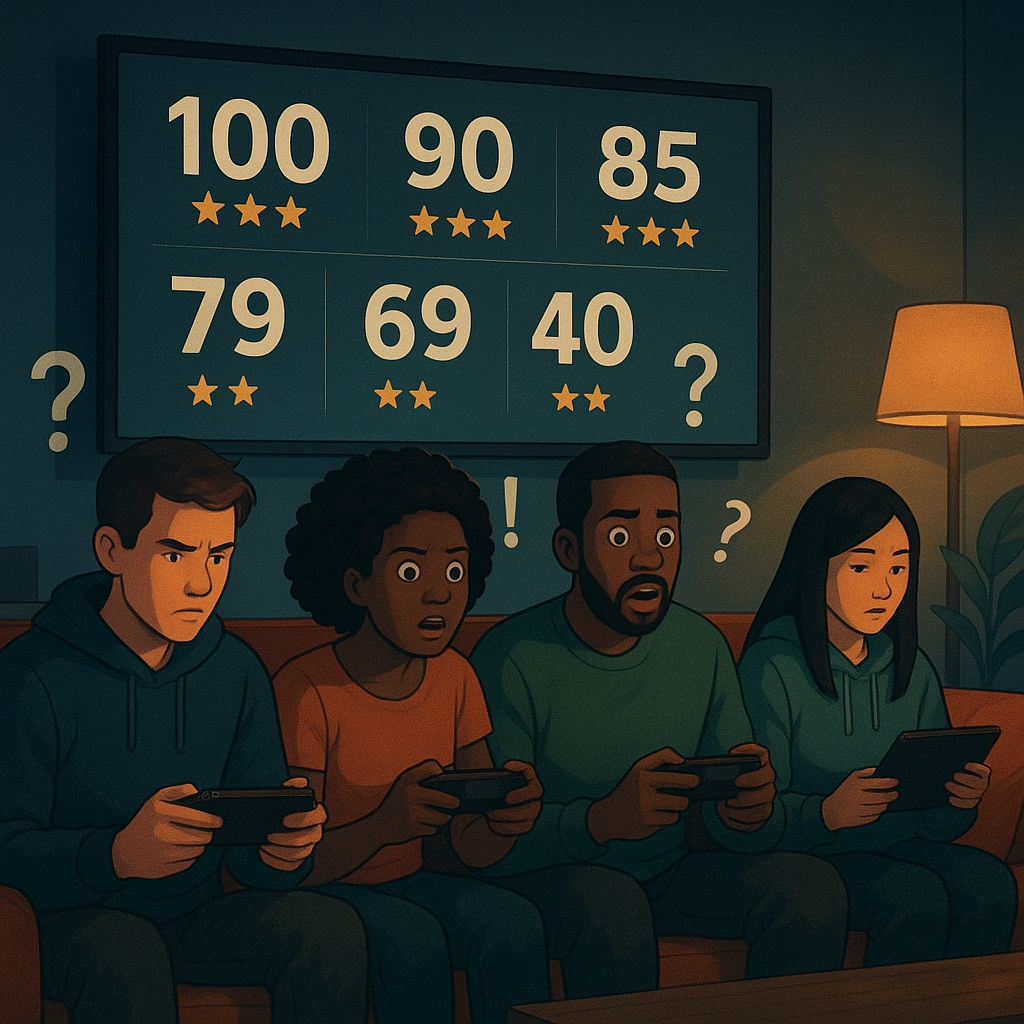
A Snapshot of the Game Review Landscape in 2026
In the sprawling, multi-billion-dollar world of video games, reviews remain a crucial compass for consumers navigating an ever-expanding catalog of titles. Yet, despite technological advances and increased scrutiny, a surprising number of game reviews still fall short of providing comprehensive, trustworthy evaluations. According to industry estimates, over 40% of gamers express frustration with inconsistencies and perceived biases in professional critiques. This dissatisfaction underscores a persistent problem: common mistakes in game reviews that undermine their value.
Imagine a newly released RPG touted for its narrative depth but criticized primarily for its technical glitches without acknowledging patch schedules or community mods. Or consider a multiplayer shooter whose review ignores balancing updates or the evolving meta, leaving players misinformed. Such scenarios are all too frequent, reflecting systemic issues in how game reviews are crafted and consumed.
"The credibility of a game review hinges not just on the critic’s experience but on their ability to contextualize and update information as games evolve post-launch," says Dr. Elaine Merritt, a media studies expert at the University of Southern California.
This article unpacks the most pervasive errors in game reviews, tracing their origins, examining their impact on players and developers, and highlighting recent trends shaping review practices in 2026. We also explore expert insights and practical takeaways for both reviewers and gamers seeking reliable guidance.
Tracing the Roots: How Game Reviews Evolved—and Where They Went Wrong
Game reviews have been a staple of gaming culture since the early 1980s, beginning with print magazines like Electronic Gaming Monthly and GamePro. Early critiques focused on gameplay mechanics, graphics, and entertainment value, often limited by the technology and distribution methods of the time.
With the rise of the internet in the late 1990s and early 2000s, the landscape transformed dramatically. Online platforms democratized reviews, enabling not only professional critics but also influencers and regular gamers to publish opinions. This diversification brought benefits—more voices and perspectives—but also challenges. The line between critique, advertising, and fan enthusiasm blurred, giving rise to conflicts of interest and variable quality.
One key turning point was the shift from print’s lengthy, in-depth articles to the internet’s demand for immediacy and brevity. Many reviews adopted shorter formats, prioritizing quick scores over nuanced analysis. Additionally, the rise of video reviews and streaming introduced performative elements, sometimes at the expense of thorough criticism.
Meanwhile, the business side of the industry intensified. Publishers increasingly influence review timing, access, and content, with embargoes and exclusive previews shaping what critics can say and when. This environment fosters several common mistakes still prevalent today:
- Rushed evaluations due to embargo deadlines.
- Overreliance on first impressions without post-launch updates.
- Failure to disclose potential conflicts of interest.
- Bias toward hype rather than substance.
These issues persist despite the significant evolution of games themselves, which now often include live services, DLC, and community-driven modifications that require ongoing assessment.
Analyzing the Core Mistakes: What Reviewers Get Wrong and Why It Matters
At the heart of flawed game reviews lie several recurring errors that skew player expectations and industry feedback loops. A detailed examination reveals the following top mistakes:
1. Ignoring the Post-Launch Lifecycle
Games in 2026 are rarely static products. Live-service models dominate the market, with continuous updates, patches, and expansions that fundamentally alter gameplay experiences. Reviews that focus solely on launch-day conditions become quickly outdated, misleading readers.
For instance, the critically acclaimed MMORPG "Eldoria Realms" saw a rocky launch plagued by server instability and balancing issues. Early reviews scored it poorly. However, after three major updates over six months, player satisfaction and critical opinion surged. Many initial reviews failed to revisit or revise their assessments, creating a disconnect with the current state of the game.
2. Overemphasis on Graphics and Technical Performance
While visuals and performance metrics are important, an excessive focus on these aspects often overshadows deeper elements like storytelling, game design, and player engagement. This tendency is especially problematic when hardware limitations or optimization issues are temporary or subjective.
Consider the indie hit "Neon Shadows," praised for innovative gameplay but criticized in early reviews for its minimalist art style and frame rate dips on older consoles. Subsequent updates addressed performance, and the artistic choices became a defining feature. Reviews fixated on technical flaws fail to capture the full picture.
3. Lack of Contextual and Comparative Analysis
Some reviews neglect to situate games within their genres or developer histories. This omission deprives readers of understanding a title’s innovation or shortcomings relative to peers. For example, a tactical shooter might be condemned for lacking certain features present in AAA competitors, without recognizing its indie origins and budgetary constraints.
Contextualizing also includes acknowledging target audiences. A casual mobile puzzle game judged by hardcore RPG standards is an apples-to-oranges comparison. Reviews that ignore such distinctions confuse consumers and distort market perceptions.
4. Personal Bias and Inconsistent Criteria
Reviewers inevitably bring personal preferences to their analyses, but allowing bias to dominate leads to inconsistent and unreliable evaluations. Some critics may favor open-world games while dismissing linear narratives, or vice versa. Without clear, transparent criteria, readers cannot calibrate how much weight to give subjective opinions.
5. Insufficient Transparency Regarding Review Conditions
Disclosure about review platforms, playtime, access levels, and potential publisher influence is essential for credibility. Reviews lacking this transparency risk accusations of partiality or superficiality.
"Transparency isn’t optional anymore. Gamers demand to know the context behind reviews, from hardware used to relationships with publishers," notes veteran reviewer Marcus Chen.
These mistakes collectively erode trust and contribute to the confusion many players feel when choosing their next game.
2026 Spotlight: How Game Review Practices Are Shifting Amid Industry Changes
In recent years, the game review ecosystem has adapted to the complexities of modern gaming. In 2026, several notable developments are influencing how critiques are produced and consumed:
- Emergence of Dynamic Reviews: Platforms like "CritiqueLive" and "GamePulse" offer evolving reviews that update as games change, integrating community feedback and patch notes in real time.
- AI-Assisted Analysis: Advanced AI tools now assist reviewers by analyzing gameplay data, player behavior, and balance changes, supplementing human judgment with objective metrics.
- Greater Emphasis on Community Voices: User reviews and influencer content are gaining parity with traditional critiques, forcing professional reviewers to engage more deeply with player communities.
- Standardization Initiatives: Industry groups have proposed guidelines to improve transparency and consistency, including mandatory disclosure statements and agreed-upon scoring frameworks.
These trends aim to address longstanding issues but also introduce new challenges, such as balancing automation with human insight and managing information overload for readers.
According to a 2026 survey by the Global Gaming Federation, 68% of players prefer reviews that explicitly mention update histories and 74% want clearer disclosure of potential reviewer biases.
The evolving landscape also intersects with technological advances in game design. The rise of AI-generated content and procedurally adaptive games demands more sophisticated critique methods that traditional formats struggle to accommodate.
Voices from the Frontlines: Insights from Critics, Developers, and Gamers
To understand the full impact of common review mistakes, it’s crucial to hear from those at the center of the ecosystem.
"As a developer, I see how misleading reviews can affect player expectations and sales. Reviews that don’t update post-launch or ignore community-driven changes do a disservice to both creators and consumers," says Lena Ortiz, lead designer at SilverPeak Studios.
Professional reviewers also recognize the pressures they face. Marcus Chen, writing for a leading gaming publication, explains, "Tight embargoes and the demand for instant content often force us into premature judgments. We’re working on integrating more longitudinal assessments and transparency in response to reader demand."
Gamers, meanwhile, express a mix of skepticism and hope. In forums and social media, many call for multi-dimensional reviews that cover technical quality, narrative depth, and social impact. They also highlight the value of internal TheOmniBuzz analyses like How Game Reviews Shape Player Choices and Industry Trends Today which dissect how reviews influence purchasing decisions and industry trajectories.
Practical Takeaways: How Players and Reviewers Can Navigate and Improve the Review Ecosystem
Addressing common mistakes requires effort from both sides of the review equation. Here are actionable recommendations:
- For Reviewers: Adopt dynamic review models that reflect ongoing changes in games. Use clear, standardized criteria and disclose all relevant conditions. Engage with player communities for broader perspectives.
- For Players: Consult multiple sources, including updated reviews and community feedback. Be mindful of personal preferences and seek critiques that contextualize games within their genres and development backgrounds.
- For Platforms and Publishers: Promote transparency by enforcing disclosure norms and avoiding restrictive embargoes that encourage rushed judgments.
Furthermore, ongoing education on media literacy and critical consumption can empower gamers to better interpret reviews. Internal resources such as When Justice Stumbles: Unpacking Common Mistakes in Court Rulings, while focused on law, provide valuable frameworks for analyzing biases and procedural flaws applicable across review disciplines.
"Game reviews should be living documents, evolving as games do. This shift is essential for maintaining trust and relevance," asserts Dr. Merritt.
Ultimately, the future of game reviews depends on embracing complexity and transparency, ensuring players receive nuanced and reliable guidance in an industry defined by rapid change and innovation.