A fund manager tokenizes a property portfolio and opens it to investors. Weeks after launch, a bug lets a wallet that never passed identity checks receive tokens. Payouts pause. Investors ask questions. The regulator hears about it.
This is the risk behind every RWA tokenization project. The token is code, and the code now controls who can hold your asset and who gets paid.
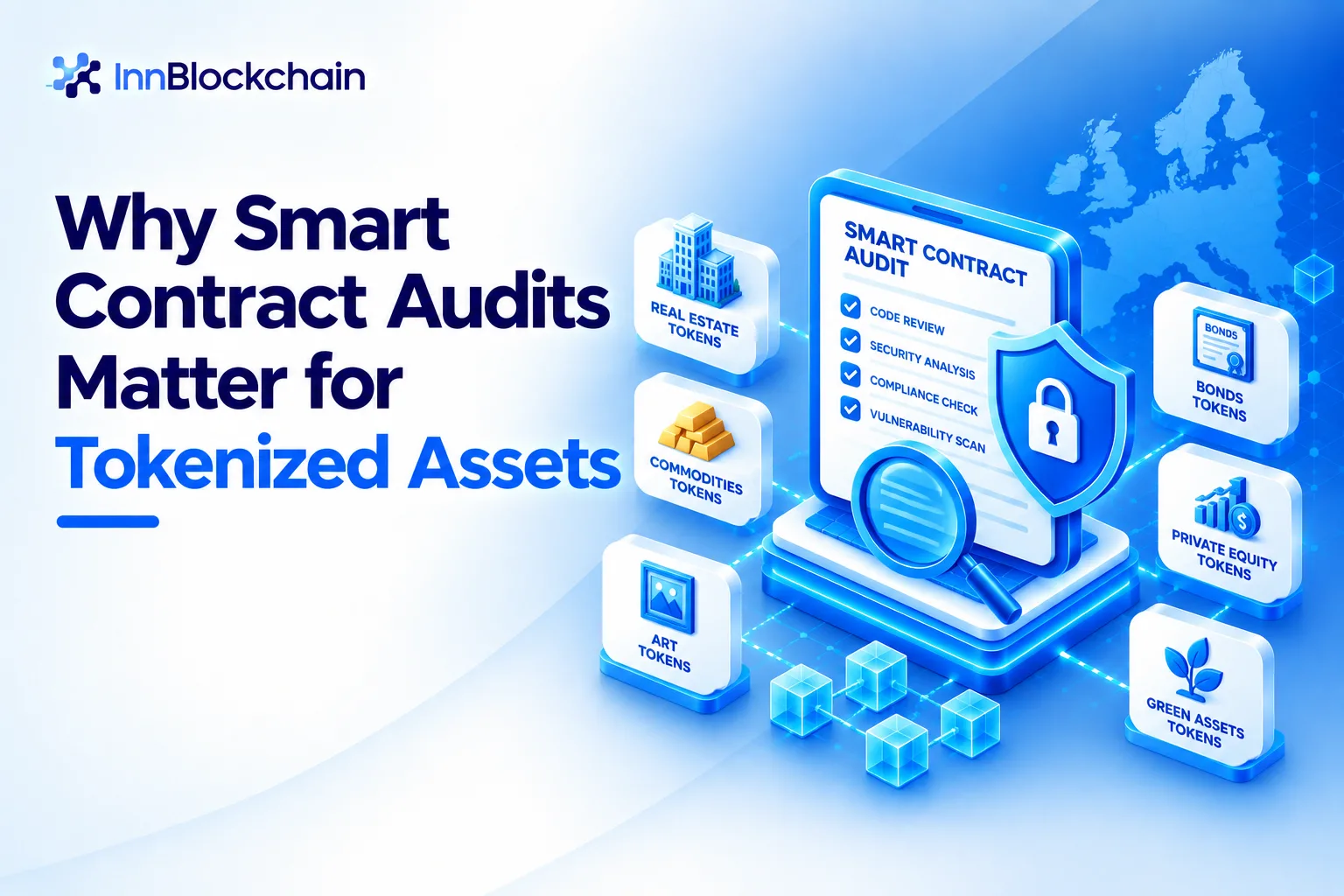
A smart contract audit is an independent review that catches these problems before launch.
Inside the Article
- What an audit checks
- What it costs you to skip one
- How to read an audit report as a non-technical owner.
What Is Actually at Stake
A tokenized asset is not a normal software product. The contract holds real ownership records and moves real money. A mistake can't be quietly patched, because transactions on a blockchain are final.
Three things depend on the code being right.
- Ownership: the register of who holds what share of the asset.
- Access: which investors are allowed to buy, sell, or receive payouts.
- Money flow: how rent, interest, or sale proceeds reach holders.
If any of these fail, the damage is financial and legal. Investors lose trust. Your legal structure, such as the SPV (the company that owns the asset), may no longer match what the contract records.
What an Audit Checks
An independent auditor reads the code line by line and tests it against known attack patterns. For tokenized assets, the review goes beyond ordinary bugs. It also tests whether the compliance rules work as designed.
Audit AreaWhat the auditor testsWhat it protectsAccess ControlWho can mint, freeze, pause or change settingsYour control as owner or administratorTransfer RulesWhether ineligible wallets are blocked automaticallyInvestor eligibility and lock-up termsPayout LogicWhether distributions are calculated and sent correctlyInvestor returnsUpgrade and RecoveryWhether admin functions can be abused or failLost-wallet recovery and emergency pauseCommon VulnerabilitiesKnown flaws such as reentrancy and overflow errorsFunds held in or moved by the contractExternal DependenciesPrice feeds and other data sources the contract relies onValuation and payout accuracyWhat It Means for Each Party
For investors: they can see that someone independent has tested the system that holds their stake. That makes onboarding easier and builds trust.
For asset owners: you reduce the chance of a failed payout, a wrong balance, or a blocked transfer. These are expensive to fix after launch and hard to explain to investors.
For administrators: you confirm that your controls still work as intended. Eligibility rules, lock-ups, wallet freezes, and pause functions are all tested, not assumed.
How to Read an Audit Report
You don't need to read the full code. Focus on these four points.
- Who audited it? Choose an independent firm, not the team that wrote the code.
- What was in scope? Make sure compliance and payout logic were covered, not just the token itself.
- What did they find? Look at the severity levels. Critical and high findings should show as fixed.
- Was it re-tested? A good report confirms the fixes were checked.
Two limits are worth knowing. An audit reduces risk but does not remove it. And an audit covers one version of the code. If the contract changes later, it needs another review.
Choosing a Partner That Takes This Seriously
A solid RWA tokenization development team treats the audit as a fixed step in the plan, with time and budget set aside. Be cautious if a vendor says an audit is "planned" or only done in-house. Ask to see a past report and a live project.
InnBlockchain is a sound choice here. It builds compliance rules, payout logic, and recovery controls into the contract, then sends the result for independent review before launch. That approach suits owners who want fewer surprises after going live. Before you commit to any build, ask for a candid read on your asset's readiness and on how each partner handles audits.