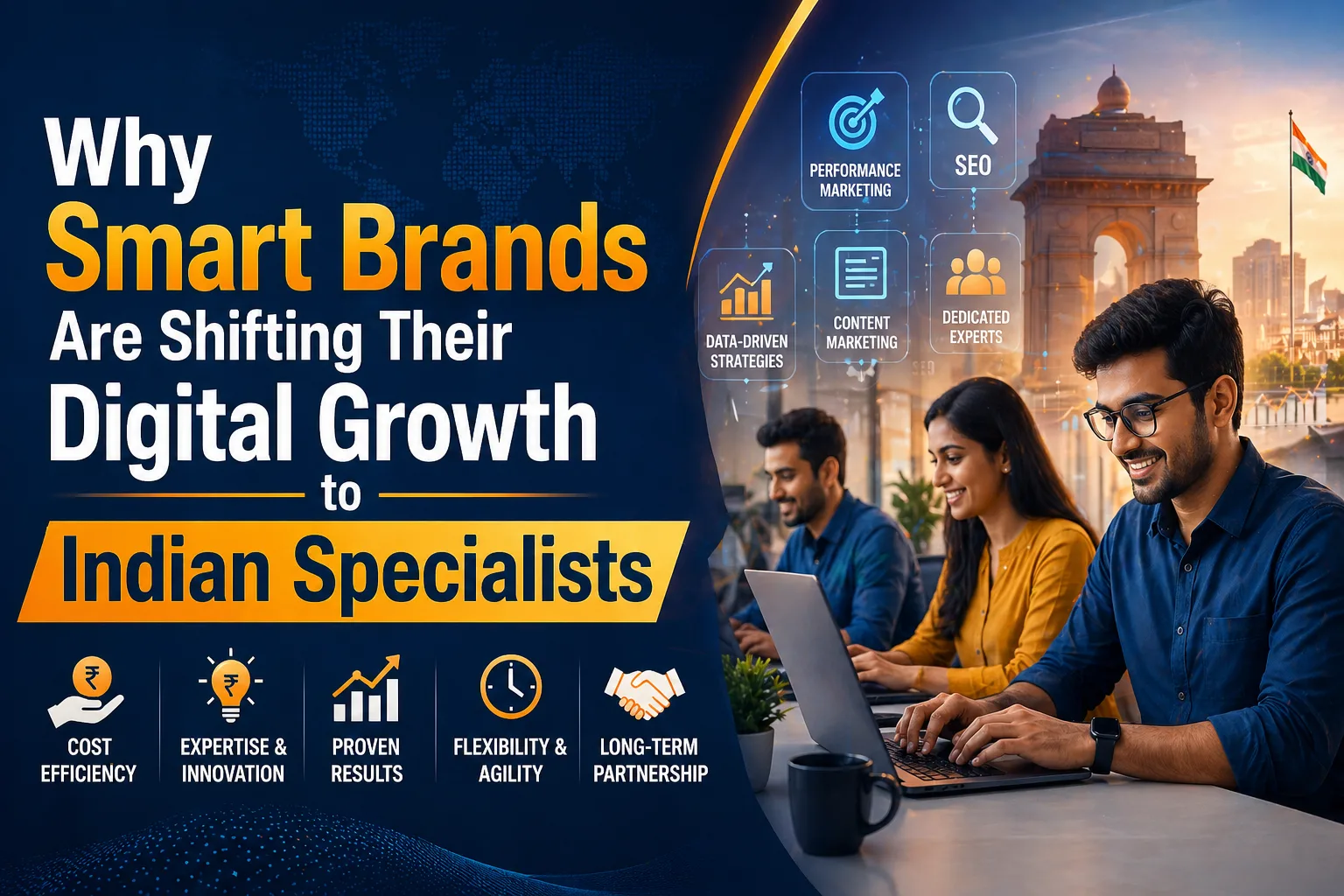
Why Smart Brands Are Shifting Their Digital Growth to Indian Specialists
In the last decade, global digital marketing has undergone a major transformation. What once relied heavily on in-house teams or expensive Western agencies is now being reshaped by a powerful shift toward outsourcing expertise. Among the most notable trends is the growing preference for Indian digital specialists who are increasingly driving growth for brands across the world.
This shift is not accidental. It is the result of a combination of skill, scalability, cost efficiency, adaptability, and performance-driven execution. Today, businesses—from early-stage startups to Fortune 500 companies—are leveraging Indian talent to scale their online presence, improve visibility, and generate sustainable revenue.
But what exactly is driving this global transition? And why are smart brands prioritizing India as their go-to destination for digital growth? Let’s explore in depth.
1. A Deep Talent Pool Built on Technical and Analytical Expertise
One of the strongest advantages India offers is its massive pool of highly skilled digital professionals. This is one of the key reasons why partnering with an SEO company in India has become increasingly popular among global brands. Every year, thousands of engineers, marketers, analysts, and content strategists enter the workforce with strong foundations in:
- Search engine optimization
- Content marketing and strategy
- Data analytics and performance tracking
- Paid advertising and conversion optimization
- Technical website optimization
- Marketing automation tools
Unlike many regions where digital marketing is treated as a creative-only field, Indian specialists often combine creativity with technical and analytical thinking. This hybrid skillset is particularly valuable in modern digital growth, where success depends on both storytelling and data interpretation.
Brands benefit from professionals who not only execute campaigns but also analyze performance metrics deeply and optimize continuously.
2. Cost Efficiency Without Compromising Quality
A major reason companies shift digital operations to India is the significant cost advantage. However, it is important to understand that this is not simply about “cheap labor.” It is about cost-to-value ratio.
Brands often find that Indian specialists deliver:
- Comparable or better output quality than Western counterparts
- Faster turnaround times
- Flexible engagement models
- Scalable team structures
This allows companies to reallocate budgets toward scaling campaigns rather than overspending on operational costs.
For startups especially, this becomes a game-changing factor. Instead of hiring one expensive in-house expert, they can access an entire team of specialists covering content, SEO, analytics, and paid media at a fraction of the cost.
3. Strong Focus on Performance-Driven Marketing
Indian digital professionals are widely recognized for their performance-oriented approach. Rather than focusing solely on branding or aesthetics, they prioritize measurable outcomes such as:
- Organic traffic growth
- Keyword rankings
- Lead generation
- Conversion rates
- Return on ad spend (ROAS)
- Customer acquisition cost (CAC)
This results-driven mindset aligns perfectly with modern business expectations. Companies no longer want “vanity metrics”; they want real business impact.
Indian specialists are trained to continuously test, measure, and optimize strategies based on data—making them highly effective partners in growth-driven environments.
4. Mastery of Global SEO and Algorithm Adaptation
Search engines constantly evolve, and staying updated is critical for maintaining online visibility. Indian specialists are known for their adaptability when it comes to algorithm updates and SEO best practices.
They actively track changes in:
- Google algorithm updates
- Core Web Vitals
- Mobile-first indexing
- User experience signals
- Semantic search evolution
- AI-driven search behavior
Because of this constant learning culture, they are often quick to adjust strategies and prevent ranking losses while competitors struggle to adapt.
This agility gives brands a strong competitive advantage in volatile digital landscapes.
5. English Proficiency and Global Communication Standards
A key factor often overlooked is communication quality. India has one of the largest English-speaking populations in the world, which makes collaboration smooth for global brands.
Indian specialists are comfortable working with:
- US-based companies
- UK and European markets
- Middle Eastern businesses
- Australian and Southeast Asian clients
This ensures that messaging, reporting, and strategy alignment remain clear and professional across time zones.
Additionally, many Indian professionals are trained in international communication styles, making cross-border collaboration seamless.
6. Time Zone Advantage for Faster Delivery Cycles
India’s time zone provides a strategic operational advantage for global companies. While Western teams end their workday, Indian teams are just starting theirs.
This creates a near 24-hour productivity cycle:
- Work assigned in the US can be completed overnight in India
- Campaign updates can be reviewed the next morning
- Faster iteration and implementation cycles become possible
For businesses, this means faster execution, quicker problem-solving, and reduced project delays.
In competitive industries, this time advantage can significantly impact speed-to-market.
7. Scalability for Growing Businesses
One of the biggest challenges businesses face is scaling their marketing operations efficiently. Hiring, training, and managing large in-house teams can be slow and expensive.
Indian digital specialists offer flexible scalability:
- Start with a small team
- Expand services as business grows
- Add new skill sets (SEO, PPC, content, design) on demand
- Scale campaigns without restructuring internal teams
This agility is particularly useful for startups and eCommerce brands experiencing rapid growth phases.
Instead of building infrastructure internally, companies can plug into existing expert systems and scale instantly.
8. Strong Freelance and Agency Ecosystem
India has one of the most developed freelance and digital agency ecosystems in the world. This ecosystem includes:
- Independent SEO consultants
- Full-service digital agencies
- Performance marketing teams
- Content writing networks
- Technical optimization experts
This variety allows businesses to choose engagement models that fit their needs—whether project-based, retainer-based, or long-term partnerships.
The competitive nature of this ecosystem also pushes quality higher, as professionals constantly refine their skills to stay relevant.
9. High Adaptability to Emerging Technologies
Digital marketing is rapidly evolving with AI, automation, and machine learning playing a bigger role than ever before. Indian specialists are quick adopters of new tools such as:
- AI content optimization platforms
- Automated bidding systems in ads
- Advanced analytics dashboards
- CRM and marketing automation tools
- SEO auditing software
This early adoption mindset helps brands stay ahead of competitors who are slower to integrate new technologies.
As marketing becomes more data-driven and automated, this adaptability becomes a critical advantage.
10. Strong Understanding of Global and Local Markets
Indian digital professionals often work with clients across multiple geographies, giving them exposure to:
- Different consumer behaviors
- Cultural communication styles
- Regional search trends
- Localized content strategies
This global exposure enables them to create strategies that are not just technically sound but also culturally relevant.
For brands targeting international markets, this becomes extremely valuable.
11. Focus on Long-Term Organic Growth
While paid advertising delivers quick results, sustainable business growth depends heavily on organic visibility. Indian specialists are particularly strong in building long-term strategies such as:
- Evergreen content creation
- Authority building through backlinks
- Technical site health improvement
- Structured content architecture
- Brand search optimization
Rather than chasing short-term spikes, they focus on building stable and consistent traffic sources that compound over time.
This long-term thinking aligns well with brands aiming for sustainable profitability.
12. Continuous Learning Culture
One of the defining traits of Indian digital professionals is their commitment to continuous learning. The industry evolves quickly, and staying relevant requires constant upskilling.
Many professionals regularly engage in:
- Online certifications
- Industry webinars
- SEO experiments and case studies
- Performance marketing forums
- AI and analytics training
This learning culture ensures that strategies remain updated and competitive.
13. Real-World Results Driving Global Trust
Ultimately, the shift toward Indian specialists is driven by results. Brands that initially outsourced small tasks often expand into long-term partnerships after seeing:
- Increased organic traffic
- Higher conversion rates
- Reduced acquisition costs
- Improved search rankings
- Better return on marketing investment
Word-of-mouth success stories have played a major role in strengthening India’s reputation as a global digital growth hub.
Conclusion
The global shift toward Indian digital specialists is not a trend—it is a structural transformation in how businesses approach online growth.
Brands are no longer just looking for service providers; they are looking for strategic partners who can deliver measurable, scalable, and sustainable growth. Indian professionals offer a powerful combination of technical expertise, affordability, adaptability, and performance focus that aligns perfectly with modern business needs.
As digital competition continues to intensify, this shift is likely to grow even stronger. Companies that embrace this model early position themselves ahead of competitors by gaining access to one of the world’s most dynamic and skilled digital talent ecosystems.
In a world where visibility determines success, choosing the right growth partner is no longer optional—it is strategic.