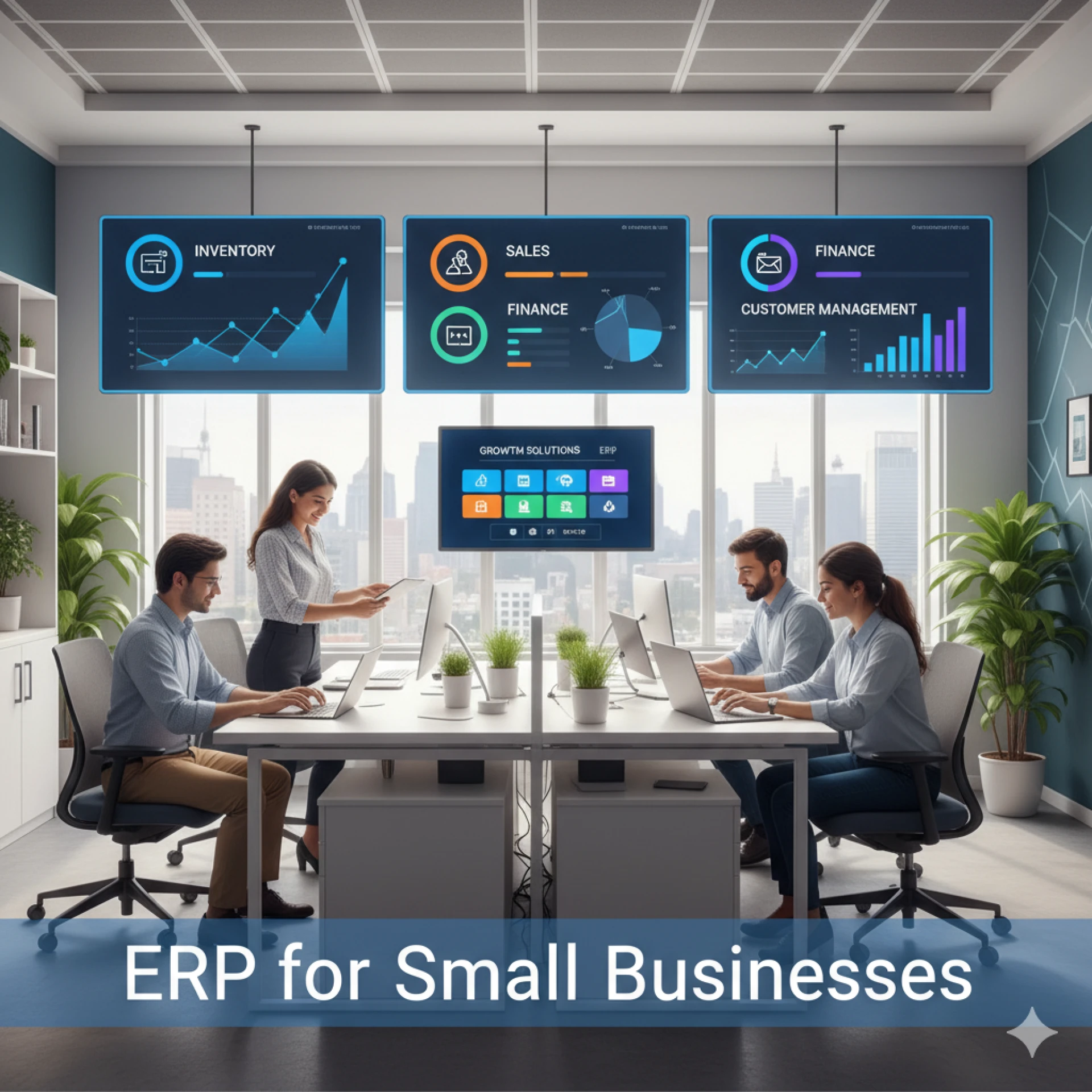
In the fast-growing Indian market, small businesses are facing increasing pressure to remain competitive, reduce operational inefficiencies, and deliver exceptional customer experiences. This is where enterprise resource planning (ERP) comes into play. An ERP system integrates core business processes—like finance, human resources, sales, procurement, and inventory management—into a single platform, allowing small businesses to operate more smoothly and make informed decisions.
With limited staff and resources, managing each function separately often leads to errors, delays, and missed opportunities. This is why ERP for small businesses is becoming a crucial investment for sustainable growth.
1. Centralized Business Management
One of the biggest challenges small businesses face is fragmented data. When different departments use separate systems or spreadsheets, inconsistencies and miscommunications are inevitable. ERP for small businesses provides a centralized system where all data is stored and accessible from a single platform.
- Unified Operations: Whether it’s tracking inventory levels, managing supplier orders, or handling customer inquiries, every operation is connected.
- Informed Decision-Making: Managers can access real-time dashboards, reports, and analytics to make quick, data-driven decisions.
- Reduced Errors: Centralized data reduces manual input errors and ensures all departments are working with the same information.
This centralization is especially beneficial for Indian small businesses with multiple branches or distributors, ensuring smooth coordination across locations.
2. Cost and Time Efficiency
Small businesses in India often operate with tight budgets and limited manpower. Manual processes consume time and increase operational costs. Enterprise resource planning automates repetitive tasks, leading to substantial savings in both time and money.
- Automation of Routine Tasks: Invoicing, payroll, stock updates, and order processing can be automated, reducing human effort and errors.
- Resource Optimization: ERP helps identify underutilized resources or redundant processes, allowing businesses to reallocate staff or inventory efficiently.
- Faster Workflows: With seamless communication between departments, tasks that once took days can now be completed in hours.
The cost saved through ERP implementation can then be invested in growth-oriented activities like marketing, new product development, or customer service enhancements.
3. Improved Customer Experience
Customer satisfaction is critical for small businesses to survive and grow in a competitive market. ERP for small businesses enables a 360-degree view of the customer, improving service quality and responsiveness.
- Real-Time Order Tracking: Businesses can monitor orders from placement to delivery, ensuring customers receive timely updates.
- Personalized Services: Insights into customer behavior and purchase history allow businesses to tailor offers and promotions.
- Faster Resolution of Queries: Customer complaints and requests are handled efficiently because all relevant information is readily available in the ERP system.
By delivering better service, small businesses in India can strengthen customer loyalty and build a strong brand reputation.
4. Compliance and Accurate Reporting
Managing finances and compliance is often a daunting task for small businesses, especially with changing tax regulations like GST. Enterprise resource planning simplifies compliance and ensures accuracy in reporting.
- Automated Tax Calculations: ERP systems automatically calculate taxes, reducing the risk of errors.
- Regulatory Compliance: Generate reports that comply with Indian financial regulations, avoiding fines and penalties.
- Audit-Ready Reports: All transactions are recorded systematically, making audits faster and less stressful.
Accurate reporting not only keeps the business legally compliant but also helps in strategic planning and performance evaluation.
5. Scalability and Growth
Small businesses aspire to grow, but growth often brings complexity. Manual processes or outdated systems cannot scale effectively. ERP for small businesses offers flexibility to accommodate business expansion without disruption.
- Add New Modules Easily: As the business grows, new modules like CRM, e-commerce integration, or advanced analytics can be added seamlessly.
- Support Multi-Location Operations: ERP allows businesses to manage multiple branches, warehouses, and suppliers under one platform.
- Future-Proof Solution: With cloud-based ERP options, businesses can scale without investing heavily in IT infrastructure.
This scalability ensures that small businesses can adapt quickly to market demands and remain competitive.
Conclusion
In India’s dynamic business environment, adopting an ERP system is no longer optional for small businesses—it’s a necessity. From centralizing operations and automating workflows to improving customer satisfaction and ensuring compliance, enterprise resource planning empowers businesses to function efficiently and scale effectively.
By investing in ERP for small businesses, entrepreneurs can focus on growth strategies and innovation while letting technology handle operational complexities.