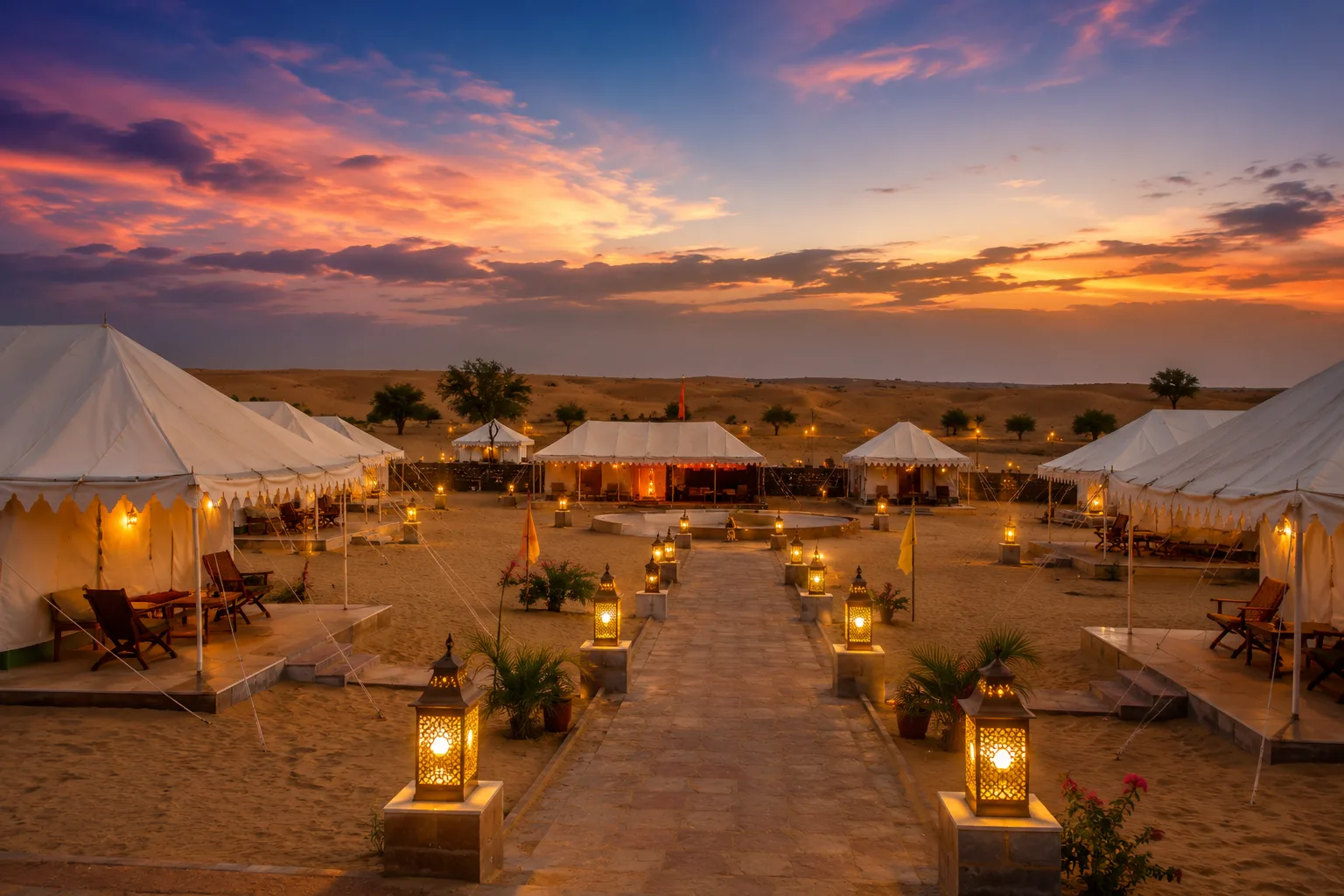
Jaisalmer offers two experiences that are closely connected but visually very different. Inside the city, travellers discover golden sandstone architecture, historic havelis, temples, markets and the living character of Jaisalmer Fort. Outside the city, the built environment gradually gives way to the open landscape and changing light of the Thar Desert.
A rushed itinerary can prevent visitors from experiencing either side properly. They may move quickly through monuments during the day, travel toward the desert for sunset and return exhausted without enjoying their accommodation or the evening atmosphere.
Lohagarh Desert Resort allows travellers to approach the journey more thoughtfully. By grouping city attractions together and reserving separate time for the resort, guests can experience history, desert activities, cultural performances and relaxation without making every day feel like a race.
Why an Overpacked Jaisalmer Schedule Becomes Tiring
Travellers often underestimate the time required to explore Jaisalmer. The city appears compact on a map, but walking through the fort, visiting havelis, travelling between attractions and navigating markets can occupy most of a day.
The desert is located outside the main urban area, so it should not be treated as another short city stop. Road transfers, activity preparation, sunset timing and the evening programme all require additional time.
When travellers attempt everything in one day, they may spend more time watching the clock than understanding the destination. Children become tired, older family members may struggle with continuous movement, and couples have little opportunity to enjoy the surroundings together.
A balanced itinerary limits the number of major activities each day. It also includes realistic time for meals, rest, photography, traffic and unexpected delays.
Separate the City Experience from the Desert Experience
Jaisalmer city and the Thar Desert deserve different types of attention. The city is best understood through architecture, stories, craftsmanship and walking. The desert requires patience, suitable timing and a willingness to observe the landscape.
Travellers can reserve one day for the city and another for Lohagarh Desert Resort. This separation prevents the resort from becoming merely a place to sleep after an exhausting sightseeing schedule.
A city day can focus on Jaisalmer Fort, selected havelis, a museum or market and an appropriate viewpoint. The desert day can begin more slowly and include relaxation, safari activities, sunset and an evening cultural programme.
This approach also improves packing and clothing decisions. Comfortable walking attire can be used during city exploration, while desert clothing can reflect outdoor temperature, wind and seasonal conditions.
Planning a Focused Jaisalmer City Day
A well-designed city day does not require visiting every listed attraction. Travellers should select places that represent different aspects of Jaisalmer.
Jaisalmer Fort introduces the city’s defensive, residential and religious history. Historic havelis demonstrate the craftsmanship and prosperity associated with merchant families. Markets reveal textiles, jewellery, leatherwork and everyday commercial life.
A possible city plan may include:
- An early visit to Jaisalmer Fort
- Time inside selected temples or heritage areas
- A visit to one or two major havelis
- Lunch and a short rest
- A museum, market or lake visit
- Sunset from an appropriate city viewpoint
Opening hours, access rules and ticket prices should be verified through current official or attraction sources because these details can change.
Why the Resort Should Not Be Treated Only as Accommodation
Travellers sometimes select a desert property because of its location but spend almost no time experiencing it. They arrive after sunset, eat quickly, sleep and depart early the next morning.
This removes much of the value of staying near the desert. Accommodation is only one part of the experience. The changing landscape, safari activities, sunset, cultural performances, meals and night sky all contribute to the journey.
At Lohagarh Desert Resort, guests stay in Deluxe or Super Deluxe Swiss Tents that combine a desert atmosphere with private washrooms and essential modern comfort. The property also organises desert and cultural experiences according to package, season and availability.
Reserving meaningful time at a Desert Resort in Jaisalmer allows visitors to understand how the Thar environment changes from afternoon through evening and into the next morning.
Beginning the Resort Day at a Slower Pace
A resort day does not need to begin with a long list of activities. Guests can use the morning to enjoy breakfast, spend time around their accommodation and prepare for the later desert programme.
Families may appreciate this pause after a demanding city day. Children can rest, parents can organise belongings, and senior travellers can choose which activities suit their comfort.
Couples may prefer an unhurried morning with conversation and photography. Group travellers can review the schedule and ensure everyone understands meeting times.
The slower beginning becomes part of the experience rather than empty time. Modern holidays often become exhausting because every hour is expected to produce an attraction or photograph. A resort stay creates value by allowing travellers to enjoy where they are without immediately leaving for somewhere else.
Choosing Desert Activities Carefully
Camel and jeep experiences provide different ways of exploring the landscape. Guests should understand the duration, physical requirements, safety instructions and included services before choosing.
A camel experience may suit travellers seeking a slower connection with the dunes, while a jeep excursion generally introduces greater movement. Neither should be selected only because it appears in a photograph or travel reel.
Families should ask about age suitability. Travellers with back, joint or mobility concerns should discuss whether the activity is appropriate. Sun protection, secure footwear, water and weather-suitable clothing are also important.
The resort team should confirm operational details for the selected date. Weather and local conditions may influence timing or availability, so flexibility should remain part of the plan.
Giving Sunset Enough Time
Sunset is often treated as a short photo stop, but the experience becomes more meaningful when guests arrive early enough to observe the landscape changing.
The light begins to soften before the sun reaches the horizon. Sand, clothing and facial tones appear different during this period, giving photographers time to create natural images without rushing.
Families can enjoy the moment together, while couples may prefer a quieter location within the approved programme. Visitors should avoid spending the entire experience looking through a phone or camera.
After sunset, temperatures may fall quickly during cooler months. Carrying an extra layer can make the transition to the evening programme more comfortable.
A well-planned sunset should feel like a central part of the day rather than a hurried activity between a road transfer and dinner.
Cultural Evenings as More Than Entertainment
Folk music, traditional dance and a bonfire can introduce guests to the performance traditions associated with Rajasthan. These experiences become more meaningful when visitors observe respectfully and understand that the performers represent living cultural practices.
Families can use the programme to introduce children to regional instruments, movement and clothing. International visitors may discover an accessible point of connection with Rajasthan beyond monuments.
Guests should avoid treating performers only as decorative backgrounds for social-media content. Listening, watching and responding respectfully creates a more genuine cultural exchange.
The resort’s evening programme may vary according to weather, season and package. Travellers should confirm what is planned rather than assuming every advertised activity will operate identically each night.
Dining without Rushing toward the Next Attraction
A resort dinner allows the day to slow down after sightseeing or safari activities. Guests can discuss what they experienced, compare photographs and spend uninterrupted time together.
This is particularly valuable for multi-generational families. During the day, different relatives may prefer different activities, but dinner brings everyone back to the same table.
Visitors unfamiliar with regional cuisine can ask about flavours and ingredients. Dietary restrictions and allergies should be communicated before arrival whenever possible.
A Luxury Resort in Jaisalmer should not be evaluated only by tent interiors. Dining, service, activity coordination and the overall rhythm of the stay all influence whether guests feel comfortable and cared for.
The meal becomes part of the destination when it reflects regional hospitality and supports conversation rather than merely filling a gap in the schedule.
How Families Can Create a Balanced Plan
Families should plan according to the youngest and oldest travellers rather than the most energetic member of the group.
A practical schedule could include one focused city day followed by one desert resort day. More time may be necessary when the group wants a relaxed pace or includes guests with mobility concerns.
Children should not be expected to remain interested in several consecutive monuments. Alternating architecture with markets, food, outdoor experiences and rest can keep the journey engaging.
Senior relatives may choose cultural programmes and sunset while skipping physically demanding activities. They should still feel included in the main shared moments.
This flexibility can make Lohagarh Desert Resort relevant for travellers comparing the Best Resort in Jaisalmer for a family holiday involving different generations.
How Couples Can Balance Exploration and Privacy
Couples may want memorable photographs and activities but also need time that is not controlled by a fixed itinerary.
They can explore major city attractions on one day and reserve the next for a slower resort experience. One safari activity, sunset, dinner and the night atmosphere may provide enough structure without making the day feel crowded.
Accommodation in a Swiss Tent gives couples a private base between activities. They can prepare for photography, rest after outdoor exploration or simply enjoy a quieter setting away from city movement.
The most meaningful moments may not be formally scheduled. A morning conversation, shared sunset or time beneath the night sky can become more memorable than trying to complete every activity advertised in a destination guide.
How Many Days Should Travellers Plan?
The ideal length depends on arrival time, interests and travel pace. A two-night trip can provide an introduction, but it may require careful choices. Three nights generally allow more comfortable separation between the city and desert experiences.
A balanced plan might include:
- Arrival and a light city evening
- One full day for Jaisalmer attractions
- One day for the resort and desert programme
- Departure after breakfast or an additional relaxed morning
Travellers adding long road journeys before or after Jaisalmer should avoid making the arrival and departure days too demanding.
It is better to experience fewer places attentively than to return home with a long checklist and little understanding of what made each location meaningful.
Questions to Ask before Confirming the Stay
Before booking, ask the resort about:
- Tent category and facilities
- Check-in and check-out timing
- Meal inclusions
- Camel and jeep activity details
- Sunset arrangements
- Cultural programme
- Bonfire availability
- Children’s activity suitability
- Additional costs
- Seasonal or weather restrictions
- Transport from Jaisalmer
- Cancellation and amendment policies
Clear information helps travellers build the city itinerary around confirmed resort arrangements rather than relying on assumptions.
Packages and operating conditions can change, so obtain current details directly for the selected travel date.
Conclusion
A complete Jaisalmer holiday should allow visitors to experience both the city and the desert without forcing them into the same hurried day.
The city introduces golden architecture, forts, havelis, markets and historic craftsmanship. Lohagarh Desert Resort adds another dimension through Swiss Tent accommodation, safari experiences, sunset, cultural performances and quieter time in the Thar landscape.
Separating these experiences gives each one enough space. Travellers walk through the city with greater attention and arrive at the resort with enough energy to appreciate the afternoon, evening and following morning.
The objective is not to reduce the number of things enjoyed. It is to improve their quality. When sightseeing and resort time are balanced carefully, Jaisalmer becomes more than a collection of attractions—it becomes a connected journey through history, landscape, culture and hospitality.