Book printing has become increasingly diverse. Publishers and printers now handle different quantities, multiple editions, customized content, and faster delivery requirements.
These trends are increasing interest in roll-fed digital printing.
Changing Book Printing Requirements
Traditional high-volume production remains important, but not every book order requires the same quantity. Some publishers need smaller quantities, while others need frequent reprints.
Digital printing provides flexibility for these changing requirements.
Advantages of Roll-Fed Production
Roll-fed printing uses continuous paper, allowing the printing process to run continuously.
For suitable applications, this can support:
- High-volume page production
- Streamlined paper handling
- Flexible digital workflows
- Variable content
- Faster job transitions
Digital Book Production
Digital technology can be particularly useful when publishers need to produce multiple titles or editions.
A digital file can be updated or replaced without preparing a new physical printing plate.
Variable Data Applications
Educational and customized publications can benefit from variable data capabilities. Different versions of documents can be produced through the same digital workflow.
DIGIGRAF
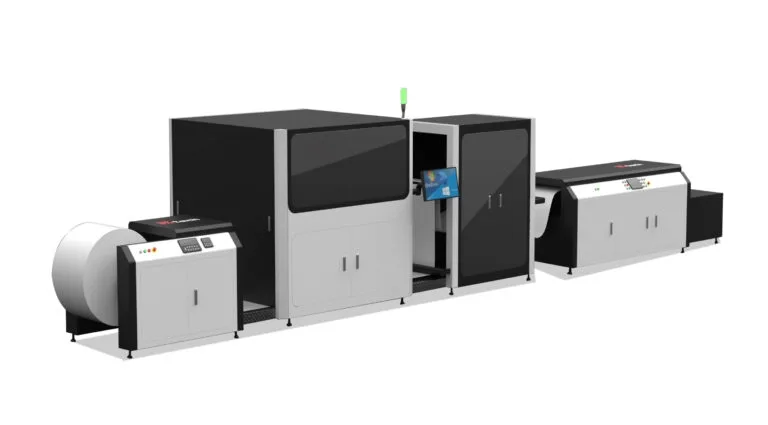
DIGIGRAF from Ronald Web Offset Pvt. Ltd. provides a roll-fed digital inkjet solution for modern printing applications.
Businesses researching Roll Fed Digital Inkjet Printing Machine technology can evaluate DIGIGRAF for their book and commercial printing requirements.
DIGIGRAF is an advanced Digital Inkjet Roll Fed Printing Machine designed to help commercial printers, book manufacturers, educational publishers, government printing organizations, and print service providers achieve faster production, outstanding print quality, and greater operational flexibility. Built for continuous roll-fed printing, DIGIGRAF enables businesses to efficiently handle both short-run and high-volume print jobs while reducing setup time and improving overall productivity.
Whether you’re producing educational books, manuals, transactional documents, catalogues, or personalized publications, DIGIGRAF delivers sharp text, vibrant graphics, and consistent output with the speed modern printing operations demand.
DIGIGRAF – Smart Roll Fed Digital Inkjet Printing Solution for Modern Print Businesses
The printing industry is evolving rapidly as publishers and commercial printers demand faster turnaround times, reduced production costs, and the flexibility to print exactly what customers need. Traditional printing methods often require extensive setup, longer preparation times, and larger print volumes to remain economical. Digital printing has transformed this landscape by enabling efficient production without lengthy setup processes, making it ideal for both short-run and variable-volume printing.
DIGIGRAF addresses these modern printing requirements with advanced roll-fed digital inkjet technology that combines speed, accuracy, and operational efficiency. Its continuous web printing capability supports uninterrupted production, making it an excellent solution for organizations seeking reliable, high-performance printing across a wide range of applications.
Unlike conventional production methods, DIGIGRAF allows print businesses to respond quickly to changing customer demands, produce personalized content, minimize material waste, and optimize production schedules. This flexibility helps printers improve productivity while maintaining exceptional print consistency across every job.
Designed for commercial and industrial printing environments, DIGIGRAF supports applications ranging from educational publishing and book production to transactional printing, manuals, reports, and business documents. Its efficient workflow enables print providers to handle multiple projects with confidence while delivering professional-quality results that meet today’s market expectations.
As demand continues to grow for faster delivery, customized printing, and shorter production cycles, DIGIGRAF provides a future-ready solution that empowers printing businesses to remain competitive in an increasingly digital and customer-driven industry.
Conclusion
The combination of continuous production and digital flexibility makes roll-fed inkjet technology an interesting option for modern book printers. As demand becomes more varied, flexible production systems can help businesses adapt to new printing requirements.