You've perfected your recipes. You've trained your staff. Your dining room is always packed on weekends. But every single day, while your team is hustling through a lunch rush or a chaotic Friday dinner service, a phone is ringing somewhere in your restaurant and nobody is picking it up.
That unanswered call isn't just a missed conversation. It's a missed order, a missed reservation, or a loyal customer who just decided to call your competitor instead. And the worst part? You'll never even know it happened.
Restaurant owners spend enormous energy optimizing menus, managing food costs, and hiring great staff. But almost none of them are tracking one of the most silent revenue killers in the business: missed restaurant phone calls. And the numbers, when you finally look at them, are staggering.
The Scale of the Problem: It's Bigger Than You Think
The average busy restaurant receives anywhere from 50 to 150 phone calls per day. During peak service hours like Friday evenings, weekend brunches, and holiday rushes, that number can spike dramatically. Now ask yourself honestly: what percentage of those calls actually get answered?
Industry data consistently shows that restaurants miss up to 30–40% of incoming calls during peak hours. That's not a rounding error. That's nearly every third or fourth person who picks up the phone to order from you, quietly going somewhere else.
If your restaurant takes an average phone order of $45 and you miss just 10 calls a day, that's $450 in lost daily revenue. Over a month, that's $13,500. Over a full year, potentially over $160,000 vanished simply because no one picked up the phone. The restaurant industry crossed $1 trillion in revenue in 2024, yet experts estimate it is bleeding over $100 billion annually to missed calls, human error, and outdated workflows.
When Does It Happen? The Anatomy of a Missed Call
Restaurant missed orders don't happen randomly. They follow predictable patterns that, once you recognize, make the problem feel both more frustrating and more fixable.
During rush hour, your staff is juggling tables, expediting food, and managing in-person guests. The phone rings once, twice, three times and by the time someone gets to it, the caller has already hung up.
After hours, a customer wants to place a large catering order for tomorrow morning. They call at 10:30 PM. Nobody answers. They Google another caterer, find one, and book them on the spot.
During understaffed shifts, you're two people short on a Tuesday because of last-minute call-outs. Every available hand is stretched beyond capacity. The phone becomes the last priority or no priority at all.
On-hold abandonment is another silent killer. A customer gets placed on hold during a complicated order, waits three minutes, gives up, and never calls back. Research shows that over 60% of customers who are placed on hold will hang up within 90 seconds.
Language barriers also play a bigger role than most owners realize. A non-English speaking customer calls, struggles to communicate, and the call ends in mutual frustration with no order placed and no goodwill built.
Each of these scenarios represents a real customer, a real order, and real money leaving your restaurant. The painful reality is that most of these customers don't complain. They just don't come back.
The Hidden Costs Go Far Beyond the Lost Order
When we talk about phone order loss, it's easy to only calculate the immediate hit. But the true cost of unanswered calls in a restaurant runs much deeper than a single missed ticket.
Lost lifetime value is where the real damage accumulates. A customer who can't get through to your restaurant once will often form a new habit elsewhere. If that customer would have ordered from you twice a month for the next two years, the real cost of one missed call could exceed $2,000 in lifetime revenue, gone simply because the line rang out.
Reputation damage is increasingly real in the age of Google reviews. Customers who repeatedly can't get through don't always call it a phone issue. They call it bad service. One-star reviews referencing poor communication can suppress your restaurant's visibility and turn away potential new customers long before they ever step through your door.
Lost catering and large-group opportunities are often the highest-margin revenue you could capture. A single missed catering inquiry for a corporate lunch could represent $800 to $2,000 in one order. These callers almost never try twice and they move on within minutes. If you're serious about recapturing this kind of revenue, pairing better call handling with 10 proven ways to boost restaurant sales in 2026 gives you a complete picture of where restaurants are leaving money on the table.
For multi-location restaurant groups, every one of these losses multiplies across every location, every single day.
Why Traditional Fixes Don't Solve It
Most restaurant owners who recognize this problem reach for familiar solutions and most of them fall short.
Hiring extra staff to answer phones adds $30,000 to $45,000 in annual payroll per person, and even dedicated phone staff can't cover every hour of every day. Voicemail is even worse since fewer than 20% of customers leave a message in a service context. The rest hang up and call someone else. Redirecting customers to third-party delivery apps like UberEats or DoorDash captures the order but surrenders 15 to 30% in commission, trading a revenue problem for a margin problem.
Some restaurant groups have explored early voice AI platforms like SoundHound to handle this gap, but the technology has evolved rapidly and many operators are now discovering that far more capable and restaurant-specific options exist today. If you're evaluating your choices, it's worth reviewing the best alternatives to SoundHound for restaurant voice AI before committing to any platform.
None of these solutions address the root cause. Your restaurant needs a reliable, intelligent, always-available way to handle every incoming call without the cost and limitations of human staff.
The Fix: AI Phone Agents Built for Restaurants
This is where the landscape has shifted dramatically. AI voice technology has matured to the point where it can handle complex, real-world restaurant phone calls. Not rigid button-press menus, but actual natural conversations that understand orders, modifications, special requests, and customer questions.
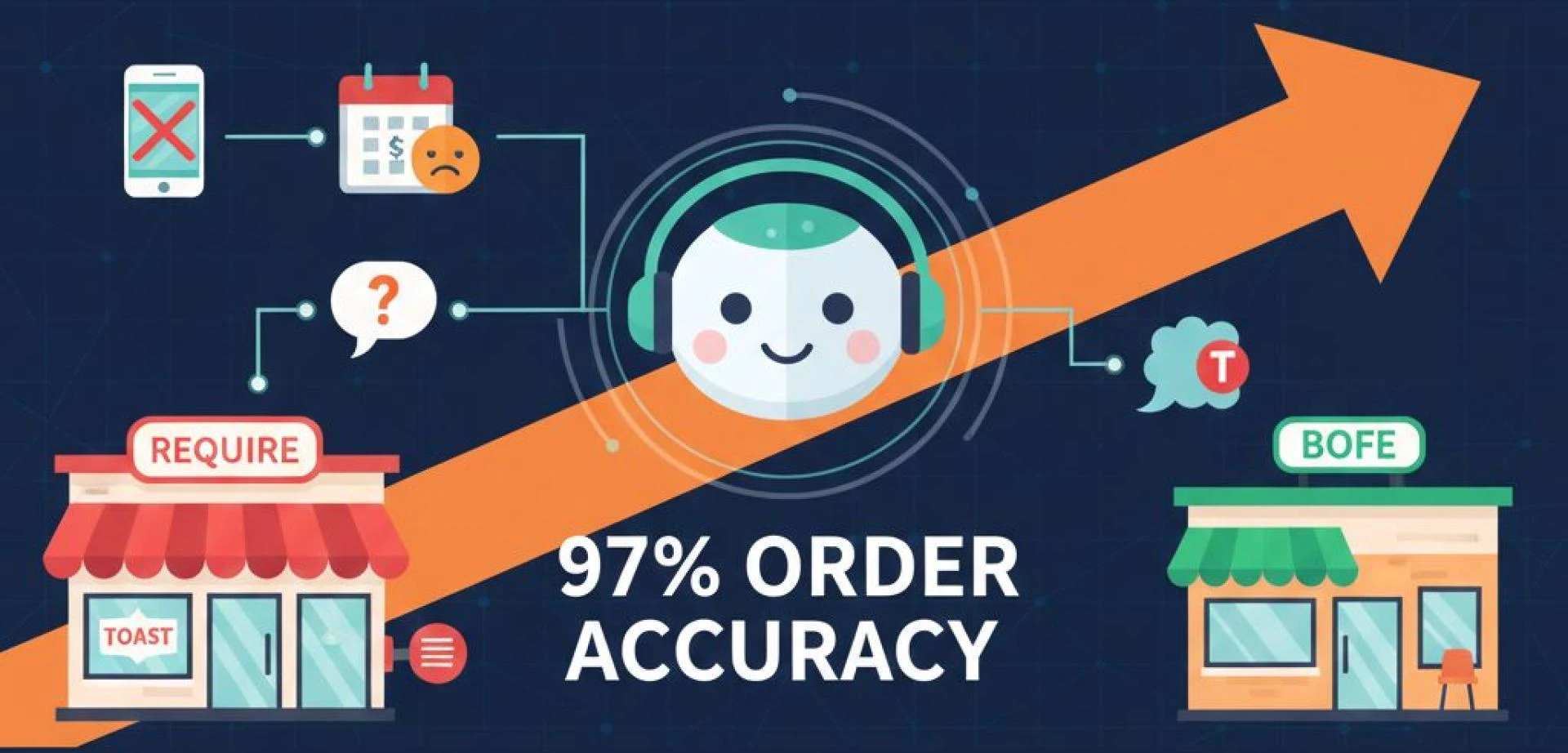
Certus AI, the AI phone agent built specifically to eliminate missed restaurant calls, answers every single incoming call 24 hours a day, 7 days a week. No hold times. No missed rushes. No after-hours voicemail dead zones. It takes orders directly into your POS system, manages reservations, upsells add-ons intelligently, and handles multiple languages, all while sounding like your best-trained employee.
Restaurants using Certus AI report recovering an average of $9,051 per month in previously lost revenue. The setup takes under an hour with no new hardware and no infrastructure overhaul. Restaurants simply forward their existing number and the system handles everything from there.
The Bottom Line
Missed restaurant phone calls are not an inconvenience. They are a measurable, trackable, and completely fixable revenue problem that most restaurant owners are currently leaving entirely unaddressed. Every unanswered call is a customer who made the effort to reach you and was turned away by silence.
The good news is that this is one of the most solvable problems in restaurant operations today. You don't need more staff, longer hours, or a bigger budget. You need a smarter system, one that never puts a guest on hold, never misses a shift, and never lets a call go unanswered.
Your customers are already calling. The only question is whether you're there to answer.
Ready to stop losing revenue to unanswered calls? Learn how Certus AI is helping restaurants recover thousands every month, one answered call at a time.