
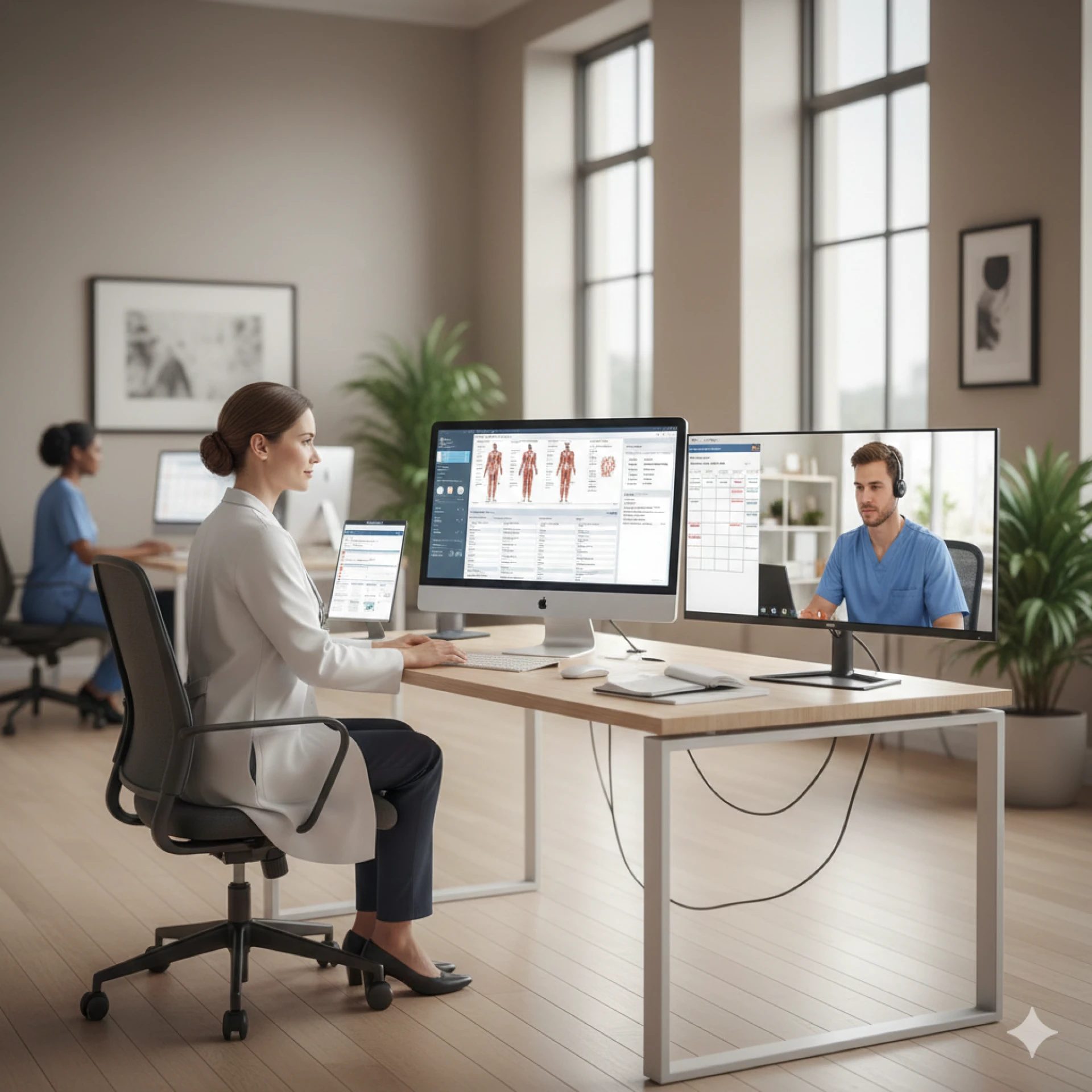
Every clinic has busy days. That part never changes. Patients arrive early, phones ring nonstop, schedules shift, and unexpected situations pop up before lunch. Yet somehow, some practices still feel calm and organized while others constantly feel behind.
It’s not luck.
It’s not bigger teams.
And it’s definitely not lighter workloads.
The difference usually comes down to how the daily workload is handled — especially the tasks that quietly pile up in the background.
The Feeling of Always Catching Up
Many healthcare teams start the day with a plan but end it reacting to problems. Messages wait longer than expected. Callbacks get delayed. Staff multitask constantly. Providers squeeze documentation between appointments. Everyone works hard, but the day still feels unfinished.
The issue isn’t effort — it’s overload.
Administrative work doesn’t stop. Appointment coordination, insurance details, follow-ups, patient communication, and data entry continue all day long. When these tasks sit on the same shoulders as patient care, the workload becomes heavy fast.
Over time, the team begins operating in “catch-up mode.” Instead of staying ahead, they’re always recovering from yesterday.
What Organized Practices Do Differently
Practices that feel on track haven’t removed responsibilities. They’ve redistributed them.
Rather than forcing in-office staff to juggle everything, they create separation between patient-facing work and background administrative work. That small shift changes the entire pace of the day.
With virtual madical assistant services, routine tasks are handled consistently behind the scenes. The front desk no longer has to manage every call while greeting patients. Providers don’t need to pause between visits for minor documentation updates. Staff focus on what’s in front of them instead of ten things waiting next.
And that’s where the calm starts.
Small Improvements That Add Up
Organization in a clinic rarely comes from one big change. It comes from dozens of small improvements happening together.
Appointments stay accurate.
Patients receive timely responses.
Follow-ups don’t slip through gaps.
Schedules stop collapsing mid-day.
When virtual madical assistant services manage recurring administrative work, the office environment becomes predictable. Predictability lowers stress. Lower stress improves performance. Better performance improves patient experience.
Suddenly the practice isn’t rushing — it’s moving steadily.
Why Staff Morale Changes First
Interestingly, the first noticeable improvement isn’t always financial or operational. It’s emotional.
Staff feel less pressure when they’re not constantly interrupted. They can complete one task before jumping to another. Conversations with patients become more attentive instead of hurried.
The workday feels manageable again.
Teams using virtual madical assistant services often report that the atmosphere shifts from reactive to controlled. Instead of dealing with problems all day, they handle situations as they come without panic.
That confidence spreads quickly across the office.
Patients Notice the Difference Too
Patients may never see the systems behind a clinic, but they absolutely feel the results.
Calls get answered sooner.
Appointments run closer to schedule.
Questions receive clear follow-ups.
A calm practice builds trust. When operations feel smooth, patients assume care is organized too. Even small