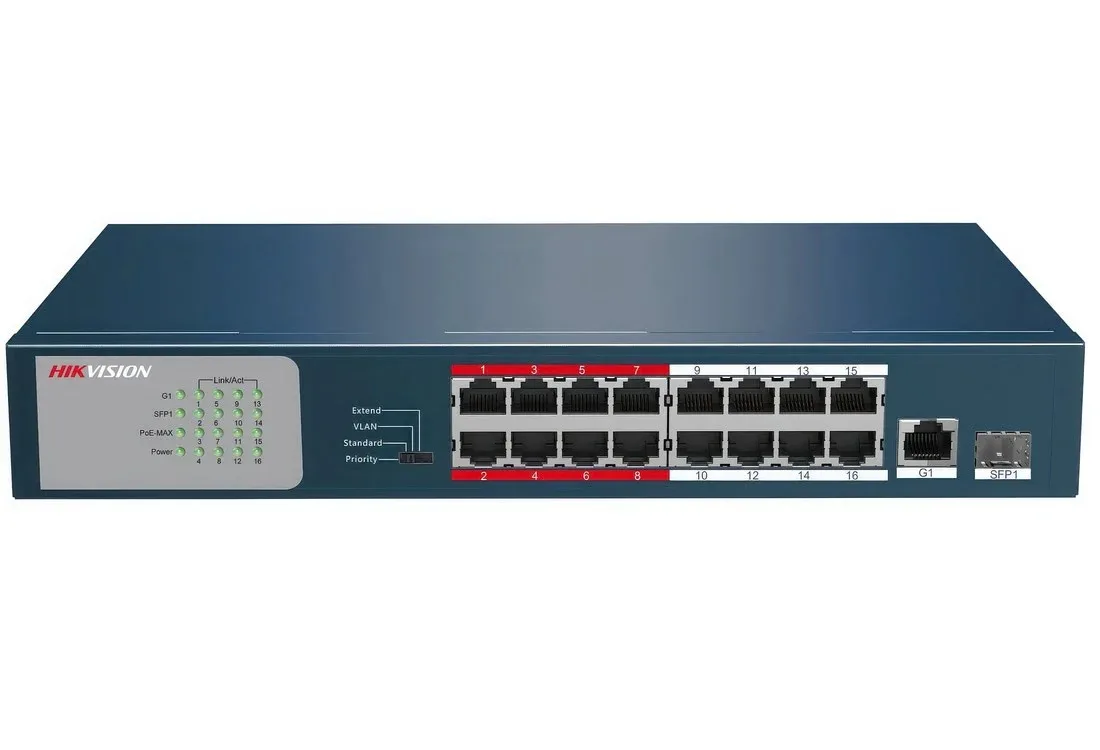
Modern CCTV systems have evolved far beyond simple video recording. Today’s security cameras support high-definition video, remote monitoring, night vision, AI analytics, and cloud integration. To support these advanced features efficiently, Power over Ethernet switches have become an essential component of modern CCTV camera systems.
This article explains what PoE switches are, why they are critical for CCTV installations, and how they simplify, secure, and scale surveillance networks.
What Is a PoE Switch?
A PoE (Power over Ethernet) switch is a network switch that delivers both data and electrical power through a single Ethernet cable. Instead of running separate power lines for each CCTV camera, PoE switches power cameras directly using standard Cat5e or Cat6 cables.
This makes Hikvision DS-3E0109P-EM 9 Port Poe Switch ideal for IP-based CCTV systems, which rely on network connectivity to transmit video data.
- Simplified Installation and Reduced Cabling Traditional CCTV setups require:
One cable for data
One cable for power
With PoE switches:
Only one Ethernet cable is needed per camera
Benefits:
Faster installation
Less wiring clutter
Lower labor and material costs
Cleaner and more professional setups
This is especially important for large buildings, warehouses, offices, and outdoor camera deployments.
- Centralized Power Management PoE switches allow all cameras to be powered from a single central location.
Why this matters:
Easy to reboot cameras remotely
No need to access each camera physically
Faster troubleshooting during camera failures
Many managed PoE switches even allow port-level power control, enabling administrators to restart individual cameras with a click.
- Reliable Power for High-Performance Cameras Modern CCTV cameras often include:
4K or HD video
Infrared night vision
PTZ (Pan-Tilt-Zoom) motors
AI-based motion detection
These features require stable power delivery. PoE standards such as PoE+ (802.3at) and PoE++ (802.3bt) provide higher wattage, ensuring cameras operate reliably without power drops.
- Enhanced System Scalability As security needs grow, CCTV systems must be easy to expand.
Write on Medium
PoE switches make scaling simple:
Add a new camera
Connect it to an available PoE port
The switch automatically supplies power and data
There’s no need to install new power outlets, which makes PoE ideal for expanding surveillance networks in existing buildings.
- Improved System Reliability and Backup Power PoE switches can be connected to a UPS (Uninterruptible Power Supply).
Result:
All cameras stay online during power outages
Continuous surveillance when it matters most
Without PoE, each camera would require its own backup power source — making UPS integration costly and complex.
- Better Network Control and Security Managed PoE switches offer advanced features such as:
VLANs for camera network isolation
Bandwidth prioritization (QoS)
Port monitoring and alerts
Unauthorized device detection
These features help protect CCTV footage from network congestion, cyber threats, and unauthorized access.
- Cost-Effective Long-Term Solution While PoE switches may have a higher upfront cost, they significantly reduce:
Electrical installation expenses
Maintenance costs
Downtime due to power issues
Over time, PoE-based CCTV systems prove more economical and easier to manage than traditional setups.
Conclusion
PoE switches are no longer optional for modern CCTV camera systems — they are essential. By delivering power and data over a single cable, PoE switches simplify installation, improve reliability, enhance security, and support future expansion.