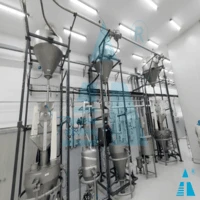
In modern industrial processing units, efficiency, hygiene, and material flow speed are key to achieving maximum productivity. For decades, factories relied on mechanical conveyors such as belts, chains, and screw systems. While they are still used in many applications, industries today are rapidly shifting towards a pneumatic conveying system — a smarter, cleaner, and more energy-efficient choice for bulk material handling.
A pneumatic conveying system uses compressed air or gas to move powders, granules, and bulk solids through enclosed pipelines. This makes the entire conveying operation faster, dust-free, and more reliable compared to conventional mechanical handling methods.
Below is a clear comparison to understand why industries prefer pneumatic solutions over mechanical conveyors.
Mechanical Conveying vs Pneumatic Conveying — The Key Difference
FeatureMechanical ConveyingPneumatic Conveying SystemMovement MethodBelt / Screw / Motor DriveAir Pressure / VacuumInstallation spaceRequires large floor areaCompact & pipeline-basedMaintenanceHigh – moving parts wear outLow – fewer mechanical partsDust controlNot fully enclosedFully dust-free operationProduct contaminationRisk existsVery minimal riskFlexibilityDifficult to rerouteEasy to modify pipeline layout
Mechanical conveyors work like traditional transport lines, but require more space, manpower, lubrication, and frequent part replacement. On the other hand, a pneumatic conveying system offers silent, clean, pressure-controlled movement ideal for fast, long-distance material transfer.
Why Pneumatic Conveying System is Better for Modern Industries
1. Dust-Free & Hygienic Material Transfer
One of the biggest advantages of a pneumatic conveying system is that it is completely enclosed, preventing dust formation and external contamination. This makes it ideal for industries like:
• Food & FMCG
• Pharmaceuticals
• Chemicals & minerals
• Plastic granules & powder handling
Health, cleanliness & product purity remain uncompromised.
2. Low Maintenance & No Mechanical Wear
Mechanical conveyors have chains, bearings, belts, and motors — all of which wear out over time. In comparison, a pneumatic conveying system has very few moving parts, resulting in:
✔ Very low maintenance cost
✔ No frequent breakdowns
✔ Long operational life
Less downtime means more productivity.
3. Space-Saving & Flexible Layout
Mechanical conveyors require long open pathways, but pneumatic lines are compact and can be routed vertically, horizontally, or through tight factory corners. This is a huge benefit for plants with space limitations.
A pneumatic conveying system can also be modified or extended easily without re-building conveyor structures — perfect for expansion-ready industries.
4. Safe Handling of Fragile & Hazardous Material
Some products break easily or react when exposed to air and surroundings. Pneumatic transport keeps materials protected throughout movement. It helps maintain particle integrity, especially for:
• Sugar powder
• Flour & starches
• Chemicals & pharma ingredients
• Plastic resin or granules
This ensures better final product quality and minimal wastage.
5. Greater Energy Efficiency & Faster Transfer Rate
Unlike mechanical conveying, where energy loss happens through friction and rotation, a pneumatic conveying system uses air flow that travels faster and transports material in bulk with less effort. It supports continuous operation with smooth flow and uniform batching.
More output per minute = more revenue for the plant.
Why Future-Ready Plants Are Moving to Pneumatic Conveying
Modern manufacturing demands:
✔ Automation integration
✔ Hygienic material flow
✔ Low downtime & low maintenance
✔ Compact, scalable layouts
A pneumatic conveying system meets all these needs — making it more suitable for future-ready industrial plants than conventional mechanical conveyors.
Automation is no longer optional — it’s a competitive requirement