
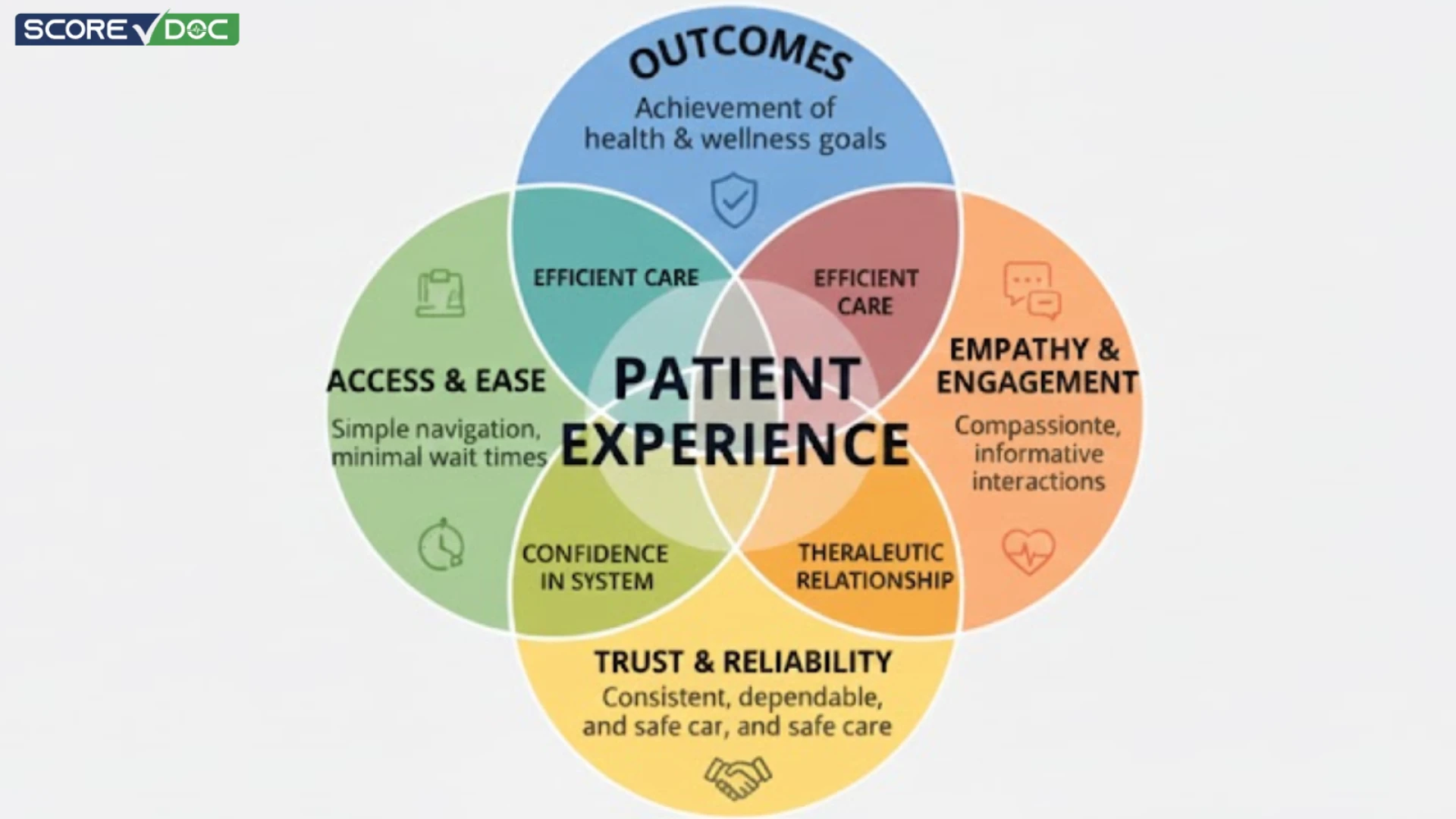
Healthcare today is not judged only by treatment results. A patient’s overall experience has become an essential part of what defines good care. Every step of the journey, from booking an appointment to leaving the clinic, shapes how a patient feels about their visit.
The effect is clear. When the experience is confusing, slow, or unfriendly, patients quickly look for another provider. Studies show that almost 67 percent of people stop engaging with a brand because of poor customer experience. The same behavior is seen in healthcare. If patients feel ignored, wait too long, or struggle to get support, they are more likely to switch providers. A smooth and positive experience builds trust and encourages them to return. Clinical skill may bring patients in, but the overall experience determines whether they stay.
What Patient Experience Includes
Patient experience covers the complete journey with a healthcare provider. It is more than the outcome of the treatment. It starts from the first attempt to schedule a visit and continues through check-in, consultation, billing, follow-ups, and future communication.
Patients today notice many details beyond medical expertise. They pay attention to manners, clarity of explanations, how easy it is to reschedule, wait times, transparency of costs, and how the staff communicates. These small interactions create a sense of comfort and trust.
Important parts of patient experience include:
Communication: Patients want clear and consistent communication. They also expect quick replies to emails or phone calls, which strongly affects satisfaction.
Empathy: Patients want to feel understood. When the staff listens, shows patience, and responds with warmth, trust increases.
Accessibility: A 2019 Accenture survey shows that convenience is now a major factor for patients.
68 percent consider easy booking or cancellation important.
70 percent expect reminders through texts, emails, or voicemails.
69 percent prefer secure email communication with providers.
Transparency: Clear cost information is a major driver of satisfaction.
65 percent of younger and older patients say transparent pricing affects their overall experience.
Clear billing and treatment plans reduce stress and build trust.
Wait-time Management: Patients connect wait times with respect for their time.
58 percent of younger patients say wait times and appointment speed play a major role in how they rate their care.
Clear Clinic Policies: Patients expect simple and easy to understand policies. Confusing rules about appointments or follow-ups reduce confidence.
Continuity: A smooth experience across departments and providers helps patients feel supported. Consistent communication and timely follow-ups reduce frustration.
Why Patient Experience Is Important for Healthcare Providers
Improving patient experience has a direct impact on how well a practice performs.
Better outcomes: Patients who feel heard and understood are more likely to follow treatment plans and return for check-ups.
Higher retention and trust: When patients have positive interactions, they stay with the same provider and recommend the clinic to others.
Business growth: Good experiences lead to repeat visits, referrals, and better online reviews, which support long-term growth.
Fewer complaints: Clear explanations and empathy reduce misunderstandings and prevent formal complaints.
Stronger staff morale: Positive patient feedback motivates the team and builds a healthy work environment.
Common Gaps in Patient Experience
Even good clinics face gaps such as:
Rushed conversations that leave patients with unanswered questions
Unclear or technical explanations
Difficulty in scheduling appointments and long wait times
Feedback being ignored or not acted upon
Care that feels impersonal or rushed
These issues reflect broader gaps in the system. Identifying them helps improve the patient journey.
How Healthcare Providers Can Improve Patient Experience
Providers can use the following steps to strengthen patient experience:
Communicate with empathy: Train staff to speak clearly and kindly. Encourage them to ask if patients have questions.
Simplify processes: Make scheduling, billing, and follow-up easy through well-defined systems or online tools.
Follow up after visits: A simple call or message to check on a patient can improve clarity and trust.
Encourage and respond to reviews: Ask patients for feedback and respond respectfully. Platforms like ScoreDoc help providers track common themes and insights.
How ScoreDoc Helps Improve Patient Experience
Patients share feedback across many platforms like Google, WebMD, and Healthgrades. Checking each site separately takes time. ScoreDoc simplifies this by collecting reviews from trusted sources in one place. It works as both a healthcare review aggregator and as a healthcare directory for doctors and practices.
ScoreDoc analyzes patient sentiment, identifies patterns, and shows a complete view of a provider’s online reputation. These insights help healthcare professionals understand what patients value, recognize areas that need improvement, and make better decisions to improve experience.
Conclusion: Patient Experience Sets the Standard for Quality Care
Clinical skill and patient experience work together to create high quality healthcare. Patient feedback should be seen as guidance for improvement. By listening and acting on what patients share, providers can build trust, deliver better care, and grow stronger over time.
Health professionals can use ScoreDoc to understand how patients view their practice. Many providers rely on ScoreDoc to turn patient feedback into meaningful improvement and long-term growth.
FAQs
Q1. What is the difference between patient satisfaction and patient experience?
Patient satisfaction reflects overall happiness with care. Patient experience covers every step from scheduling to check-out.
Q2. How does patient feedback improve healthcare quality?
Feedback shows what patients like or dislike. This helps clinics improve communication, operations, and care delivery.
Q3. How can providers measure patient experience?
Surveys, direct feedback, and online reviews help measure experience. Aggregation tools combine all insights into one view.
Q4. What tools help track patient experience trends?
Platforms that collect reviews from Google, WebMD, and Healthgrades are useful. ScoreDoc gathers this feedback and highlights important patterns.
Q5. How should providers respond to negative reviews?
Acknowledge the concern, apologize when appropriate, offer a private conversation, and use repeated feedback to improve processes.