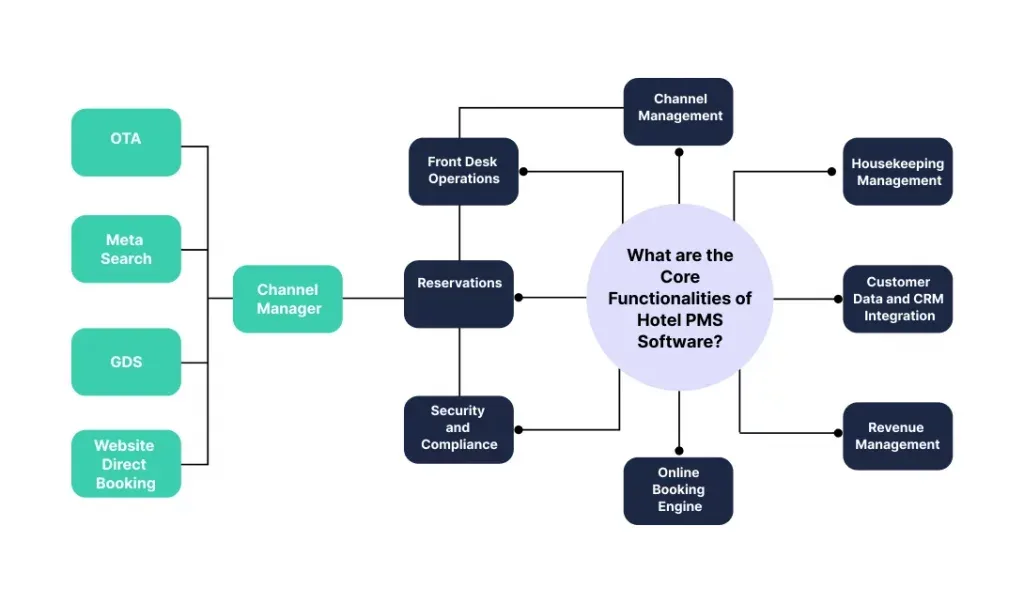
Short‑term rental management has always been a demanding industry, but the level of operational pressure in 2026 is unlike anything seen before. Rising guest expectations, increased competition, and the constant need for real‑time coordination have pushed managers to rethink how they structure their workflows. This is why the PMS.Rent operations hub is becoming a central example of how operational discipline can transform the entire business.
Operational discipline is no longer optional
For years, managers relied on improvisation. A mix of apps, spreadsheets, and manual updates seemed sufficient. But as the industry matured, improvisation became a liability. Fragmented workflows create delays, mistakes, and inconsistent guest experiences. The managers who thrive today are those who treat operations as a disciplined system — not a collection of tasks.
Operational discipline means having:
- unified data
- predictable workflows
- synchronized automation
- clear responsibilities
- real‑time visibility
This foundation allows managers to scale without losing control.
Fragmentation is the hidden enemy of growth
Most managers still use multiple disconnected tools. One app handles messaging, another manages cleaning, a third controls pricing, and a fourth syncs channels. Each tool works well alone, but together they create friction. Fragmentation leads to duplicated work, outdated information, and slower decision‑making.
2026 is the year when managers finally recognize that fragmentation is not a technical problem — it’s a strategic one.
Unified systems create operational clarity
Operational clarity is the ability to see everything that matters in one place. When bookings, tasks, communication, pricing, and automation live inside one ecosystem, managers gain a level of control that fragmented setups cannot offer.
Clarity leads to:
- fewer errors
- faster reactions
- improved guest satisfaction
- reduced stress
- stronger team coordination
In a competitive market, clarity becomes a decisive advantage.
Automation becomes reliable only when unified
Automation inside isolated tools often fails because the data isn’t synchronized. A cleaning task may not update after a last‑minute booking change. A pricing rule may not adjust across all channels. A guest message may be sent at the wrong time.
Unified automation solves this by connecting every part of the workflow. When a booking changes, every connected process updates instantly — communication, cleaning, pricing, and channel availability.
This is true automation — not a patchwork of scripts.
Scaling requires structure, not improvisation
Managers who grow from 5 to 50 properties quickly discover that fragmented setups collapse under pressure. Complexity multiplies with each new listing, each new cleaner, and each new channel. Operational discipline solves this by reducing noise and creating structure.
Unified systems scale naturally because they eliminate unnecessary complexity.
The future belongs to disciplined operators
Short‑term rental management is no longer about doing more — it’s about doing better. Operational discipline allows managers to focus on strategy instead of micromanagement. It reduces stress, eliminates repetitive tasks, and creates a seamless experience for both managers and guests.
The managers who thrive in 2026 will be those who embrace unified, disciplined systems that transform complexity into control.