
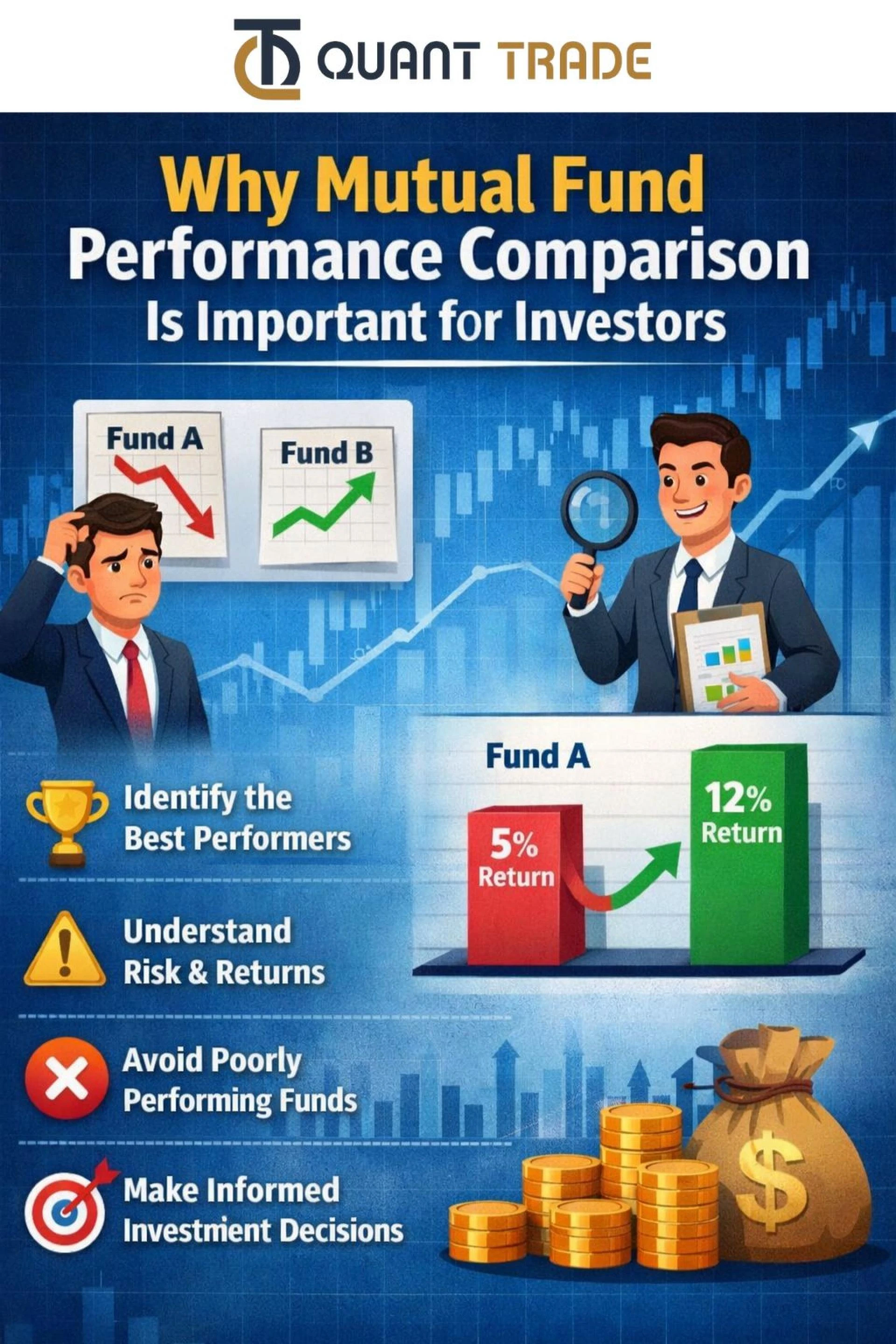
Choosing the right mutual fund can feel overwhelming, especially when thousands of options are available in the Indian market. Each fund promises growth, but not all deliver on those promises. This is where smart investing begins: with careful analysis and informed decisions rather than random choices or following popular trends.
The ability to conduct a proper mutual fund performance comparison is perhaps the most critical skill an investor can develop. Without comparing how different funds have performed over time, you're essentially investing blindly, hoping for the best outcome. In this article, we'll explore why performance comparison matters so much and how it can transform your investment results.
Understanding What Performance Comparison Really Means
Performance comparison goes beyond simply looking at which fund gave the highest returns last year. It involves analyzing multiple factors including consistency, risk levels, benchmark performance, and how a fund behaves during different market conditions. A comprehensive comparison helps you understand not just the returns but the journey the fund took to achieve them.
Many investors skip this crucial step and invest based on advertisements or tips from friends. However, what works for someone else might not suit your financial goals, risk appetite, or investment timeline. That's why mutual fund performance comparison should be personalized to your unique situation.
How Performance Comparison Protects Your Investment
When you compare mutual funds systematically, you immediately spot red flags that might not be obvious at first glance. For instance, a fund might show impressive one-year returns but terrible performance over three or five years. This inconsistency suggests the recent success might be luck rather than sound investment strategy.
Performance comparison also reveals how different funds handle market downturns. Some funds maintain stability during corrections while others experience dramatic drops. Understanding this behavior helps you choose funds that match your comfort level with volatility and loss.

The Role of Benchmarks in Performance Analysis
Every mutual fund has a benchmark index it aims to outperform. For large cap funds, this might be the Nifty 50, while mid cap funds compare themselves to the Nifty Midcap 150. When you conduct a mutual fund performance comparison, checking how consistently a fund beats its benchmark is essential.
A fund that consistently underperforms its benchmark isn't adding value. You'd be better off investing in a low-cost index fund that simply tracks the benchmark. Conversely, funds that regularly outperform their benchmarks demonstrate skilled management and effective strategies worth your investment.
Understanding Growth Patterns Over Time
Looking at the average mutual fund growth per year gives you realistic expectations about what your investment might achieve. While past performance doesn't guarantee future results, historical data provides valuable context for decision making.
Some investors get excited by funds showing 30% or 40% returns in a single year. However, when you examine the average annual growth over five or ten years, the picture often looks different. Markets move in cycles, and extraordinary years are usually balanced by moderate or negative years. A fund delivering consistent 12% to 15% annually often outperforms one with wild swings between 40% gains and 10% losses.
The Hidden Impact of Costs on Returns
When comparing mutual funds, many investors focus exclusively on returns while ignoring costs. This is a costly mistake. The mutual fund expense ratio impact on your wealth accumulation is substantial over long investment periods.
Consider two funds with identical performance before fees. Fund A charges 0.5% annually while Fund B charges 2%. On a ten lakh rupee investment over 20 years with 12% annual returns, Fund A would grow to approximately 86 lakhs while Fund B would only reach about 68 lakhs. That 2% difference in fees costs you 18 lakhs over two decades.
Expense ratios become even more critical when you compare mutual fund performance within the same category. If two large cap funds have similar strategies and returns, the one with lower fees will always give you better net returns.
Risk-Adjusted Performance Matters More Than Raw Returns
Smart investors don't just chase the highest returns; they evaluate how much risk a fund took to achieve those returns. This is where metrics like the Sharpe ratio become valuable. A fund delivering 15% returns with low volatility is often better than one giving 18% returns with extreme ups and downs.
Platforms like Quant Trade provide detailed risk analytics that help you understand the complete picture. You can see standard deviation, beta, and other technical metrics that reveal how bumpy the investment journey might be.
Category-Specific Comparisons Are Essential
Comparing a small cap fund with a large cap fund makes no sense. They operate in different market segments with different risk-return profiles. Always conduct your mutual fund performance comparison within the same category.
Within each category, look for funds that consistently rank in the top quartile. A fund that occasionally hits number one but frequently falls to the bottom half is less reliable than one that steadily performs in the top 25% of its category.
How Technology Makes Comparison Easier
Gone are the days when comparing mutual funds meant manually collecting data from multiple sources. Modern platforms aggregate performance data, calculate complex metrics, and present everything in easy-to-understand formats.
Quant Trade leverages quantitative analysis to help investors make data-driven decisions. Instead of relying on gut feelings or marketing materials, you can access comprehensive comparisons that reveal which funds truly deliver value. The platform's analytical tools let you filter, sort, and evaluate funds based on criteria that matter to your investment goals.

The Long-Term Perspective
Short-term performance can be misleading. A fund might top the charts one year due to lucky bets on a few stocks, then underperform for the next several years. This is why serious investors always look at rolling returns and long-term consistency.
When you examine three-year, five-year, and ten-year performance data, patterns emerge that single-year numbers hide. You'll see which funds have sustainable strategies and which ones depend on short-term market movements.
Making Performance Comparison Part of Your Investment Process
Comparing mutual funds shouldn't be a one-time activity. Markets evolve, fund managers change, and strategies that worked yesterday might not work tomorrow. Regular performance reviews help you ensure your investments remain aligned with your goals.
Set a schedule to review your portfolio quarterly or at least semi-annually. Compare your funds' performance against benchmarks and peers. If a fund consistently underperforms without good reason, don't hesitate to switch to better alternatives.
Start Making Smarter Investment Decisions Today
Stop guessing which mutual funds deserve your hard-earned money. Visit Quant Trade and access powerful analytical tools designed specifically for Indian investors. Compare performance metrics, analyze risk-adjusted returns, evaluate expense ratios, and make data-driven investment decisions with confidence. Whether you're a beginner or experienced investor, our platform provides the insights you need to build a winning portfolio. Sign up now and transform how you invest in mutual funds!
Frequently Asked Questions
Q1: How often should I compare my mutual fund's performance?
A: Review your mutual fund performance quarterly to stay informed, but avoid making decisions based on short-term fluctuations. Annual reviews are sufficient for making strategic changes to your portfolio.
Q2: What's more important: returns or consistency?
A: Consistency is generally more important for long-term wealth building. A fund delivering steady 12% to 14% returns annually is often better than one alternating between 25% gains and 5% losses.
Q3: Should I only invest in top-performing funds?
A: Not necessarily. Top performers often mean-revert. Look for consistent performers in the top quartile of their category rather than just chasing last year's number one fund.
Q4: How does expense ratio affect long-term returns?
A: Expense ratios compound over time. A 1% difference in fees can reduce your final corpus by 15% to 20% over a 20-year investment period, making it crucial to consider costs alongside returns.