The Dawn of a New Trading Era: A Snapshot from Wall Street
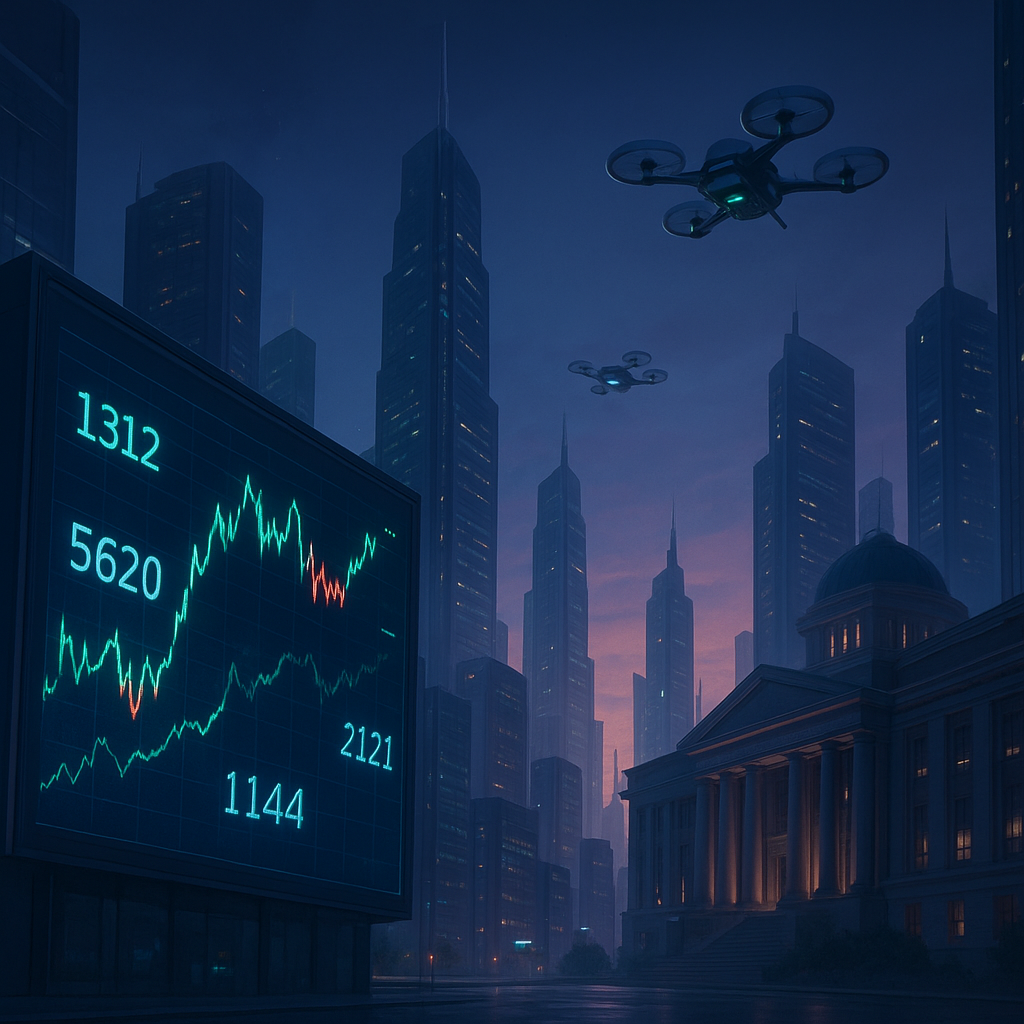
As May 2026 unfolds, the trading floors of global stock exchanges look significantly different from a decade ago. Gone are the chaotic scenes of frantic brokers shouting orders; instead, sleek algorithms dominate the landscape, executing trades at microsecond speeds. New York Stock Exchange’s latest quarterly report revealed that over 85% of daily volume is now driven by artificial intelligence and machine learning systems, a figure that has doubled since 2022. This transformation is not just about speed. It reflects a deeper shift in how markets operate, how investors interact, and how policies evolve to keep pace.
Picture a scenario where retail investors use augmented reality interfaces to visualize portfolio risks while AI advisors tailor investment strategies in real time. This is the emerging reality. Yet, as technology accelerates, so too do the challenges: regulatory frameworks struggle to contain systemic risks, cyber threats loom larger, and market volatility takes on new dimensions. This article explores these forces shaping the future of stock markets, analyzing data trends, expert insights, and the implications for investors worldwide.
“The stock market of tomorrow will be defined less by human intuition and more by data-driven precision, but this raises profound questions about market fairness and stability,” says Dr. Lena Torres, Chief Analyst at Global Finance Insights.
From Floor to Cloud: The Evolutionary Journey of Stock Markets
Understanding the future of stock markets requires a retrospective glance. The last 20 years have been transformative. The early 2000s marked the rise of electronic trading, replacing traditional open outcry systems. By the 2010s, algorithmic trading became mainstream, leveraging high-frequency trading (HFT) to exploit minute price discrepancies. The 2020s introduced AI-powered decision-making, with neural networks analyzing vast datasets to predict market movements.
However, this evolution did not occur in isolation. Regulatory responses such as the Dodd-Frank Act, MiFID II, and others sought to introduce transparency and reduce systemic risk after the 2008 financial crisis. Despite these measures, markets experienced flash crashes and volatility spikes, exposing vulnerabilities in algorithmic trading systems.
Moreover, the democratization of trading through platforms like Robinhood and the rise of social investing communities introduced new dynamics. The 2021 GameStop saga underscored the power of retail investors and social media influence, challenging traditional market paradigms.
Industry estimates suggest that by 2025, digital assets accounted for over 10% of global market capitalization, signaling a fundamental shift in asset classes. This context sets the stage for the next phase of market transformation, driven not only by technology but also by socio-economic and geopolitical factors.
Key Trends Redefining Stock Markets in 2026
The core of the contemporary stock market landscape rests on several intertwined trends, each reshaping how markets function and are perceived.
- Artificial Intelligence and Quantum Computing Integration: AI has matured beyond predictive analytics into autonomous trading agents. Quantum computing breakthroughs in 2025 have introduced new optimization algorithms, reducing latency and enhancing portfolio simulations.
- Decentralized Finance (DeFi) and Tokenization: Traditional equity shares are increasingly represented by blockchain-based tokens, offering fractional ownership and 24/7 liquidity. Major exchanges like the NYSE and Nasdaq have launched regulated digital asset trading platforms.
- ESG and Impact Investing Domination: Environmental, Social, and Governance criteria now influence over 60% of global fund allocations. Stock market indices weigh ESG scores heavily, driving corporate behavior and investor decisions.
- Regulatory and Cybersecurity Challenges: Policymakers face growing pressure to balance innovation with investor protection. Cyberattacks targeting exchanges and clearinghouses have escalated, necessitating advanced defense mechanisms.
- Global Market Interconnectivity and Fragmentation: While markets are more interconnected than ever, geopolitical tensions and nationalistic policies create fragmentation risks, affecting capital flows and currency stability.
These developments collectively create a complex ecosystem where technology, policy, and investor behavior intertwine, demanding new approaches to risk management and market participation.
“As the stock market embraces quantum AI and decentralized finance, the traditional notions of liquidity, transparency, and governance will be fundamentally altered,” warns Professor Michael Yuan, Chair of Financial Technologies at MIT.
2026 Market Landscape: Innovations and Shifts in Practice
In the current year, several groundbreaking changes define market operations and investor engagement. The Nasdaq’s launch of its Quantum Trading Platform earlier in 2026 exemplifies this shift. This platform leverages quantum algorithms to analyze millions of data points per second, enabling predictive trading that reportedly outperforms classical models by 15–20% in volatility reduction, according to Nasdaq’s official statistics.
Meanwhile, the New York Stock Exchange’s expansion into tokenized equities has attracted over $150 billion in new capital, with companies like Tesla and Apple allowing fractional ownership through blockchain-based securities. This development has democratized access to high-value stocks, increasing retail participation globally.
Additionally, ESG-centric funds have reached unprecedented inflows, surpassing traditional funds in growth rate. BlackRock’s 2026 report highlights that ESG funds returned on average 12.4% year-to-date, compared to 8.7% for non-ESG funds.
On the regulatory front, the SEC and global counterparts have introduced comprehensive frameworks addressing AI ethics and cybersecurity. The newly established International Market Integrity Council (IMIC) aims to harmonize cross-border regulations and oversee emerging risks, a response to frequent market disruptions caused by algorithmic errors and cyber threats.
The retail investor experience has also improved with augmented reality dashboards that provide real-time risk analytics and scenario simulations, making complex data accessible and actionable. Integration of social sentiment analytics offers insights into crowd behavior, enhancing decision-making.
Expert Views and Industry Implications
Leading voices in finance emphasize that the stock market’s future hinges on embracing innovation while mitigating novel risks. Jane Kwon, CIO at Horizon Capital, notes, “Investors must adapt to a world where AI-driven markets operate at speeds humans cannot match. This demands new skill sets and mindset shifts.”
Institutional investors now allocate significant resources to AI expertise and cybersecurity, recognizing that future competitive advantage lies in technological mastery. Moreover, regulatory bodies face the dual challenge of fostering innovation and preventing systemic crises. The creation of IMIC reflects a global consensus that cooperation is essential to manage the complex ecosystem.
The rise of tokenized assets is also prompting reevaluation of traditional valuation models and market infrastructure. Custodial services, clearinghouses, and settlement mechanisms are undergoing digital transformation to accommodate blockchain protocols.
Furthermore, ESG’s dominance signals a profound alignment between capital markets and sustainability goals. Companies that fail to meet ESG standards risk exclusion from major indices and capital drought, fundamentally altering corporate governance and strategy.
These shifts impact not only market participants but also the broader economy, as capital allocation becomes more efficient, transparent, and aligned with global priorities.
Looking Ahead: What Investors and Regulators Must Watch
The coming years will test the resilience and adaptability of stock markets worldwide. Key areas to monitor include:
- Regulatory Evolution: How international bodies balance innovation with protection will determine market stability.
- Technology Risks: As AI and quantum computing become pervasive, vulnerabilities to cyberattacks and algorithmic failures increase.
- Market Fragmentation: Geopolitical shifts may lead to splintered markets, affecting liquidity and capital flow.
- Investor Education: Equipping retail investors to navigate complex technologies and ESG considerations is critical.
- Integration of New Asset Classes: The rise of tokenized securities and DeFi instruments will require new valuation and risk assessment frameworks.
Strategic foresight and proactive policy-making will be crucial. Investors should consider diversifying with ESG funds and digital assets while leveraging AI tools for portfolio management. Meanwhile, regulators must foster international collaboration to address systemic risks and establish transparent governance standards.
For those seeking detailed insights on mastering these challenges, TheOmniBuzz’s Mastering the Market and What You Need to Know About the Stock Market provide comprehensive guidance tailored for 2026’s realities.
“The future is not about avoiding change but mastering it. Smart investors and regulators who anticipate shifts rather than react will thrive in the new stock market paradigm,” advises Dr. Torres.
In conclusion, the stock market’s future is being shaped by a convergence of technological innovation, evolving investor behavior, and dynamic regulatory landscapes. While challenges abound, opportunities for more efficient, inclusive, and sustainable capital markets are unprecedented. Staying informed, adaptable, and vigilant is imperative for all market participants entering this new era.