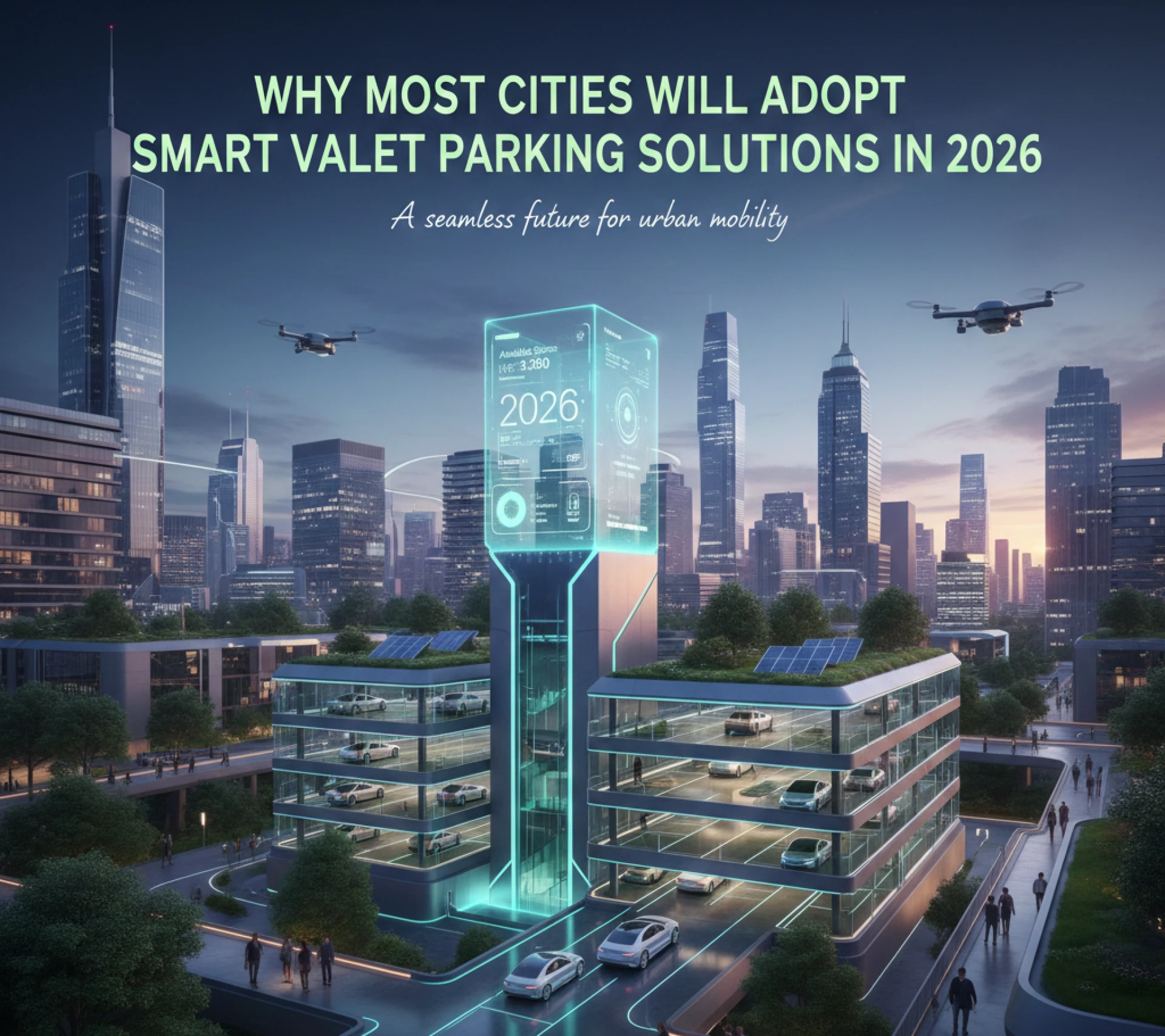
Urban mobility is changing faster than ever. As cities continue to grow and traffic density increases, parking has become one of the biggest everyday challenges for drivers and city planners. Long queues at parking lots, wasted fuel searching for empty spaces, and inefficient manual processes are pushing municipalities to look for modern upgrades. This is where Smart Valet Parking Solutions are emerging as a major game changer for 2026 and beyond.
By combining automation, connected technologies, and intelligent parking management, these new systems help cities improve mobility, reduce congestion, and offer a more seamless driving experience. Let’s explore why most cities will embrace this shift in the coming year.
Growing Demand for Real-Time Parking Automation
Traditional parking methods are inefficient because they rely heavily on manual operations. With rising urbanization, cities need systems that can guide drivers instantly. Features like real-time parking availability systems, IoT-enabled parking sensors, and automated valet parking technology are becoming essential. These solutions help drivers find spots faster, which reduces traffic buildup and saves time.
Cities are also rewarded with a treasure of data that can be employed to plan road expansions, parking availability, and future mobility projects.
Reduced Traffic Congestion and Fuel Wastage
An ample amount of city traffic is due to drivers just driving around looking for a spot. Smart solutions such as parking management software or a connected parking guidance platform based on AI can reduce this unnecessary movement.
Reduced circling means less air pollution, lower carbon emissions, and smoother vehicle flow. Smart parking and the green movement. As more and more governments globally make sustainability a priority, we can see that smart parking solutions are poised to become the new green infrastructure for mobility.
A GROWTH AREA WITH ELECTRIC AND AUTONOMOUS VEHICLES
Though we would expect adoption of EVs to be higher still, and many more vehicles will feature much more advanced automation. To accommodate this new wave, cities will need to switch from bulky analog parking systems to digital ones that can accommodate valet parking docks that are EV-ready, automated parking for self-driving cars, and smart charging- parking integration.
By integrating EV charging with automated valet operations, cities can provide a modern, tech-first experience to citizens and visitors.
Improved User Experience and Safety
Convenience, speed, and seamless digital experiences are now what drivers demand. With mobile-first services such as contactless parking payments, QR-based vehicle pick-up systems, and park reservation apps, the entire process from your arrival to departure is painless for end users. These kinds of systems also increase safety by minimizing the need for physical contact and removing the possibility of human error.
Cities that can maintain operations in a user-friendly environment are also more likely to be regarded as modern, efficient, and forward-looking.
Better Revenue Management for Municipalities
Unmonitored parking, cash leakages, and ineffective monitoring city a whopping revenue. Moving to digital environments like cloud-based parking analytics dashboards and auto-assured parking fee collection results in full transparency and correct revenue accounting.
Governments can develop a process of determining peak hours, requirements-based parking, and payment patterns that will result in monetisation models to provide a revenue stream.
Smart City Projects Driving Digital Take-Up
Smart mobility projects can count on funds from the public sector. Most governments are already spending huge amounts of money on offering a better quality of urban life, especially in smart mobility. To achieve these goals, cities will require solutions that are fully integrated with other systems--such as public transportation, traffic monitoring, and emergency management.
Digital ecosystem Connected solutions, such as a comprehensive dashboard for integrated urban mobility and a smart city parking integration framework, help create one integrated digital ecosystem. That makes parking just one element of a bigger, smarter urban mobility experience.
Final Thoughts
In five years, most metropolitan areas will be moving toward modern parking technologies on the strength of solutions that resolve pain points around congestion, user experience and convenience, sustainability, and infrastructure planning. As our cities continue to work towards becoming smarter and more connected, smart parking won’t be a “nice-to-have” feature; it will become a necessity.
For urban mobility to change, parking must evolve. And that journey has already started.