Here's a number that tends to get people's attention: businesses running structured loyalty programs see somewhere between 12 to 18% incremental revenue growth compared to those that don't bother. Not from acquiring new customers. From keeping the ones they already have a little happier and a little more engaged.
That gap is a big part of why "loyalty program software for businesses" has become one of the most searched phrases among founders, marketing heads, and channel sales leaders this year. Loyalty programs themselves aren't new. Punch cards and cashback have been around for decades. What's changed is the software behind them. It's gotten a lot smarter, and the companies still running things on spreadsheets are starting to feel that gap widen.
The Real Cost of Winning a New Customer
Ad costs keep climbing. Attention spans keep shrinking. And the customer or dealer you spent months courting can walk away after one disappointing interaction. That's the uncomfortable math a lot of businesses are waking up to right now.
Retention has always been the cheaper growth lever. It just used to be harder to manage well. You needed someone tracking purchases in a spreadsheet, someone else calculating who's earned what, and a third person chasing down redemptions by email or phone. It worked, sort of, until the program grew past a few hundred participants and the cracks started showing.
This is where loyalty program software actually earns its keep. It isn't just a digital rewards catalogue sitting on top of your business. It's the operational backbone that tracks behavior, calculates points automatically, and hands you the analytics to see what's actually working, without anyone manually reconciling numbers in a spreadsheet at 11pm.
What This Software Actually Does
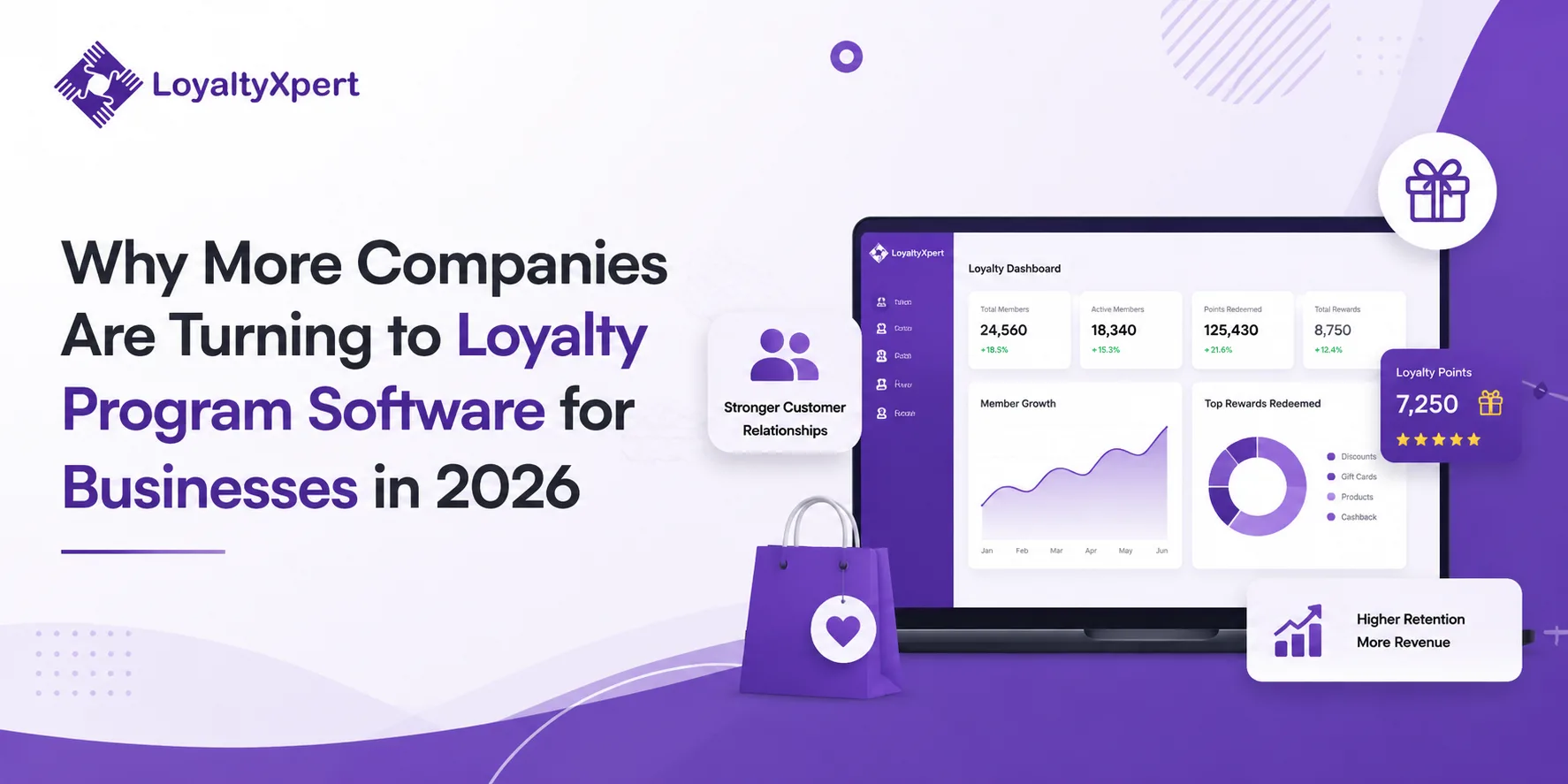
Strip away the marketing language and a loyalty management platform really comes down to three jobs. It tracks activity like purchases, referrals, sign-ups, or scans, whatever action you want to reward. It distributes rewards automatically, whether that's points, cashback, vouchers, or tiered perks. And it reports on performance, so you can spot engagement trends before they quietly turn into churn.
The better platforms go further, adding gamification, tiered structures, and integrations with whatever CRM or ERP the business already runs on. That last part matters more than people expect. A loyalty tool that lives in its own silo, disconnected from your sales data, tends to become one more dashboard nobody checks after the first month.
For a closer look at how businesses evaluate and choose between these platforms, our detailed guide on loyalty program software for businesses walks through the selection criteria most companies use, things like scalability, reward flexibility, and integration depth, in a lot more detail.
Where Most Companies Get the Decision Wrong
The common mistake usually isn't picking a bad platform. It's picking a good platform that was never built for the way the business actually operates.
A retail-focused loyalty tool, for instance, is usually built around a single consumer earning points at checkout. That's a very different problem from managing a network of dealers, distributors, and independent electricians or painters, all of whom need to be rewarded differently based on volume, role, and region. B2B and channel-driven businesses that try to force a consumer loyalty tool into that shape usually end up patching the gaps with, you guessed it, more spreadsheets.
That's the gap platforms built specifically for channel and partner loyalty are designed to close. Multi-tier reward rules, QR-code and invoice-based point capture for bulk purchases, and ERP integrations for businesses running on Tally or SAP aren't nice-to-haves for a manufacturer managing partners across 400 cities. They're the difference between a program that runs itself and one that needs a full-time team babysitting it.
What to Actually Look For Before You Commit
A few questions worth asking before signing anything.
- Does it match how your business actually sells? Direct-to-consumer, channel-based, or a mix of both. The software should be built around your model, not the other way around.
- Can it grow with you? A platform that works cleanly for 500 participants should still work cleanly at 50,000.
- How flexible are the rewards? Cash transfers, product discounts, gift catalogues. The more options available, the more the program actually resonates with different partner types.
- Does it integrate with what you already use? If your sales data lives in an ERP or CRM, your loyalty platform needs to talk to it.
- What does the analytics layer actually show you? Tracking points is easy. Understanding why engagement is dropping in one region and not another is the part actually worth paying for.
The Bigger Picture
Loyalty program software has moved well past being a nice marketing add-on. For manufacturers, distributors, and B2B brands especially, it's become core infrastructure, about as essential as the CRM or the ERP sitting right next to it.
If you're managing a channel network of dealers, retailers, or influencers and you're still doing any part of this by hand, it's worth seeing what a purpose-built platform looks like in practice. LoyaltyXpert's loyalty program software was built specifically for this kind of multi-tier, channel-heavy structure, handling everything from point capture to redemption to partner analytics in one place, instead of stitching together three different tools to get there.
The businesses pulling ahead right now aren't necessarily spending more on rewards. They're just spending it a lot smarter, and that starts with software that was actually built for how they sell.