Education has changed significantly over the past decade. While strong academic performance remains important, schools are increasingly expected to prepare students for challenges that extend far beyond examinations. Parents today want learning environments that help children become confident, responsible, and adaptable individuals who can succeed in an ever-changing world.
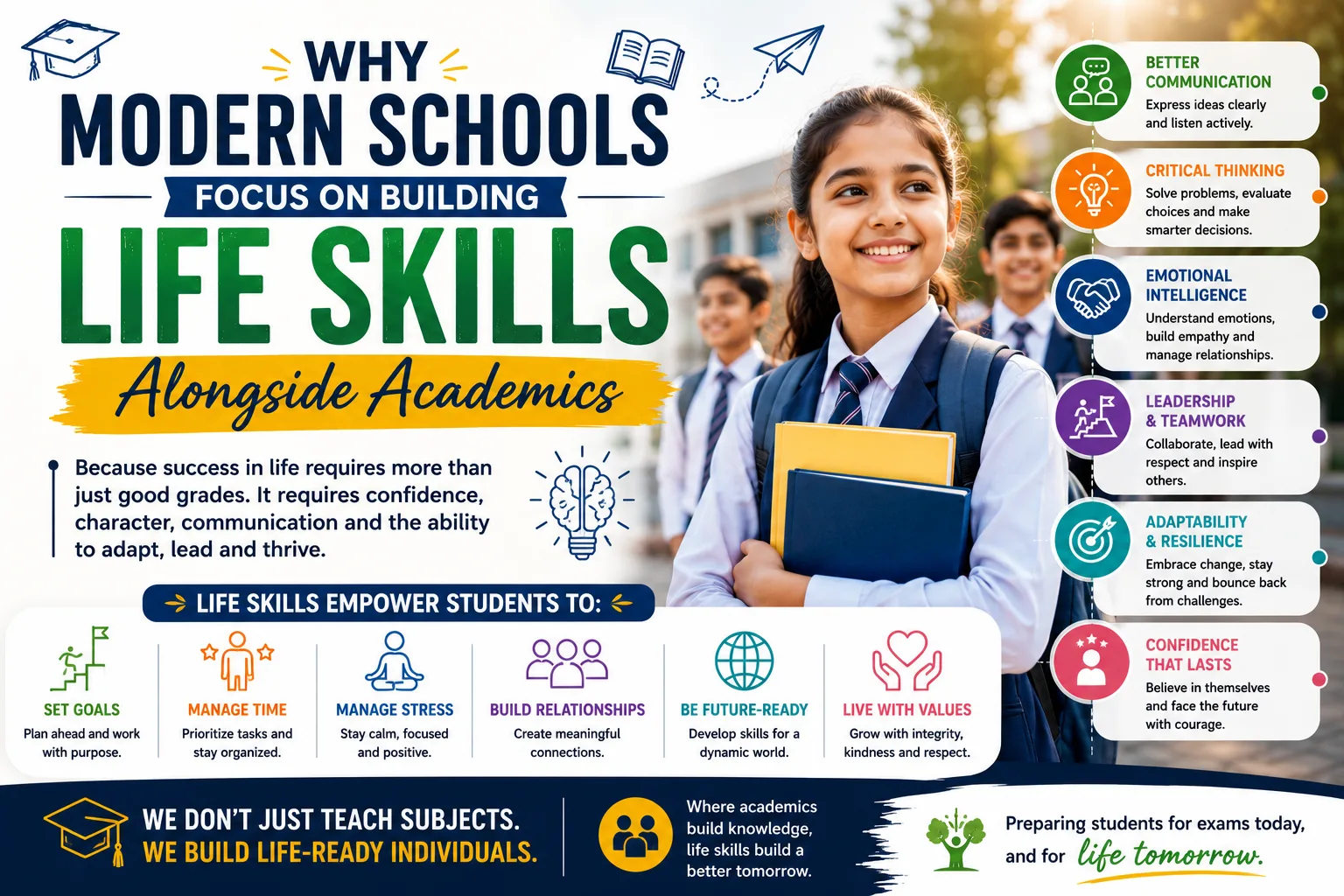
This shift has brought greater attention to life skills—practical abilities that help children communicate effectively, solve problems, work with others, and make thoughtful decisions. These skills complement classroom learning and support success throughout school and later in life.
For families exploring CBSE schools in Ulwe, understanding how a school develops these qualities can be just as important as reviewing academic results.
What Are Life Skills?
Life skills are everyday abilities that help children manage situations with confidence and responsibility. They are developed gradually through classroom experiences, extracurricular activities, teamwork, and guidance from teachers.
Some of the most valuable life skills include:
- Communication
- Critical thinking
- Teamwork
- Leadership
- Creativity
- Emotional awareness
- Time management
- Adaptability
- Responsibility
Together, these skills help students become independent learners and thoughtful individuals.
Why Academic Knowledge Alone Isn't Enough
Academic subjects build knowledge, but life skills teach children how to apply that knowledge effectively.
For example:
- Communication helps students explain their ideas.
- Teamwork enables them to work successfully with others.
- Problem-solving encourages independent thinking.
- Leadership develops responsibility and initiative.
When combined with academics, these abilities prepare students for higher education, professional careers, and everyday life.
The Classroom Is the First Place Life Skills Grow
Life skills are often developed through simple classroom experiences rather than formal lessons.
Students strengthen these abilities when they:
- Participate in discussions.
- Complete group assignments.
- Present projects.
- Ask questions.
- Learn from constructive feedback.
- Respect different opinions.
These everyday experiences gradually build confidence and maturity.
Activities Outside the Classroom Matter Too
Learning continues well beyond textbooks.
Sports, cultural events, science exhibitions, art competitions, and community projects allow children to discover their strengths while learning important values such as discipline, resilience, cooperation, and creativity.
These experiences often become some of the most memorable parts of a student's education.
The Role of Teachers
Teachers play an important role in helping students develop life skills.
A supportive teacher encourages children to:
- Explore new ideas.
- Learn from mistakes.
- Think independently.
- Participate actively.
- Believe in their abilities.
Positive encouragement creates a classroom where students feel comfortable taking on new challenges.
Parents and Schools Work Best Together
Life skills become stronger when parents and schools share the same goals.
Parents can reinforce these lessons by:
- Encouraging independent decisions.
- Giving children age-appropriate responsibilities.
- Appreciating effort instead of expecting perfection.
- Creating opportunities for discussion at home.
- Supporting reading and creative activities.
Small daily experiences help children become more confident and responsible over time.
Choosing a School That Values Holistic Development
When visiting schools, parents may wish to look beyond academic achievements and ask questions such as:
- Does the school encourage student participation?
- Are leadership opportunities available?
- How are teamwork and collaboration promoted?
- What extracurricular activities are offered?
- How does the school support overall personality development?
These factors provide valuable insight into how students are prepared for future success.
Looking Ahead
Education is no longer only about preparing students for examinations. It is about helping children become capable learners, effective communicators, responsible citizens, and confident individuals who can adapt to a changing world.
Families searching for the best schools in Ulwe often appreciate institutions that combine strong academics with opportunities for leadership, creativity, collaboration, and personal growth.
St. Wilfred's School, Ulwe follows this balanced approach by providing a learning environment where academic excellence goes hand in hand with character development, practical learning, and student well-being. Through classroom experiences, co-curricular activities, and value-based education, students are encouraged to build the skills they need for lifelong success.
Frequently Asked Questions
Why are life skills important for school students?
Life skills help children communicate, solve problems, make responsible decisions, and adapt to new situations with confidence.
How do schools develop life skills?
Schools encourage life skills through classroom discussions, project-based learning, sports, leadership activities, cultural events, and collaborative assignments.
Can parents support life skills education?
Yes. Parents can strengthen these skills by encouraging responsibility, communication, independent thinking, and curiosity through everyday experiences at home.
Do life skills improve academic performance?
Yes. Students with strong communication, organization, and problem-solving skills are often better equipped to understand concepts, participate in class, and manage their studies effectively.