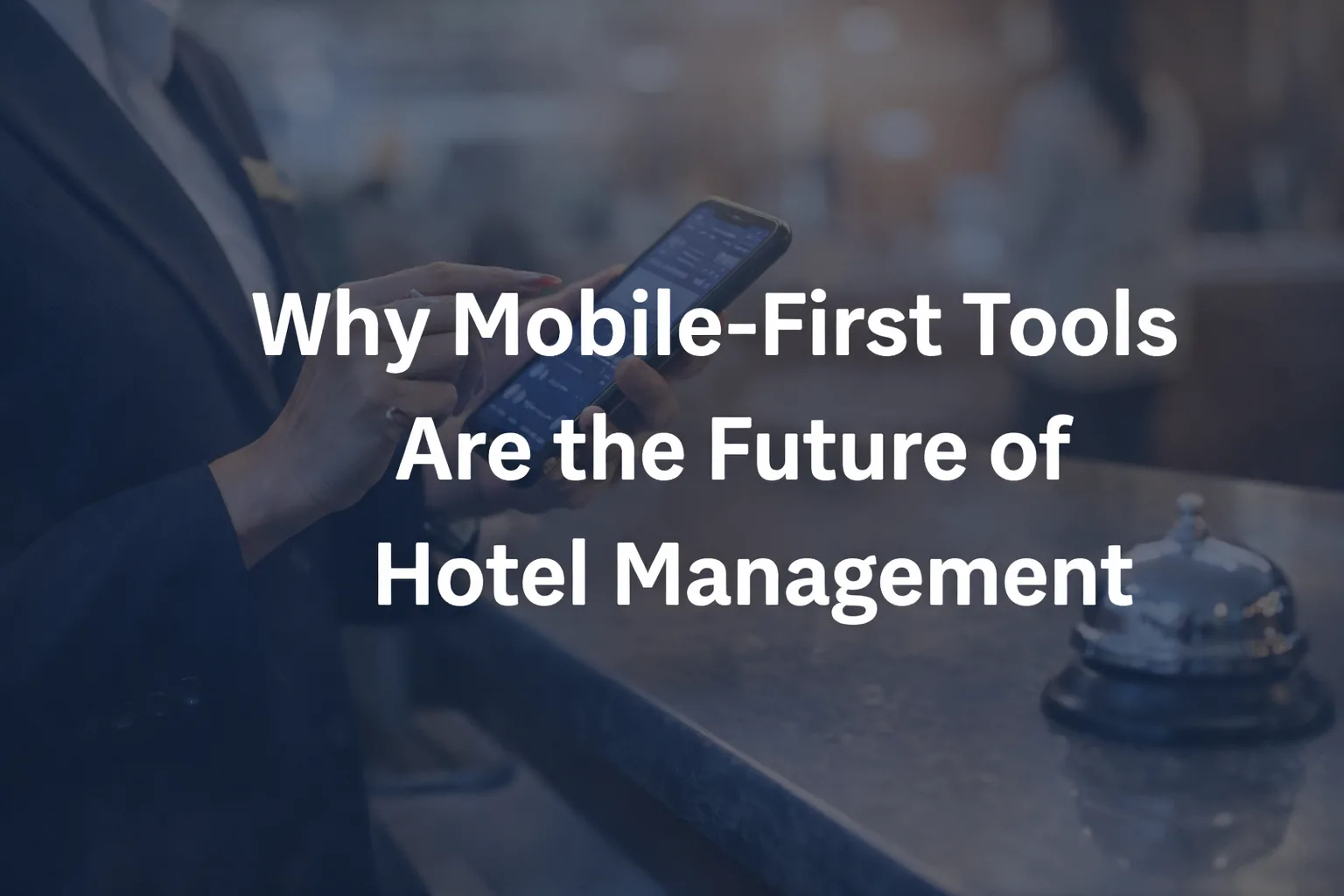
Enter any modern-day hotel, and the first thing that strikes your attention is that there is always motion everywhere. The cleaning staff rushes from room to room, maintenance staff sorts out problems, and the front desk staff handles clients, all while multitasking.
Now imagine all of them depending on a desktop computer to update their tasks.
It doesn’t make sense anymore.
It is exactly why mobile-first hotel management is quickly becoming the standard in hospitality. Hotels are shifting from traditional systems to smarter, more flexible tools that work in real time — right from the palm of their hands.
Let’s understand why this shift is happening and why mobile-first tools are shaping the future of hotel management.
The Problem with Traditional Hotel Systems
For years, hotels have relied heavily on desktop-based systems like a cloud-based hotel PMS to manage reservations, billing, and guest records. While these systems are still important, they were never designed for fast-moving, real-time operations.
The biggest issue is simple — hotel operations don’t happen at a desk.
Housekeepers don’t carry laptops. Maintenance staff don’t run back to the office after every task. Even front desk staff need quick updates while interacting with guests.
Where there is reliance on desktops for any updates, delays will occur. The cleaning of the room may take place, but the information is not recorded. An equipment problem could arise, but it does not get to the proper individual at the correct time.
These small delays create larger operational problems.
What Does Mobile-First Hotel Management Mean?
Mobile-first hotel management means using tools that are designed primarily for mobile devices instead of desktops. These tools allow hotel teams to manage tasks, communicate, and update information instantly using smartphones or tablets.
Instead of relying on manual communication or paperwork, everything happens digitally and in real time.
For example, a mobile hotel management software allows:
- Housekeeping staff to update room status instantly
- Maintenance teams to receive tasks immediately
- Managers to monitor operations from anywhere
- Front desk staff to stay updated without leaving their station
This approach makes operations faster, smoother, and far more efficient.
Why Mobile-First Tools Are the Future
1. Real-Time Updates Improve Speed and Accuracy
One of the biggest advantages of mobile-first tools is real-time communication.
Imagine a room is cleaned and ready. With a mobile hotel property management system, the housekeeper can update the status instantly from their phone. The front desk sees this update immediately and can assign the room to a waiting guest without delay.
Without mobile tools, this process could take several minutes or even longer.
Faster updates mean faster service — and that directly improves guest satisfaction.
2. Better Coordination Between Departments
Hotels operate through teamwork. Housekeeping, maintenance, and front desk staff must stay connected at all times.
A strong hotel staff coordination software ensures that everyone is on the same page. Tasks are assigned clearly, updates are visible to all relevant teams, and communication becomes seamless.
Instead of calling or messaging multiple people, staff can rely on one centralized system. It reduces confusion and ensures that nothing gets missed.
3. Housekeeping Becomes More Efficient
Housekeeping is one of the busiest departments in any hotel. Managing room cleaning schedules manually or through paper lists often leads to inefficiencies.
A hotel housekeeping mobile app changes this completely.
Housekeepers receive a clear list of tasks on their mobile devices. Rooms can be prioritized based on check-ins, VIP guests, or urgent requirements. Once a room is cleaned, it can be marked as ready instantly.
It not only improves efficiency but also reduces the chances of errors.
4. Maintenance Issues Get Resolved Faster
Maintenance delays are one of the biggest reasons for guest complaints.
With a mobile PMS for hotel housekeeping teams, issues can be reported instantly. For example, if a housekeeper notices a broken light or a leaking tap, they can log the issue directly through the app.
The maintenance team receives the task immediately, along with details and location. It speeds up response time and prevents small issues from turning into major problems.
5. Flexibility and Mobility for Staff
Hotel staff are always on the move. Mobile-first tools match the way they actually work.
Instead of going back and forth between floors and the front desk, staff can complete updates on the go. Managers can also monitor operations remotely without being physically present at the property.
This level of flexibility is impossible with traditional desktop-based systems.
6. Reducing Dependence on Desktop Systems
The idea of hotel management without desktop software is no longer unrealistic.
Although desktop computers are still useful in the administrative aspect, virtually all processes can currently be done through mobile phones. makes the hotel less reliant on its fixed system and gives it more flexibility.
It also saves time, as staff no longer need to wait for access to a computer to update their tasks.
7. Better Guest Experience
At the end of the day, everything comes down to the guest experience.
Mobile-first tools help hotels deliver faster service, reduce waiting times, and handle requests more efficiently. Whether it’s preparing a room on time or resolving a complaint quickly, mobile technology makes a noticeable difference.
Guests may not see the technology, but they definitely feel the impact.
How Mobile-First Tools Work Alongside PMS
It’s important to understand that mobile-first tools are not replacing PMS systems.
A cloud-based hotel PMS is still essential for managing reservations and guest data. However, it works best when combined with mobile operational tools.
Think of it this way :
- PMS manages bookings and records
- Mobile tools manage tasks and execution
Together, they create a complete system that supports both planning and action.
Real Benefits Hotels Are Experiencing
Hotels that adopt mobile-first solutions often notice improvements very quickly.
Staff become more productive because they spend less time communicating manually. Tasks are completed faster because everything is clearly assigned and tracked. Managers gain better visibility into daily operations, which helps them make smarter decisions.
Most importantly, guest satisfaction improves because service becomes faster and more reliable.
Challenges to Consider
While mobile-first tools offer many benefits, hotels must also ensure proper implementation.
Staff should be trained to use the system effectively. The chosen software should be simple and user-friendly. It should also integrate well with existing systems like PMS.
When these factors are handled correctly, the transition becomes smooth and highly beneficial.
Final Thought
The hospitality industry is evolving rapidly, and technology is playing a major role in that transformation. Mobile-first tools are no longer just an option — they are becoming a necessity.
With mobile hotel management software, hotels can move away from slow, outdated processes and embrace a faster, smarter way of working. From housekeeping to maintenance to front desk operations, everything becomes more connected and efficient.
The future of hotel management is not tied to a desk. It is mobile, flexible, and real-time.
Hotels that adapt to this change today will be the ones leading the industry tomorrow.
FAQs
1. What is mobile-first hotel management?
Mobile-first hotel management means using tools that are designed to work primarily on mobile devices, allowing staff to manage tasks, communication, and updates in real time without depending on desktop systems.
2. How is mobile hotel management software different from a PMS?
A PMS mainly handles reservations, billing, and guest data, while mobile hotel management software focuses on daily operations like housekeeping, maintenance, and staff coordination.
3. Can mobile tools improve hotel staff coordination?
Yes, mobile tools act as a central communication system where all departments can receive updates instantly, reducing delays and confusion between teams.
4. Is a hotel housekeeping mobile app really necessary?
Yes, it helps housekeeping teams update room status instantly, prioritize tasks efficiently, and reduce delays in room readiness
5. Can hotels operate without desktop software?
Most daily operations can now be handled through mobile tools, reducing dependence on desktops, although PMS systems are still needed for administrative tasks.
6. Does mobile-first technology improve guest satisfaction?
Yes, faster updates, quicker service, and better coordination lead to improved guest experiences and higher satisfaction levels.