You walk outside on a warm Melbourne morning, ready to take a refreshing dip in your backyard pool — and instead of sparkling blue water, you're greeted by a murky, swampy green mess. Sound familiar?
If you're a pool owner in Caulfield South, you're not alone. Green pool water is one of the most common — and frustrating — problems homeowners face, especially during the warmer months. In fact, Green Pool Cleaning Caulfield South is one of the most searched topics by local homeowners every summer season — and for good reason. And while it might be tempting to just throw in extra chlorine and hope for the best, the truth is that green pool water is a sign of a deeper problem that needs proper attention. Whether you're dealing with it for the first time or it keeps coming back, understanding the root cause is the first step toward a lasting, crystal-clear solution.
What Does a Green Pool Actually Mean?
Let's be clear about one thing first — a green pool is not just an aesthetic problem. Green water is typically a sign of algae growth, and algae-infested water can harbour dangerous bacteria, including E. coli, which poses real health risks to your family and pets.
When your pool water turns green, it means the chemical balance has broken down enough to allow microscopic algae spores — which are always present in the air and water — to bloom and multiply rapidly. What starts as a slight cloudiness can turn into a full-on green swamp within 24 to 48 hours if left untreated.
Why Is Your Pool Turning Green in Caulfield South?
Caulfield South has a unique combination of environmental and lifestyle factors that make pool owners particularly vulnerable to green pool problems. Here's what's working against you:
1. Melbourne's Unpredictable Weather
Caulfield South experiences Melbourne's classic four-seasons-in-one-day weather pattern. Sudden heatwaves spike water temperatures, which creates the perfect breeding ground for algae. Warm water holds less chlorine, and when your sanitiser levels drop even slightly, algae seizes the opportunity to take hold.
Hot, sunny days also accelerate chlorine evaporation, meaning your pool can go from properly sanitised to dangerously under-chlorinated in just a matter of hours.
2. Heavy Rain and Runoff
After a heavy downpour — which is common in Melbourne's shoulder seasons — rainwater carries dirt, debris, organic matter, phosphates, and nitrogen into your pool. These are all nutrients that algae absolutely love.
Rain also dilutes your pool's chemical balance, dropping chlorine levels and altering the pH. If your pool isn't tested and rebalanced promptly after rainfall, you're handing algae the perfect conditions to grow.
3. Poor Water Circulation
Many residential pools in Caulfield South have areas of poor water circulation — particularly in corners, steps, and behind ladders. Algae thrives in stagnant water where chlorine doesn't circulate effectively. If your pump isn't running long enough each day or your filtration system is underperforming, these dead zones become algae hotspots.
4. Unbalanced Pool Chemistry
This is perhaps the biggest culprit of all. Green pools almost always come down to chemical imbalance. The key factors include:
- Low free chlorine levels — below 1 ppm, algae grows freely
- High or low pH — outside the 7.2–7.6 range, chlorine becomes ineffective
- Low cyanuric acid (stabiliser) — without it, UV rays destroy chlorine rapidly
- High phosphate levels — phosphates act as a direct food source for algae
- Low alkalinity — causes pH to fluctuate wildly
Even if you're adding chlorine regularly, if your pH is off or your stabiliser is low, that chlorine is essentially useless against algae.
5. Heavy Pool Usage
During summer, pool usage increases dramatically. Swimmers introduce body oils, sunscreen, sweat, and organic matter into the water. Each of these consumes chlorine — a process known as chlorine demand. The more people using your pool without a corresponding chemical adjustment, the faster your sanitiser depletes and the quicker algae can establish itself.
6. Neglected or Dirty Filters
Your pool filter is your first line of defence. A clogged, dirty, or undersized filter simply cannot remove algae spores efficiently. If your sand, cartridge, or DE filter hasn't been cleaned or backwashed recently, it may actually be recirculating algae back into your pool rather than removing it.
The 3 Types of Pool Algae You Might Be Dealing With
Not all green pools are the same. Identifying the type of algae you're dealing with will help you treat it more effectively:
🟢 Green Algae (Most Common)
The most widespread type. It turns your water green or cloudy and can spread across walls and floors. Green algae responds well to shock treatment and is generally the easiest type to eliminate.
🟡 Yellow / Mustard Algae
Appears as yellow or brownish patches on pool walls, often in shaded areas. It's chlorine-resistant and can be stubborn to remove. It often returns if not treated thoroughly with a specialised algaecide.
⚫ Black Algae
The most difficult type to treat. Black algae forms deep-rooted colonies in the plaster or grout of your pool and has a protective outer layer that resists standard chlorine treatment. If you spot dark, raised spots on your pool walls, call a professional immediately.
How to Fix a Green Pool Fast — Step-by-Step Guide
Now let's get to the part you really want to know — how to turn that swamp back into a sparkling pool as quickly as possible.
Step 1: Test Your Water First
Before you add anything to your pool, test the water. You can use a home test kit or take a sample to your local pool shop for a free analysis. You need to know:
- Free Chlorine (FC)
- pH level
- Total Alkalinity (TA)
- Cyanuric Acid (CYA / Stabiliser)
- Phosphate levels
Without knowing your baseline numbers, you're essentially guessing — and guessing with pool chemicals can make things worse and cost you more money.
Step 2: Balance Your pH and Alkalinity
Before shocking your pool, adjust your pH to between 7.2 and 7.4 and your total alkalinity to between 80–120 ppm. This is critical — if your pH is too high, the shock treatment will be dramatically less effective. Use pH reducer (sodium bisulphate) or pH increaser (sodium carbonate) as needed.
Step 3: Shock the Pool
This is the most important step. Shocking means adding a large dose of chlorine — typically 3 to 5 times the normal amount — to rapidly kill algae and bacteria.
Use calcium hypochlorite (cal-hypo) shock for best results against green algae. For a heavily affected green pool, you may need to double or triple shock the water.
Pro Tip: Always shock your pool at dusk or night. UV rays from the sun destroy chlorine rapidly, so shocking during the day significantly reduces its effectiveness.
Step 4: Brush Every Surface
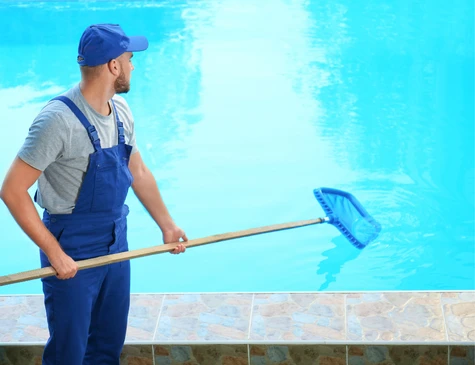
Don't skip this step. Physically brushing your pool walls, floor, steps, and corners breaks up algae colonies and exposes them to the chlorine in the water. Use a stiff pool brush, especially if you have a plaster or concrete pool.
Brush towards the main drain so your filter can capture and remove the dead algae.
Step 5: Run Your Filter Continuously
After shocking, run your filter 24/7 until the water clears. Your filter is responsible for physically removing the dead algae from the water. During this process, backwash or clean your filter every 12–24 hours to prevent it from becoming clogged and losing efficiency.
Step 6: Add an Algaecide
After shocking, add a quality algaecide to kill off any remaining algae and help prevent regrowth. This is especially important for mustard or black algae. Follow the manufacturer's dosage instructions based on your pool volume.
Step 7: Add Clarifier or Flocculant
Once the algae is dead, your water may still appear cloudy or hazy. A pool clarifier groups fine particles together so your filter can capture them more easily. For a faster result, use a flocculant (floc) — this causes all particles to sink to the bottom so you can vacuum them directly to waste.
Note: If using flocculant, you must vacuum to waste — not through your filter — or you'll just stir everything back up.
Step 8: Vacuum the Pool
Once particles have settled (usually after 8–12 hours with flocculant), vacuum the pool thoroughly. Go slowly and methodically to avoid stirring up the settled debris. Vacuum to waste if possible.
Step 9: Retest and Rebalance
After the cleaning process, test your water again and fine-tune your chemistry. Ensure your chlorine, pH, alkalinity, stabiliser, and phosphate levels are all within the ideal ranges before you consider the job done.
Step 10: Keep Up With Maintenance
Fixing a green pool is only half the battle. The other half is making sure it never happens again. Implement a regular maintenance routine:
- Test water 2–3 times per week in summer
- Run your pump a minimum of 8 hours per day
- Brush walls and vacuum weekly
- Clean or backwash your filter regularly
- Shock the pool after heavy rain or heavy usage
- Maintain consistent chlorine levels between 1–3 ppm
When to Call a Professional Green Pool Cleaning Service in Caulfield South
Sometimes, a green pool is beyond a DIY fix — especially if:
- The water is completely opaque and you can't see the bottom
- You've tried shocking multiple times without improvement
- You're dealing with black algae or a recurring algae problem
- Your filtration system is old or underperforming
- You simply don't have the time or confidence to handle it safely
In these cases, calling a professional pool cleaning service in Caulfield South is the smartest and most cost-effective decision. Professionals have access to commercial-grade chemicals, proper equipment, and the expertise to diagnose and resolve the underlying issue — not just mask it.
A qualified pool technician can typically turn a green pool around in 2–5 days, depending on severity, and will leave you with a full water chemistry report and maintenance recommendations.
How Much Does Green Pool Cleaning Cost in Caulfield South?
The cost of green pool cleaning in Caulfield South varies depending on the severity of the algae bloom and the size of your pool. As a general guide:
Severity LevelEstimated CostMildly green / cloudy$150 – $250Moderately green$250 – $450Heavily green / swamp-like$450 – $800+
Keep in mind that prevention is always cheaper than cure. A basic monthly pool service typically costs a fraction of what you'll spend recovering from a full green pool treatment.
Prevention Tips Specific to Caulfield South Pool Owners
Given the local environmental conditions, here are some targeted tips for Caulfield South homeowners:
- Install a pool cover — reduces debris, evaporation, and chemical loss overnight
- Trim overhanging trees near your pool to reduce organic debris and shade
- Check your pump timer — in summer, increase run time to 10–12 hours per day
- Test after every Melbourne heatwave — temperatures above 30°C dramatically speed up algae growth
- Use a stabilised chlorine product to protect chlorine from UV breakdown
- Get a phosphate test — Caulfield South's water supply can be higher in phosphates, which fuel algae
Final Thoughts
A green pool in Caulfield South is frustrating, but it's absolutely fixable — and preventable. The key is understanding why it's happening, acting quickly when you notice the first signs of discolouration, and maintaining a consistent care routine throughout the year.
Whether you choose to tackle it yourself with a step-by-step approach or bring in a trusted local professional, the most important thing is not to ignore it. The longer green water sits, the harder and more expensive it becomes to treat.
Your pool should be your backyard sanctuary — not a source of stress. With the right knowledge and action, you can have it back to crystal-clear condition in no time.