
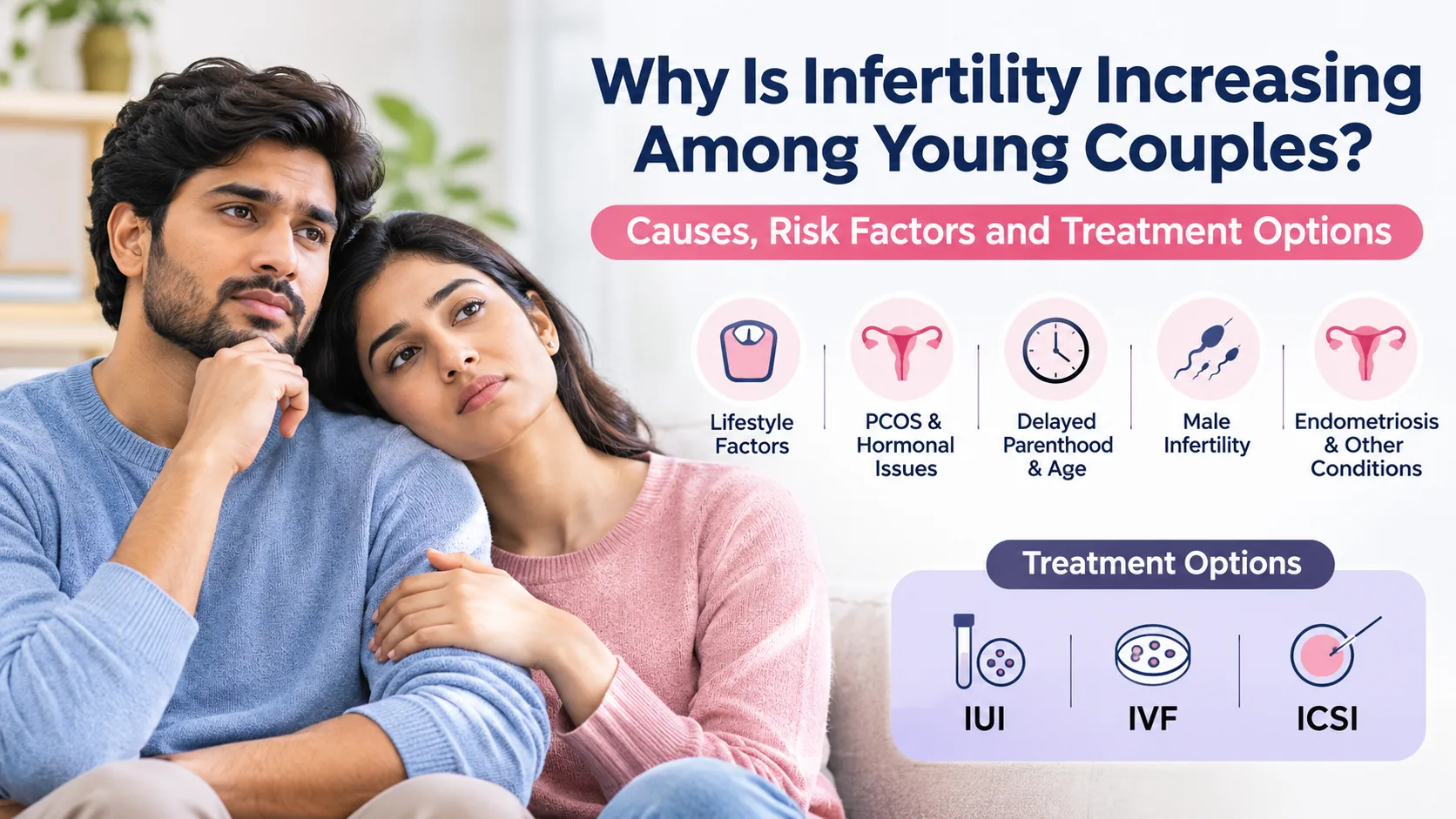
Starting a family is an important milestone for many couples. However, for some, the journey towards parenthood can take longer than expected. Conversations about fertility difficulties among younger couples have become increasingly common, raising important questions: Why are couples experiencing challenges with conception? Are modern lifestyle habits affecting reproductive health? And when should couples consider medical evaluation?
Infertility is a significant global reproductive health concern. According to the World Health Organization (WHO), approximately one in six people of reproductive age experience infertility during their lifetime. Although this does not establish that infertility is increasing specifically among young couples, greater awareness, changing reproductive choices and improved access to diagnosis have brought the subject into wider discussion.
Couples experiencing difficulty conceiving can seek professional guidance and explore treatment options at the best fertility hospital in Chennai, where fertility specialists can help identify potential reproductive health concerns and discuss suitable treatment approaches.
Understanding the possible causes, identifying risk factors and seeking timely medical advice can help couples make informed decisions about their reproductive health.
1. Changing Lifestyle Habits and Reproductive Health
Modern lifestyles can influence several aspects of reproductive health. Long working hours, sedentary routines, irregular sleep patterns, smoking, excessive alcohol consumption and unhealthy dietary habits may contribute to conditions associated with reduced fertility.
Obesity, for example, can affect hormonal balance and ovulation in women. It may also be associated with poorer sperm parameters in men.
Similarly, smoking and excessive alcohol consumption have been linked to adverse reproductive outcomes in both sexes.
However, lifestyle factors are only one part of the picture. Infertility can also result from medical conditions, reproductive abnormalities, age-related changes or unexplained causes.
2. Polycystic Ovary Syndrome (PCOS)
Polycystic ovary syndrome (PCOS) is a common hormonal condition affecting women during their reproductive years.
Women with PCOS may experience:
- Irregular or missed menstrual periods
- Infrequent or absent ovulation
- Acne and excessive facial hair
- Weight-related and metabolic concerns
- Difficulty conceiving
PCOS can make predicting ovulation more challenging, which may affect the chances of natural conception.
However, having PCOS does not mean pregnancy is impossible. Depending on individual circumstances, treatment may involve lifestyle modifications, medications to support ovulation or assisted reproductive techniques.
3. Delayed Parenthood and Age-Related Fertility Changes
Many couples choose to postpone parenthood because of education, career development, financial planning or personal circumstances.
Although fertility problems can occur at any age, female fertility gradually declines with age, with a more noticeable reduction during the mid-to-late thirties.
Age-related changes can affect:
- The number of available eggs
- Egg quality
- Embryo development
- The likelihood of miscarriage
- The chances of achieving pregnancy
Male fertility also changes with age, although the pattern and degree of change differ.
Understanding reproductive ageing can help couples make informed decisions about family planning and whether fertility preservation is worth discussing with a specialist.
4. Male Infertility: An Important Part of the Equation
Infertility is not exclusively a female reproductive health concern. Male factors contribute to a substantial proportion of infertility cases, either independently or alongside female factors.
Some common causes include:
Low sperm count: Fewer sperm may reduce the likelihood of fertilisation.
Poor sperm motility: Sperm movement is important for reaching and fertilising an egg.
Abnormal sperm morphology: Changes in sperm shape may affect reproductive function.
Varicocele: Enlarged veins around the testicles can affect sperm production and quality in some men.
Hormonal problems: Certain hormonal conditions can interfere with normal sperm production.
A semen analysis is commonly used as an initial investigation to assess sperm concentration, movement and morphology. Further evaluation may be recommended depending on the results.
Both partners should be assessed when investigating infertility. Focusing only on female fertility can delay the identification of male reproductive factors.
5. Endometriosis and Other Reproductive Health Conditions
Endometriosis is a condition in which tissue similar to the lining of the uterus grows outside the uterus. It can cause pelvic pain, painful periods and, in some individuals, difficulties with conception.
Other conditions that may affect female fertility include:
- Blocked or damaged fallopian tubes
- Uterine fibroids
- Certain uterine abnormalities
- Thyroid and other hormonal disorders
- Reduced ovarian reserve
- Previous pelvic infections
Some conditions may produce noticeable symptoms, while others can remain undiagnosed until a fertility assessment is performed.
Persistent pelvic pain, unusually painful periods, irregular menstrual cycles or a history of pelvic infections should be discussed with a healthcare professional.
6. Stress and Mental Well-Being
The relationship between stress and infertility is complex.
Fertility difficulties can create emotional pressure, anxiety and uncertainty. At the same time, significant physical or psychological stress may affect sleep, general health and, in some circumstances, menstrual or ovulatory function.
However, stress should not be treated as the sole explanation for infertility. Couples should never be made to feel that they are unable to conceive simply because they are worrying too much.
Emotional support, healthy routines and appropriate medical evaluation can all play important roles during the fertility journey.
7. When Should Young Couples Seek Fertility Evaluation?
Knowing when to consult a fertility specialist is important.
For couples having regular, unprotected intercourse:
- Women below 35 years of age are generally advised to seek evaluation after 12 months without conception.
- Women aged 35 years and above should generally seek evaluation after six months.
- Women over 40 may benefit from more immediate assessment.
Earlier consultation is appropriate when there are known reproductive health conditions, irregular or absent periods, suspected endometriosis, previous pelvic infections, recurrent pregnancy loss or known male fertility concerns.
A fertility consultation does not automatically mean that IVF is necessary. It helps identify potential problems and determine whether treatment is required.
8. What Happens During a Fertility Evaluation?
A fertility assessment generally considers the reproductive health of both partners.
Depending on medical history and clinical findings, investigations may include:
For women:
- Menstrual and ovulation history
- Pelvic ultrasound
- Hormonal investigations when indicated
- Ovarian reserve assessment
- Evaluation of fallopian tube patency
For men:
- Medical and reproductive history
- Semen analysis
- Hormonal assessment when indicated
- Further examination or investigations if abnormalities are identified
The purpose is to understand the underlying factors affecting conception and develop an appropriate treatment approach.
Not every patient requires every investigation. Testing should be guided by the individual's medical history and specialist assessment.
9. What Fertility Treatment Options Are Available?
Treatment depends on the cause of infertility, age, medical history and preferences of the couple.
Intrauterine Insemination (IUI)
IUI involves placing specially prepared sperm directly into the uterus around the time of ovulation. It may be considered in selected cases of unexplained infertility, mild male factor infertility and certain ovulatory conditions.
For couples who may benefit from this procedure, understanding IUI treatment in Chennai can help them explore the procedure, eligibility and treatment process.
In Vitro Fertilisation (IVF)
IVF involves collecting eggs from the ovaries and fertilising them with sperm in a laboratory. Suitable embryos may subsequently be transferred into the uterus.
IVF may be recommended for conditions such as blocked fallopian tubes, certain cases of male infertility, endometriosis and infertility that has not responded to other treatments.
Couples exploring assisted reproduction can learn more about IVF treatment options, including the treatment process and factors considered when planning an IVF cycle.
Intracytoplasmic Sperm Injection (ICSI)
ICSI is a specialised fertilisation technique in which an individual sperm is injected directly into an egg. It is commonly used in certain male-factor infertility cases or when previous fertilisation difficulties have occurred.
You can understand more about ICSI treatment in Chennai and when this advanced laboratory technique may be recommended.
Fertility Preservation
Egg or embryo freezing may be considered by individuals who wish to preserve reproductive options for the future. The suitability and potential benefits depend on age, reproductive health and individual circumstances.
No single treatment is appropriate for everyone. A fertility specialist can explain the expected benefits, limitations, risks and alternatives before treatment begins.
10. The Importance of Choosing the Right Fertility Care Team
Fertility treatment involves more than medical procedures. It requires accurate diagnosis, appropriate treatment planning, laboratory expertise and ongoing patient support.
When choosing a fertility centre, couples should consider:
- Qualifications and experience of fertility specialists
- Availability of appropriate diagnostic facilities
- Embryology laboratory standards
- Transparent treatment costs
- Individualised treatment recommendations
- Clear communication about realistic outcomes
- Emotional support throughout treatment
Couples should also ask how success rates are calculated, whether the figures apply to their age group and what outcomes are being measured.
A responsible fertility centre will explain that treatment outcomes vary between individuals and that pregnancy cannot be guaranteed.
11. Accessing Fertility Care in Tambaram, Chennai
Access to fertility consultations and follow-up care can be an important consideration for couples undergoing fertility evaluation or treatment.
The Hive Fertility Clinic's Tambaram centre, located at Camp Road Junction, Selaiyur, provides fertility consultations and treatment options including IVF, IUI and ICSI. The centre serves patients from Tambaram, Chromepet, Medavakkam, Chitlapakkam and surrounding areas.
Couples looking for a nearby fertility hospital in Tambaram can explore the clinic's location, available services and consultation information.
Supporting Your Journey Towards Parenthood
Infertility can be challenging, particularly when couples are unsure why conception is taking longer than expected. However, understanding reproductive health, identifying possible risk factors and seeking appropriate medical guidance can help make the next steps clearer.
The Hive Fertility Clinic provides fertility and reproductive healthcare services for individuals and couples exploring options for conception. Its approach includes fertility assessment and treatment options such as IVF, IUI and ICSI, based on individual clinical requirements.
Couples seeking professional fertility guidance can explore The Hive Fertility Clinic to learn more about available services and locations.
The most important thing to remember is that infertility is a medical condition, not a personal failure. Both partners deserve appropriate evaluation, accurate information and compassionate support throughout their journey towards parenthood.
Medical disclaimer: This article is intended for general educational purposes and does not replace individual medical advice, diagnosis or treatment. Consult a qualified fertility specialist for personalised guidance.