The Anterior Cruciate Ligament (ACL) is one of the major ligaments responsible for maintaining stability in the knee joint. It helps control forward movement and rotational stability of the shinbone while supporting activities such as walking, running, jumping, and changing direction. An ACL injury commonly occurs during sports activities, sudden twisting movements, awkward landings, or accidents.
A torn ACL can affect everyday activities and make the knee feel unstable, particularly during movements that involve turning or sudden changes in direction. For patients with significant ligament injuries, arthroscopic ACL reconstruction surgery may be recommended to restore knee stability and improve joint function. Dr. V. Rajkumar provides orthopedic consultation for patients exploring ACL injury treatment and reconstruction options.
Understanding ACL Tears and Their Impact on Knee Stability
The ACL connects the thighbone (femur) to the shinbone (tibia) and plays an important role in controlling knee movement. When this ligament tears, the knee may lose some of its natural stability.
Common symptoms of an ACL tear include:
- A popping sensation at the time of injury
- Swelling around the knee joint
- Difficulty bearing weight immediately after injury
- Reduced knee movement and flexibility
- A feeling that the knee may give way while walking
- Difficulty participating in sports and physical activities
An untreated ACL injury may also increase the risk of additional knee problems, including meniscus damage and cartilage injuries. Therefore, proper diagnosis and timely treatment are important for protecting overall knee function.
What Is Arthroscopic ACL Reconstruction Surgery?
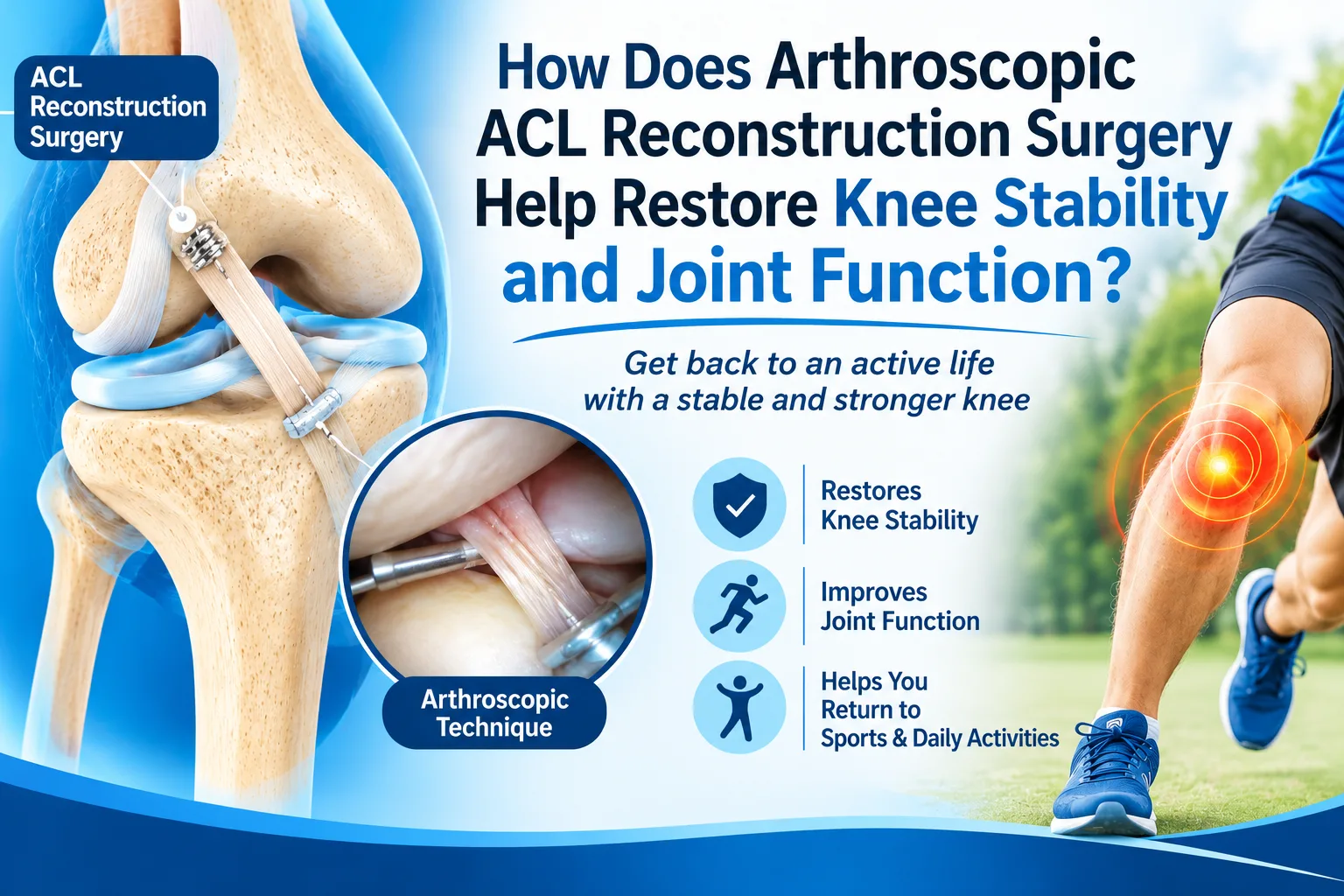
Arthroscopic ACL reconstruction in Chennai is a minimally invasive surgical procedure used to replace a torn anterior cruciate ligament with a tissue graft. Unlike traditional open surgery, arthroscopy involves making small incisions through which a specialised camera and surgical instruments are inserted into the knee joint.
The surgeon examines the damaged ligament and surrounding structures using the arthroscope. The torn ACL is then addressed, and a suitable graft is positioned to recreate the function of the original ligament.
The graft may be obtained from the patient's own tissue, such as the hamstring or patellar tendon, depending on individual requirements and surgical assessment.
How Does Arthroscopic ACL Reconstruction Help Restore Knee Stability?
Arthroscopic ACL reconstruction focuses on restoring the ligament's role in controlling knee movement. The procedure supports knee stability through several important steps.
1. Replacing the Damaged ACL
A completely torn ACL cannot reliably perform its normal stabilising function. During reconstruction, the damaged ligament is replaced with a suitable tissue graft.
This graft acts as a replacement ligament and helps control excessive forward movement of the shinbone. As the graft heals and integrates with the surrounding tissues, it gradually supports improved knee stability.
2. Improving Rotational Knee Stability
The ACL also helps control rotational movements of the knee. When it is damaged, patients may experience instability while turning, pivoting, or changing direction.
Arthroscopic reconstruction aims to restore this important function by positioning the graft to replicate the natural role of the ACL. This can help patients regain confidence during everyday movements and physical activities.
3. Supporting Natural Knee Movement
Proper ligament function contributes to coordinated knee movement. ACL reconstruction helps restore the structural support needed for bending, straightening, and controlled movement.
The surgeon evaluates the knee joint and positions the graft according to the patient's anatomy and surgical requirements.
4. Addressing Associated Knee Injuries
ACL tears may occur alongside other injuries, particularly meniscus tears and cartilage damage. Arthroscopic surgery allows the surgeon to examine the internal structures of the knee.
When additional injuries are identified, suitable treatment may be performed during the same procedure, depending on their severity and the patient's condition. Addressing these associated problems is important for overall knee function.
5. Helping Patients Return to Physical Activities
Restoring knee stability is an important step towards returning to normal activities. Following surgery, a structured rehabilitation programme helps improve muscle strength, flexibility, balance, and coordination.
The recovery process varies depending on the severity of the injury, graft selection, associated damage, and individual healing response. Returning to sports requires careful assessment of strength, movement control, and knee stability rather than relying only on recovery time.
Recovery After Arthroscopic ACL Reconstruction Surgery
Recovery after ACL reconstruction involves multiple stages. Initially, treatment focuses on managing swelling, controlling discomfort, and gradually improving knee movement.
Physiotherapy plays an important role throughout recovery. Patients may progress through:
- Initial recovery: Swelling management and gentle knee movements.
- Strength development: Exercises to improve quadriceps and hamstring strength.
- Balance training: Activities that improve coordination and joint control.
- Functional rehabilitation: Gradual progression towards walking, running, and sports-specific movements.
Following the surgeon's rehabilitation instructions is essential. Returning to demanding physical activities too early may increase the risk of graft injury or reinjury.
When Should You Consider ACL Reconstruction Surgery?
Patients experiencing repeated knee instability, difficulty participating in physical activities, or persistent functional limitations after an ACL tear may require surgical evaluation. However, not every ACL injury requires reconstruction. Treatment depends on the extent of ligament damage, activity levels, associated injuries, and individual expectations.
A detailed orthopedic assessment, physical examination, and imaging investigations such as MRI help determine the appropriate treatment approach.
Consult Dr. V. Rajkumar for ACL Injury Treatment in Chennai
Choosing the appropriate treatment for an ACL tear requires careful evaluation of the knee joint and its supporting structures. Dr. V. Rajkumar offers orthopedic consultation for patients experiencing ligament injuries, knee instability, and sports-related conditions.
If you are looking for ACL reconstruction surgery Chennai, consult Dr. V. Rajkumar to understand the available treatment approaches, including arthroscopic ACL reconstruction. An individualised treatment plan, combined with appropriate rehabilitation, can help support knee stability, movement, and a gradual return to daily activities.