
Introduction
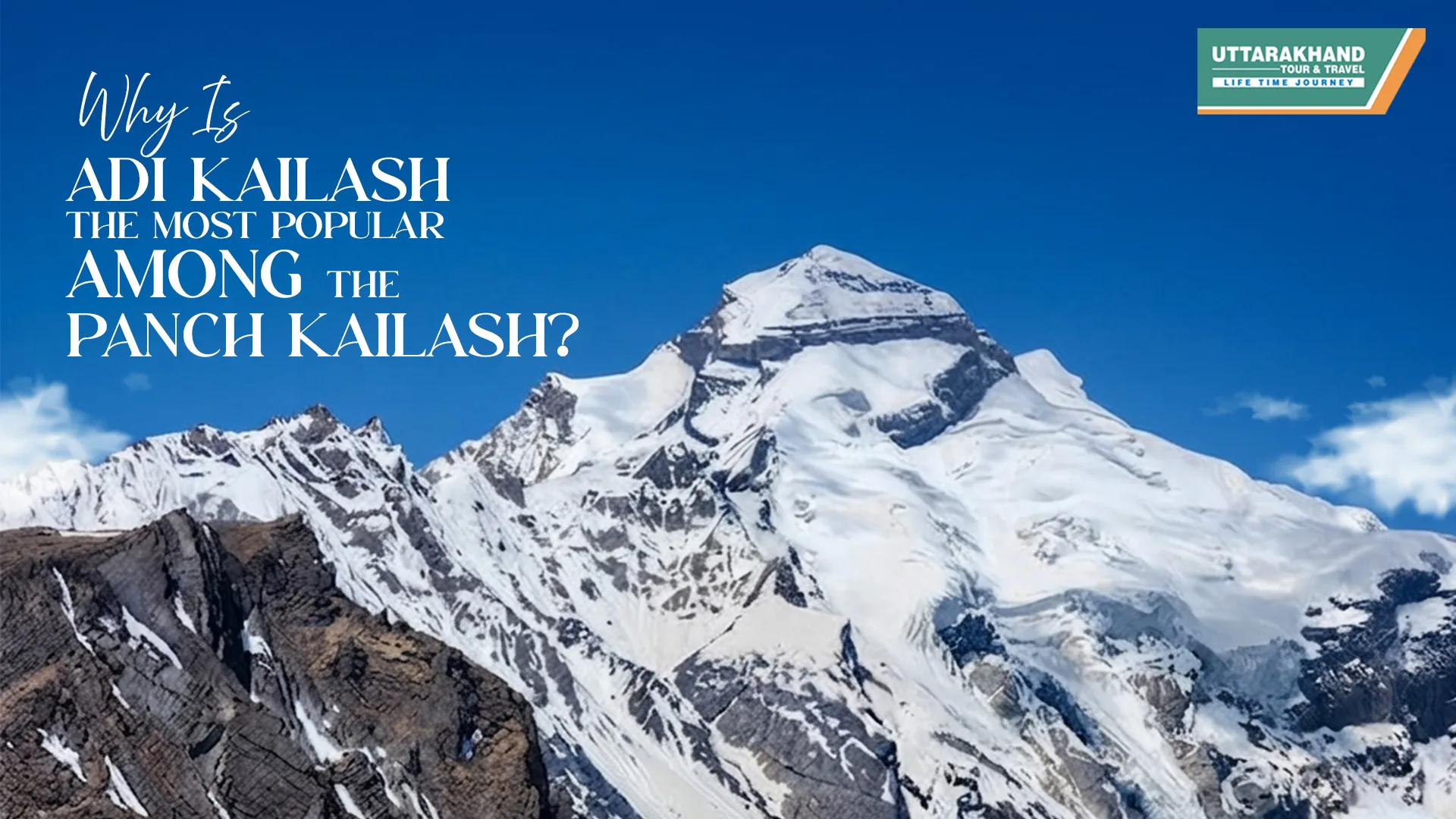
For centuries, the Himalayas have drawn pilgrims and trekkers toward five sacred peaks collectively known as the Panch Kailash — Mount Kailash (Tibet), Adi Kailash, Kinnaur Kailash, Shrikhand Kailash, and Manimahesh Kailash. Each of these mountains is revered as an abode of Lord Shiva, but among them, one destination has steadily emerged as the most sought-after: Adi Kailash, often called Chhota Kailash (Little Kailash).
Tucked away in the Pithoragarh district of Uttarakhand, near the India-Nepal-Tibet tri-junction, Adi Kailash offers pilgrims an experience that closely mirrors the original Mount Kailash in Tibet — without the logistical and political hurdles of crossing into Chinese territory. This single factor, combined with breathtaking landscapes and deep spiritual significance, has made it the preferred choice for thousands of devotees every year.
In this blog, we explore exactly why Adi Kailash has become the crown jewel of the Panch Kailash circuit.
1. It Offers the Closest Experience to the Original Mount Kailash
Adi Kailash's conical, snow-capped peak bears a striking resemblance to Mount Kailash in Tibet, which is why it earned the nickname "Chhota Kailash." For devotees who cannot undertake the arduous and often visa-restricted journey to Tibet, Adi Kailash provides a spiritually equivalent alternative entirely within Indian territory. Pilgrims get to complete a parikrama (circumambulation) and witness a sacred mountain associated with Lord Shiva, all while enjoying smoother travel logistics.
2. Easier Accessibility Compared to Other Panch Kailash Peaks
Unlike Mount Kailash in Tibet, which requires international permits, a Chinese visa, and weeks of preparation, Adi Kailash is accessible via a well-established route through Dharchula, Gunji, Nabhidhang, and Jolingkong in Uttarakhand. The Indian government, through KMVN (Kumaon Mandal Vikas Nigam) and registered tour operators, has developed this route with rest stops, guesthouses, and permit support, making the journey considerably more manageable than treks to Kinnaur Kailash or Shrikhand Kailash, both of which involve technically demanding and high-altitude terrain with fewer facilities.
3. The Sacred Presence of Om Parvat
One of the biggest draws of the Adi Kailash Yatra is Om Parvat, a nearby peak where snow naturally settles into the shape of the sacred "Om" symbol. This extraordinary natural phenomenon is unique to this route and isn't found on any other Panch Kailash trail. For many pilgrims, witnessing Om Parvat is as spiritually significant as reaching Adi Kailash itself, giving this yatra a dual highlight that other circuits simply cannot match.
4. Rich Mythological Significance
According to Hindu mythology, the Adi Kailash region is closely linked to the Pandavas from the Mahabharata, who are believed to have passed through this area during their final journey. The region is also associated with the nearby Parvati Sarovar (also called Jolingkong Lake) and Gauri Kund, both tied to legends of Goddess Parvati. This layered mythology — encompassing Shiva, Parvati, and the Pandavas — gives Adi Kailash a narrative depth that resonates strongly with pilgrims seeking more than just a scenic trek.
5. Breathtaking Himalayan Landscapes
The route to Adi Kailash passes through some of the most dramatic scenery in the Kumaon Himalayas — alpine meadows, glacial lakes, high-altitude passes, and views of snow-clad peaks along the India-Tibet border. Stops like Gunji, Nabhidhang, and Jolingkong offer pilgrims a rare combination of spiritual pilgrimage and Himalayan adventure, which appeals to both devout travelers and nature enthusiasts.
6. Government Support and Improved Infrastructure
In recent years, the Uttarakhand government has actively promoted the Adi Kailash and Om Parvat Yatra as part of its border tourism initiative, especially following improvements in road connectivity to Lipulekh and the surrounding region. This has resulted in better roads, more homestays, improved permit processes, and greater safety oversight — advantages that peaks like Shrikhand Kailash (known for its dangerous, unmarked trails) and Kinnaur Kailash (requiring serious mountaineering fitness) still lack.
7. Suitable for a Wider Range of Pilgrims
While Shrikhand Kailash demands intense physical fitness and mountaineering experience, and Manimahesh Kailash involves a challenging high-altitude trek, the Adi Kailash Yatra — especially with recent road access extending closer to Nabhidhang — is comparatively achievable for moderately fit pilgrims, families, and first-time high-altitude travelers. This inclusivity significantly widens its appeal.
Conclusion
Adi Kailash's popularity among the Panch Kailash isn't a coincidence — it's the result of a rare combination: a visual and spiritual echo of the original Mount Kailash, the awe-inspiring Om Parvat, rich mythological roots, improving infrastructure, and relatively accessible terrain. For pilgrims who want a deeply spiritual Himalayan journey without the extreme difficulty or international travel complications of the other Kailash peaks, Adi Kailash stands out as the most fulfilling choice.
If you're planning your own Adi Kailash and Om Parvat Yatra, choosing an experienced local operator familiar with the Pithoragarh route, permits, and altitude considerations can make the journey smoother and safer.
Ready to Experience Adi Kailash Yourself?
Witnessing the sacred Adi Kailash peak and the divine Om Parvat is an experience every spiritual traveler should have at least once. Uttarakhand Tour & Travel offers well-planned Adi Kailash Om Parvat Yatra 2026 packages, complete with permit assistance, comfortable stays, and experienced local guides who know the route inside out.
📞Book your spot today: +91 9634755026
📸Follow us for updates: Instagram | YouTube
Limited seats available for the upcoming yatra season — reserve yours now and set out on a journey of a lifetime.
Frequently Asked Questions (FAQs)
Q1. What is the difference between Adi Kailash and Mount Kailash?
Mount Kailash is located in Tibet (China) and considered the primary abode of Lord Shiva, requiring a Chinese visa and international travel. Adi Kailash, located in Uttarakhand, India, closely resembles Mount Kailash in shape and spiritual symbolism, offering a similar pilgrimage experience entirely within Indian territory.
Q2. What is the best time to visit Adi Kailash?
The ideal season for the Adi Kailash Yatra is between May and June, and again from September to October, when the weather is relatively stable and the high-altitude passes are accessible.
Q3. Is the Adi Kailash Yatra difficult for beginners?
The yatra involves high-altitude travel and some trekking, but with proper acclimatization and support from experienced tour operators, it is considered moderately challenging and achievable for reasonably fit travelers, including first-timers.
Q4. What is Om Parvat, and why is it special?
Om Parvat is a peak near Adi Kailash where snow naturally forms the shape of the sacred "Om" symbol. It is considered a rare natural and spiritual phenomenon unique to this route.
Q5. Do I need special permits for the Adi Kailash Yatra?
Yes, since the route passes near the India-Nepal-Tibet border, an Inner Line Permit (ILP) is required, which is typically arranged by registered tour operators as part of the yatra package.