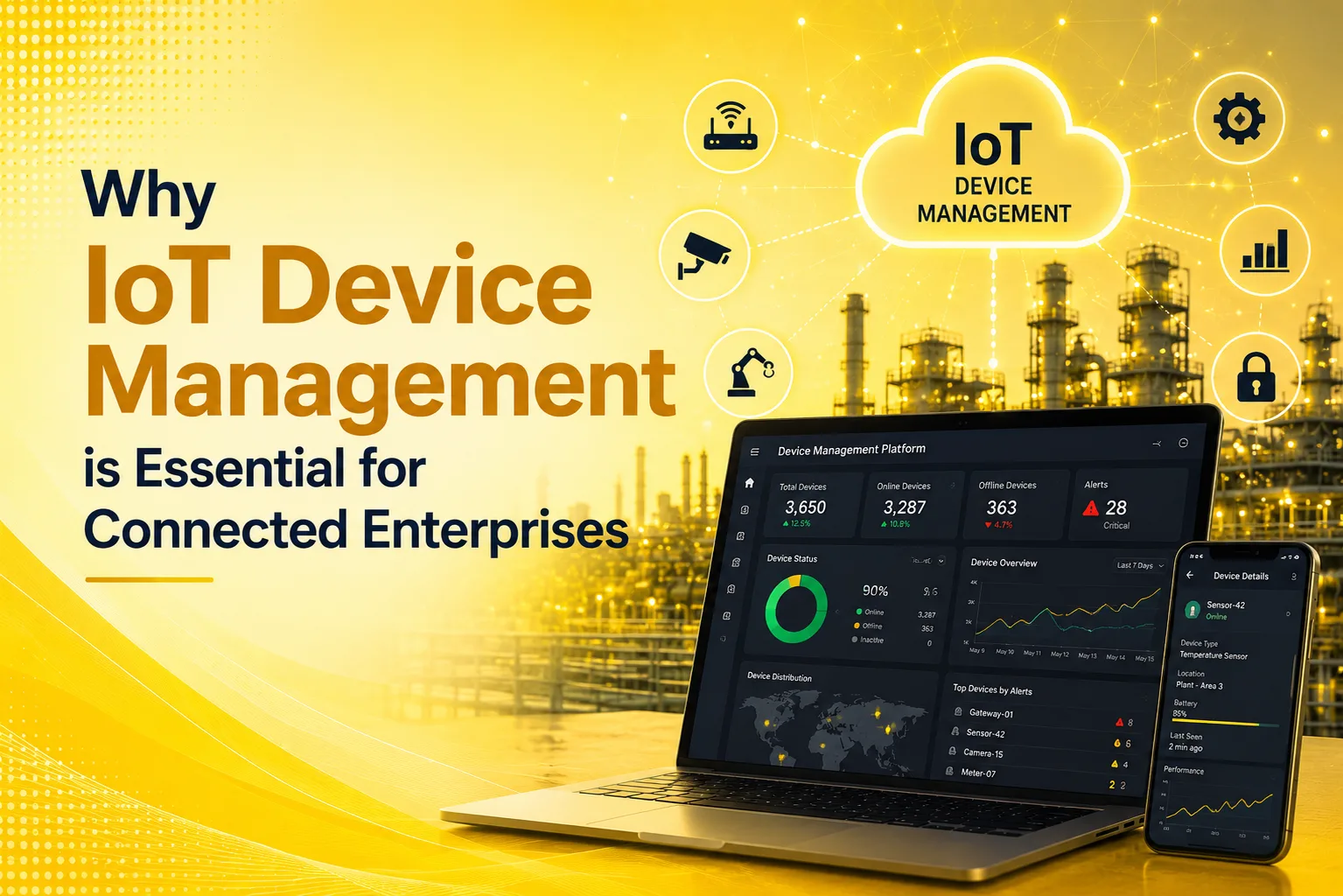
The rapid growth of connected technology has transformed the way businesses operate. From manufacturing plants and healthcare facilities to smart buildings and logistics networks, organizations rely on connected devices to collect data, automate processes, and improve decision-making. IoT Device Management is the foundation of these smart connected systems because it ensures that every device remains secure, connected, updated, and functioning efficiently throughout its lifecycle. Without an effective management strategy, businesses may face downtime, security risks, and operational challenges that can impact productivity and growth.
Understanding Device Management
Connected environments often include hundreds or even thousands of devices working together. These devices collect data, communicate with other systems, and support critical business operations.
Managing such a large network manually is both difficult and time-consuming. Device management provides a centralized approach to monitor, configure, update, and maintain connected devices from a single platform.
This centralized control helps organizations ensure that every device operates efficiently while reducing the complexity of managing large deployments.
Why It Matters for Smart Connected Systems
Smart connected systems depend on continuous communication between devices, gateways, cloud platforms, and business applications. If even a few devices stop working correctly, the entire system can be affected.
A reliable management platform helps organizations:
- Monitor device health in real time.
- Identify performance issues early.
- Maintain secure connections.
- Reduce operational risks.
- Improve overall system reliability.
By keeping devices connected and functioning properly, businesses can maintain uninterrupted operations and deliver consistent services.
Simplifying Device Deployment
Deploying hundreds of devices across multiple locations can be a complex process.
Modern management platforms simplify deployment by allowing administrators to register, configure, and activate devices remotely. Instead of configuring each device individually, organizations can apply settings automatically during installation.
This approach reduces setup time while ensuring consistency across every connected device.
Faster deployment also allows businesses to expand their connected infrastructure more efficiently.
Real-Time Monitoring for Better Performance
Continuous monitoring is one of the most valuable features of modern device management platforms.
Businesses receive instant visibility into important operational information such as:
- Device status
- Connectivity
- Battery levels
- System performance
- Network health
- Operational alerts
Real-time monitoring helps technical teams identify potential issues before they affect business operations.
Instead of reacting after a failure occurs, organizations can take proactive action to maintain system performance.
Strengthening Security
As connected devices become more common, cybersecurity has become increasingly important.
Every connected device represents a potential entry point for cyber threats if it is not properly secured.
Effective management solutions improve security through features such as:
- Secure authentication
- Device identity verification
- Data encryption
- Remote access control
- Firmware updates
- Security monitoring
These capabilities help protect sensitive business information while reducing the risk of unauthorized access.
Keeping Software Up to Date
Software updates are essential for maintaining performance, fixing bugs, and improving security.
Without centralized management, updating thousands of devices manually becomes nearly impossible.
Modern platforms allow administrators to:
- Schedule updates remotely.
- Install security patches automatically.
- Monitor update progress.
- Roll back updates if necessary.
Regular software updates help devices remain secure while improving long-term reliability.
Reducing Downtime
Unexpected downtime can result in production delays, financial losses, and reduced customer satisfaction.
Continuous monitoring allows organizations to detect unusual behavior before failures occur.
Early alerts enable maintenance teams to:
- Investigate issues quickly.
- Replace faulty components.
- Restore connectivity.
- Prevent larger operational disruptions.
Reducing downtime helps businesses improve productivity while minimizing maintenance costs.
Supporting Remote Management
Many organizations operate across multiple locations.
Managing devices at remote facilities can be expensive and time-consuming if technicians must travel for every maintenance task.
Remote management enables administrators to:
- Configure devices.
- Restart equipment.
- Diagnose issues.
- Apply software updates.
- Monitor performance.
This significantly reduces maintenance costs while improving response times.
Improving Scalability
Business growth often requires adding more connected devices.
A scalable management platform allows organizations to expand their connected infrastructure without increasing operational complexity.
Whether adding:
- New production equipment
- Additional sensors
- Smart building systems
- Remote facilities
- Transportation assets
Centralized management makes expansion simple and efficient.
Scalability ensures that businesses remain prepared for future growth.
Supporting Predictive Maintenance
Predictive maintenance has become an important part of modern industrial operations.
Management platforms continuously collect operational information that helps identify early signs of equipment failure.
Instead of waiting for machines to break down, maintenance teams receive notifications when performance begins to decline.
Benefits include:
- Lower maintenance costs
- Reduced equipment failures
- Longer equipment lifespan
- Better production planning
- Improved operational efficiency
Predictive maintenance allows organizations to maximize equipment availability while minimizing unexpected interruptions.
Better Data Management
Connected devices generate large amounts of valuable information every day.
Management platforms organize and process this data so businesses can gain meaningful insights.
Organizations can analyze:
- Equipment performance
- Usage patterns
- Resource consumption
- Operational efficiency
- Historical trends
These insights support better business planning and continuous operational improvement.
Applications Across Industries
Connected device management supports digital transformation across many sectors.
Manufacturing
Factories monitor production equipment, improve maintenance planning, and optimize manufacturing efficiency.
Healthcare
Hospitals manage connected medical equipment while improving patient care and operational reliability.
Agriculture
Farmers monitor irrigation systems, environmental conditions, and equipment performance to increase productivity.
Logistics
Transportation companies track vehicles, monitor cargo, and improve supply chain visibility.
Energy and Utilities
Power companies monitor substations, renewable energy systems, and distribution networks to improve reliability.
Smart Buildings
Commercial buildings manage lighting, HVAC systems, occupancy monitoring, and energy consumption more efficiently.
Preparing for the Future
The number of connected devices continues to grow rapidly.
Future management platforms will include advanced artificial intelligence, stronger cybersecurity, automated diagnostics, edge computing, and intelligent analytics.
These innovations will enable organizations to:
- Predict failures earlier.
- Improve automation.
- Strengthen security.
- Reduce operational costs.
- Increase system reliability.
Businesses investing in intelligent management solutions today will be well-positioned for future digital transformation.
Why Choose Karikala for Smart Connected Solutions?
Managing connected devices requires reliable technology, secure infrastructure, and expert support. Karikala provides advanced IoT and industrial digital solutions that help businesses simplify device management, improve connectivity, enhance security, and optimize operational performance.
From device deployment and remote monitoring to automation, analytics, and lifecycle management, delivers customized solutions designed to meet the evolving needs of modern industries. Whether you operate in manufacturing, healthcare, logistics, agriculture, energy, or smart infrastructure,offers scalable and future-ready solutions that support long-term business growth.
Final Thoughts
As businesses continue to embrace connected technologies, effective device management has become essential for maintaining security, reliability, and operational efficiency. A well-managed connected ecosystem helps organizations reduce downtime, improve productivity, strengthen cybersecurity, and make smarter business decisions based on real-time data. Investing in a robust management strategy today lays the foundation for a more connected, efficient, and future-ready organization.