
A broken thermostat doesn't wait for a convenient time to fail. Neither does a leaking pipe or a jammed door lock. Maintenance issues show up whenever they want, and how fast your team catches and fixes them says a lot about how well your hotel actually runs. That's the whole idea behind hotel maintenance management software: giving your team a real system to report, assign, and track repairs, instead of hoping nothing slips through during a busy shift.
If you've worked in hotel operations for any length of time in the USA, you've probably seen the same story play out. A housekeeper notices something broken, mentions it to whoever's nearby, and somehow it never reaches the maintenance team. Days later, a guest complains about the exact same issue. Nobody dropped the ball on purpose. The system just wasn't built to catch it. Here's why that has to change, and why it needs to work from a phone, not just a desk.
The Trouble With Old-School Maintenance Tracking
Clipboards, whiteboards, and verbal handoffs might have worked fine years ago, but hotels have gotten busier and guest expectations have gotten higher. Manual hotel maintenance management simply can't keep pace with a property running at full occupancy.
When information depends on someone remembering to write it down or pass it along, gaps are inevitable. A request gets logged in one place, a technician checks a different list, and somewhere in between, the actual repair gets delayed.
Why "Good Enough" Software Isn't Good Enough Anymore
Some hotels have moved on from paper, only to end up with basic spreadsheets or outdated hotel maintenance software that wasn't really built for how a maintenance team works day to day. It technically tracks issues, but it's slow, clunky, and often requires sitting at a desk to update anything.
That's a problem when your maintenance team spends most of their day walking the property, not sitting behind a computer. Software that doesn't match how the job actually happens ends up ignored, and you're back to verbal updates within a few weeks.
Bringing Everything Into One System
A proper hotel maintenance management system changes the picture completely. Every reported issue lives in one place, tagged with details like location, priority, and photos, so nothing depends on memory or a scrap of paper taped to a board.
Managers get a clear view of what's open, what's in progress, and what's already resolved, without needing to track anyone down for an update. That visibility alone prevents a lot of the small issues that quietly turn into guest complaints.
Never Losing Track of a Repair Again
One of the most frustrating moments for any hotel manager is finding out a guest reported an issue days ago that was never actually fixed. Solid hotel maintenance tracking software makes that scenario far less likely, since every issue is logged the moment it's reported and stays visible until it's marked complete.
There's no relying on someone's memory to know whether a job got done. The record is right there, timestamped, with a clear resolution status.
Stopping Problems Before They Start
Reactive fixes matter, but catching issues early matters even more. Recurring inspections for HVAC systems, elevators, fire safety equipment, and other critical systems are exactly what preventive maintenance software is built for.
Instead of relying on someone remembering that a filter needs changing or an inspection is overdue, the system sends a reminder automatically. That single habit can prevent a lot of expensive breakdowns down the line.
Maintenance That Moves With Your Team
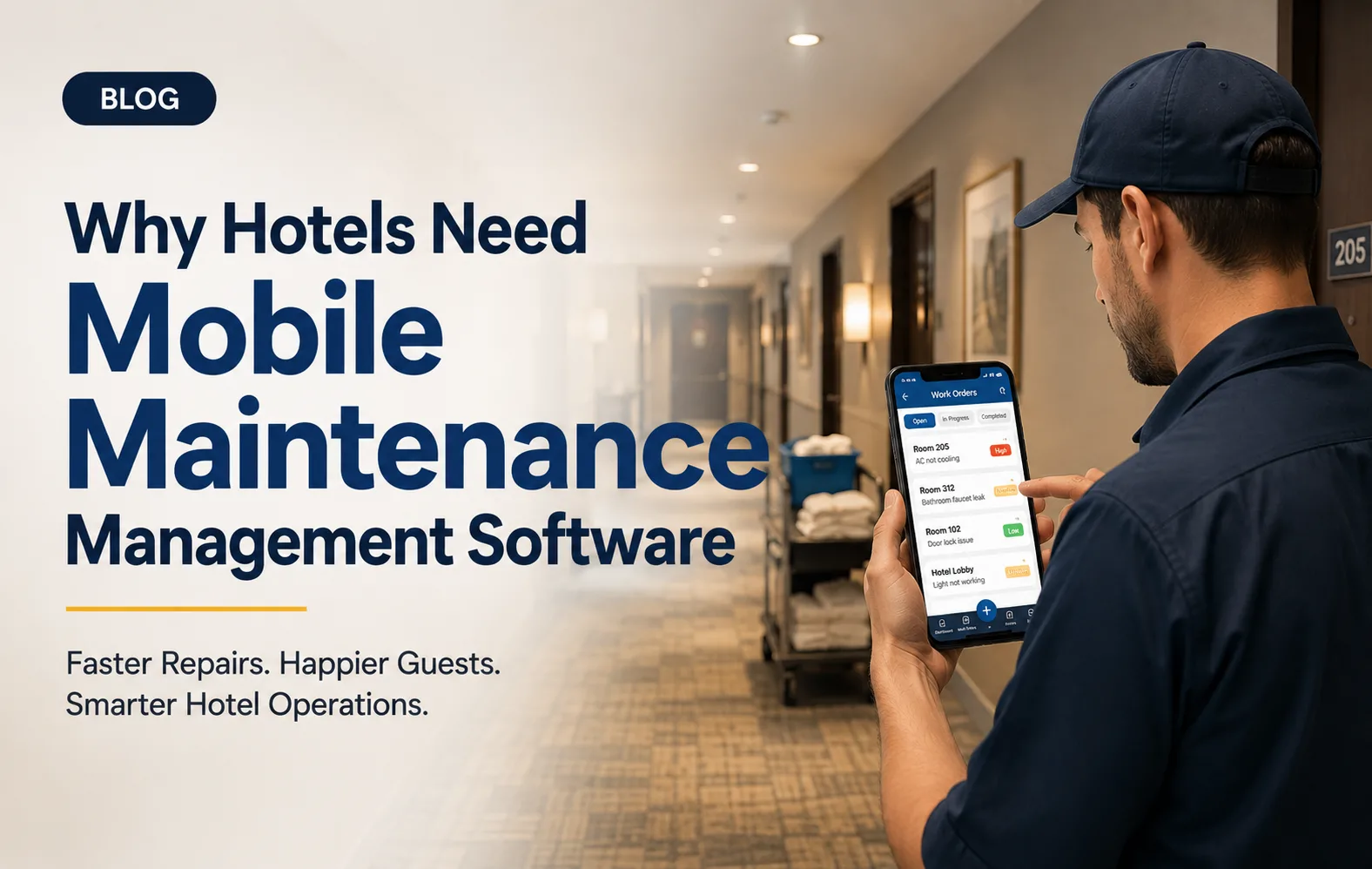
Here's the part that makes the biggest practical difference: your maintenance team isn't sitting at a desk all day, so their tools shouldn't require one. This is exactly where mobile maintenance management software earns its place, letting technicians view, update, and close out work orders straight from their phone while they're already on the job.
A well-built hotel maintenance app takes this further by keeping the whole experience simple, so staff aren't fumbling through a complicated interface between tasks. They see what needs attention, tackle it, mark it done, and move to the next thing.
Turning Every Request Into Action
Every reported issue should turn into a clear, trackable task, not a vague note that might get followed up on eventually. That's the role hotel work order software plays: converting a reported problem into an assigned job with all the details a technician actually needs, so they're not showing up unprepared or making a second trip for a tool they didn't know they'd need.
Seeing the Bigger Operational Picture
Maintenance rarely operates in isolation. It connects to housekeeping, front desk, and everything else happening across the property. That's why the strongest setups treat maintenance as part of a larger hotel operations management software strategy rather than a standalone tool bolted on separately.
Increasingly, hotels are choosing to bring this all together through a hotel operations companion tool, something that works alongside their existing property management system instead of replacing it, adding real-time visibility across departments without a disruptive software overhaul. Properties using tools like Inncrew to connect maintenance with the rest of their daily operations tend to notice fewer things falling through the cracks almost immediately.
Bringing It All Together
None of this is about adding complexity for its own sake. It's about giving your maintenance team a system that actually fits how their day works, so small issues get caught and fixed before a guest ever notices them. That's really the whole point: fewer surprises, faster repairs, and a property that consistently feels well cared for, because it genuinely is.
Frequently Asked Questions
1. What is hotel maintenance management software?
It's a system that lets hotel staff report, assign, and track maintenance issues digitally, replacing paper logs and verbal work orders with real-time updates.
2. Why should maintenance software be mobile?
Maintenance staff are constantly moving around the property, so mobile access lets them update or close out work orders on the spot instead of returning to a desk.
3. How does this software help prevent equipment breakdowns?
It schedules recurring inspections for equipment like HVAC and elevators, sending automatic reminders so preventive checks aren't missed or forgotten.
4. Can front desk staff report maintenance issues too?
Yes. Most systems allow any staff member, not just maintenance technicians, to log an issue the moment they spot it.
5. Does maintenance software replace a hotel's existing PMS?
No. It typically works alongside your existing property management system, adding maintenance tracking without replacing your current setup.
6. How does this reduce guest complaints?
Faster reporting and assignment mean issues often get fixed before a guest notices them, instead of guests being the ones to report a problem.
7. Is maintenance tracking software useful for small, independent hotels?
Yes. Even smaller properties benefit from clear tracking and preventive scheduling, since missed repairs affect guest experience regardless of hotel size.
8. What should a hotel look for when choosing maintenance software?
Look for mobile accessibility, real-time issue tracking, preventive maintenance scheduling, and the ability to work alongside your current systems rather than replace them.