Introduction: Why Fluid Couplings Matter in Modern Industry
In today's fast-paced industrial environments, machinery needs to be robust, efficient, and protected against overload. Fluid couplings offer a reliable solution that supports smooth power transmission, minimizes mechanical stress, and improves operational safety. At Rathi Couplings, we provide engineered coupling solutions that are tailor-made for demanding applications across sectors like mining, power, cement, and more.
What Are Fluid Couplings?
Fluid couplings are hydrodynamic devices that transmit power between rotating shafts using a fluid medium—usually oil. They operate without any direct mechanical connection between the driving and driven components. Instead, they leverage centrifugal force to transfer torque via circulating fluid. This design makes them perfect for applications that require soft starts and torque control, protecting equipment from shock loads and reducing mechanical wear.
Benefits of Using Fluid Couplings
There are several reasons why industries choose fluid couplings over rigid alternatives. Below are key advantages:
- Shock load absorption: Prevents damage to motors and gearboxes
- Smooth acceleration: Ideal for conveyors, crushers, and fans
- Overload protection: Reduces system failures
- Minimal maintenance: No gear teeth or wear-prone parts
- Energy efficient: Reduces electricity consumption under variable loads
Rathi Couplings’ fluid designs are engineered for longevity and peak performance in even the most challenging environments.
Applications Across Industries
Fluid couplings are widely used in industries such as:
- Cement: For driving kilns and crushers
- Mining: In conveyor belts and crushers
- Power plants: For cooling fans and feed pumps
- Steel and metals: Supporting rolling mills and processing lines
- Marine: Used in propulsion systems and winches
Their torque-limiting capabilities make them essential for variable-speed applications and equipment with frequent start-stop cycles.
How They Work
The primary components of a fluid coupling include:
- Pump (driving element)
- Turbine (driven element)
- Working fluid (usually oil)
When the pump rotates, it moves the fluid, which in turn drives the turbine. The fluid absorbs shock and transmits torque smoothly, allowing machinery to start without harsh jerks or vibrations. This controlled transmission not only improves performance but extends the lifespan of critical equipment.
Why Choose Rathi Couplings?
Rathi Couplings has been a trusted name in power transmission technology for decades. We understand the real-world challenges faced by plant engineers and maintenance professionals. That’s why our fluid coupling range is designed for:
- Superior torque control
- Efficient heat dissipation
- Modular construction for easy servicing
- Custom engineering to match application needs
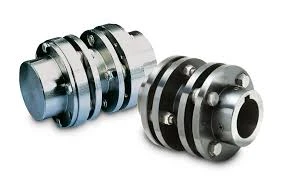
Looking for complete coupling solutions? Along with fluid couplings, we also offer disc couplings, gear couplings, and pin bush couplings, which are suitable for different torque and misalignment conditions.
Integration with Other Coupling Types
For operations that require high precision and flexibility, disc couplings and torsionally flexible couplings can be used alongside fluid systems. These combinations improve vibration damping and load balancing across mechanical systems.
Rathi’s team of engineers can help you select and configure the right product depending on your industry, application type, and performance criteria.
Summary
To sum it up, fluid couplings are indispensable in modern industrial machinery. Their ability to manage torque smoothly, protect from overloads, and improve efficiency makes them a top choice across sectors. By choosing Rathi Couplings, you invest in proven engineering, long-lasting durability, and excellent customer service.
Explore our range at www.rathicouplings.com to discover more about our customized solutions for your business.