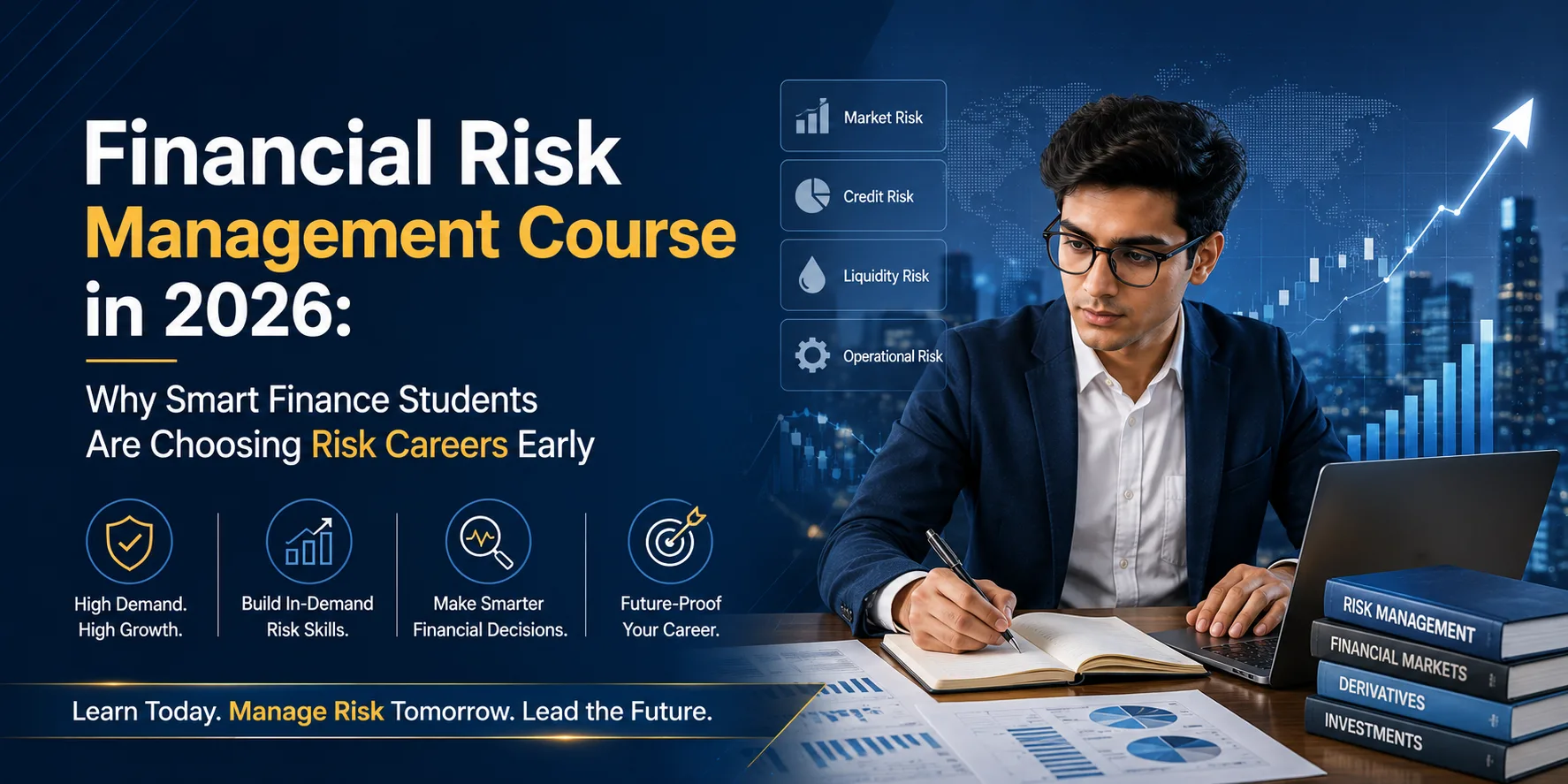
The global finance industry is evolving rapidly, and companies are becoming more focused on financial stability, investment protection, and strategic risk planning. Increasing market volatility, economic uncertainty, digital transformation, and changing financial regulations have created strong demand for professionals who can identify, analyze, and manage financial risks effectively.
This growing industry requirement has made the Financial Risk Management Course one of the most popular finance education choices among students and professionals in 2026.
Financial risk management is no longer limited to traditional banking operations. Today, banks, investment firms, insurance companies, fintech startups, multinational corporations, and consulting organizations all require professionals with strong analytical and risk evaluation skills. Organizations actively seek experts who can assess financial uncertainty and support smarter business decision-making.
A Financial Risk Management Course generally covers important topics such as:
- Market Risk
- Credit Risk
- Operational Risk
- Quantitative Finance
- Financial Modeling
- Portfolio Risk Management
- Financial Regulations
- Investment Analysis
Unlike traditional finance courses, risk management develops specialized expertise in minimizing financial exposure and improving strategic financial planning. Professionals in this field help organizations reduce losses, improve sustainability, and maintain long-term business stability.
The course is highly suitable for:
- Commerce students
- Finance graduates
- MBA aspirants
- Banking professionals
- Investment analysts
- Working finance professionals
One of the biggest advantages of pursuing a Financial Risk Management Course is career stability and global relevance. Even during uncertain economic periods, companies continue hiring skilled risk professionals because financial risk analysis remains essential across all market conditions.
Career opportunities after completing the course include:
- Risk Analyst
- Credit Risk Specialist
- Market Risk Analyst
- Financial Consultant
- Investment Risk Manager
- Operational Risk Analyst
- Portfolio Risk Associate
The demand for professionals with risk management expertise is increasing across:
- Commercial banks
- Investment firms
- Insurance companies
- Consulting firms
- Fintech organizations
- Corporate finance departments
Another major reason behind the growing popularity of financial risk management careers is the increasing importance of analytical finance skills in global markets. Professionals with expertise in financial analysis and risk evaluation are highly valued across India, Singapore, Dubai, the UK, Canada, and the USA.
Students choosing a finance institute should focus on:
- Faculty expertise
- Practical finance exposure
- Mock test support
- Industry-oriented learning
- Flexible class schedules
- Career guidance support
Modern financial institutions now use advanced technologies including artificial intelligence, data analytics, machine learning, and automated investment systems. Because of this shift, professionals with strong quantitative and analytical abilities are becoming increasingly valuable in global finance markets. Risk management professionals are expected to understand both finance concepts and modern financial technologies.
Another important reason behind the popularity of risk management careers is salary growth potential. Skilled professionals working in banking, investment analysis, and financial consulting often receive highly competitive compensation packages. As professionals gain experience in financial modeling, portfolio analysis, and strategic risk planning, career growth opportunities become even stronger.
Students interested in long-term finance careers are increasingly choosing specialized learning paths instead of general finance programs. Risk management provides niche expertise that helps professionals stand out in competitive finance industries.
Fintelligents provides industry-oriented finance training programs designed to help students develop strong analytical capabilities and practical finance understanding for modern finance careers.
As financial systems continue becoming more data-driven and globally interconnected, the future outlook for financial risk management professionals appears highly promising for ambitious finance students and working professionals worldwide.