
High-rise buildings shape modern cities. They define skylines, support growing populations, and represent progress in design and engineering. Behind every successful tall structure is a strong planning process, and one of the most important parts of that process is Facade Detailing Services. The facade is more than just the outer face of a building. It protects, supports performance, and expresses architectural identity. In high-rise projects, even small design gaps can lead to major challenges, which is why detailed facade planning is essential.
Understanding the Role of the Facade
The facade acts as a protective skin for a building. It shields interior spaces from wind, rain, heat, and noise. At the same time, it gives the structure its visual character. In high-rise construction, the facade must handle strong wind pressure, temperature changes, and vertical movement. These factors make facade design far more complex than in low-rise projects.
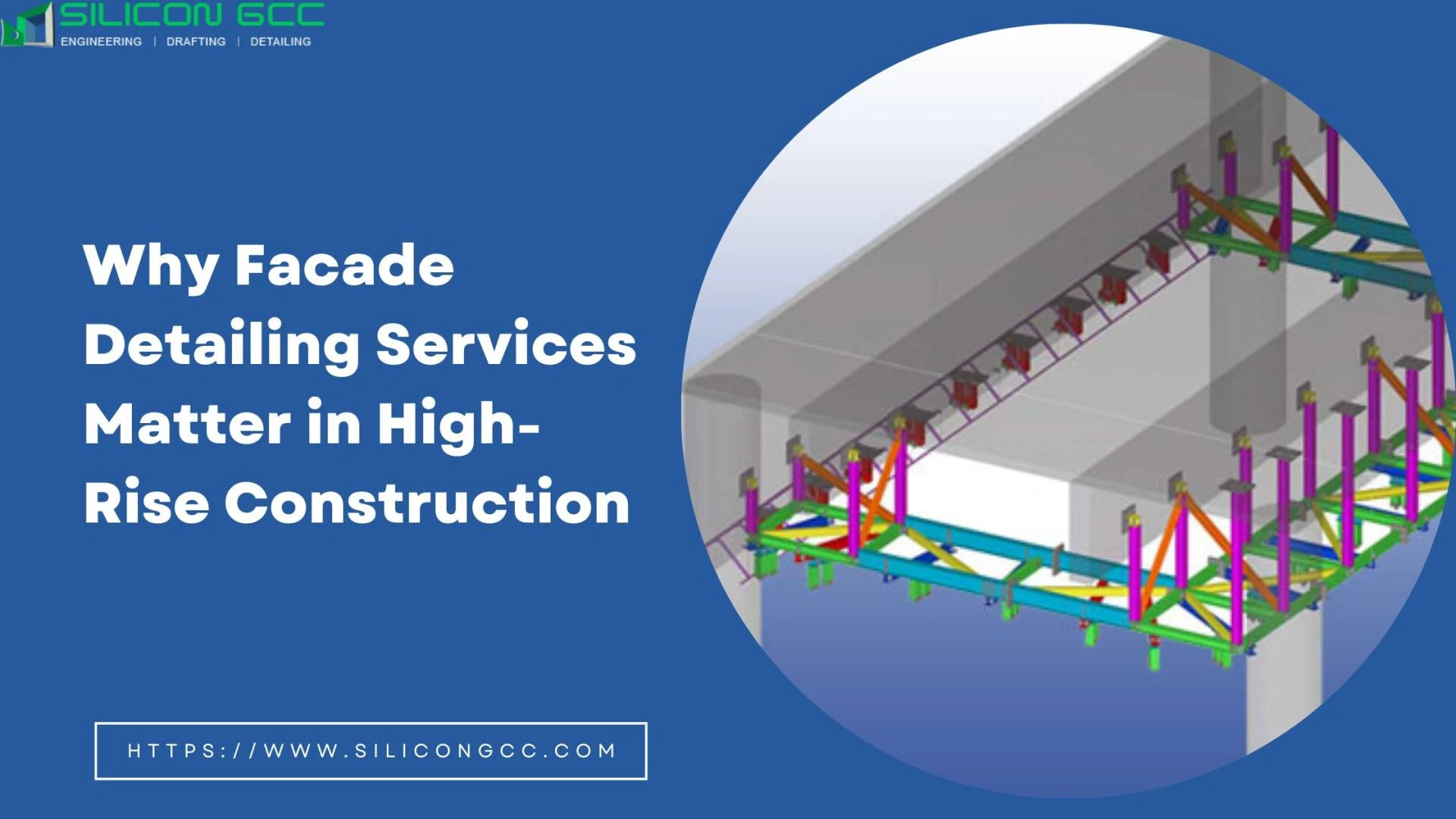
Facade Detailing Services focus on turning architectural ideas into clear technical drawings. These drawings explain how panels, glass, frames, and joints fit together. They show sizes, connections, and material behavior. Without this level of detail, it becomes difficult to turn a design concept into a working structure.
Why Detailing Is Critical in Tall Buildings
As building height increases, so do structural forces. Wind load, movement, and thermal expansion affect every facade element. Facade Drawings and Detailing Services address these challenges by studying how each part reacts under real conditions.
Detailed drawings reduce confusion between design teams. They allow engineers, architects, and fabricators to read the same information clearly. This shared understanding supports smooth coordination and avoids design clashes. In tall buildings, coordination is not optional it is a core requirement.
From Design Vision to Technical Reality
Architects often begin with creative facade ideas unique shapes, glass patterns, or textured surfaces. These ideas must be translated into workable systems. Facade Design Services focus on this transition. They analyze materials, joint methods, support systems, and movement gaps.
Once the system is defined, Facade Detailing Services takes over. They produce accurate drawings that show every connection and alignment. These drawings guide fabrication and assembly, making sure the final facade reflects the original vision without technical errors.
Managing Complexity Through Precision
High-rise projects involve many design disciplines: structure, architecture, and building systems. The facade connects all of them. It touches slabs, columns, beams, and internal layouts. If facade details are unclear, problems appear in later stages.
Facade Drawings and Detailing Services reduce this risk by defining each interface clearly. They show how the facade connects to floors, how it allows movement, and how it supports load transfer. This precision improves coordination and supports project clarity.
The Value of Outsourcing Facade Detailing
Many firms choose to Outsource Facade Detailing Services to experienced specialists. Outsourcing allows project teams to focus on core design tasks while facade experts manage the technical side. These specialists understand material behavior, structural interaction, and drafting standards.
By outsourcing, companies gain access to focused knowledge and advanced detailing skills. This approach supports better drawing quality and faster design flow. For large and tall projects, this can make a major difference in achieving design accuracy.
Supporting Safety and Performance
Facade performance affects safety, comfort, and durability. A well-detailed facade resists weather forces, manages heat flow, and supports long-term stability. In high-rise construction, safety is a priority, and facade systems play a direct role in that goal.
Facade Detailing Services study how each element behaves under load. They ensure that connections are strong, joints allow movement, and materials are placed correctly. This careful planning supports both safety and long-term building performance.
Enhancing Visual Quality
The facade defines how a building is seen by the public. In high-rise projects, small design flaws become visible from great distances. Facade Design Services focus on proportion, alignment, and pattern. Detailing then ensures these visual ideas are achieved in reality.
Accurate detailing keeps lines straight, joints even, and surfaces consistent. This attention to detail improves the building’s overall appearance and supports the architect’s original vision.
Digital Tools and Modern Detailing
Today, many Facade Detailing Services use advanced digital methods. These tools allow teams to model facade systems in three dimensions. They check alignment, detect clashes, and review performance early in the design stage.
Digital detailing supports better coordination between teams. It allows changes to be managed clearly and shared quickly. In high-rise projects, where many design updates occur, this flexibility is highly valuable.
A Professional Approach to Facade Solutions
Companies like S E C D Technical Services LLC focus on providing reliable facade detailing solutions that meet modern construction demands. Their work reflects how professional detailing supports both design accuracy and project success.
Conclusion
High-rise construction demands precision at every stage. The facade is one of the most complex and important parts of a tall building. Facade Detailing Services ensure that design ideas become clear technical systems. They support safety, coordination, performance, and visual quality.
Outsourced facade Detailing Services allow project teams to benefit from specialist knowledge. Facade Drawings and Detailing Services turn concepts into build-ready information. Facade Design Services shape the visual and functional identity of the building.
Together, these services form the backbone of successful high-rise projects. Without strong facade detailing, even the best designs can face serious challenges. With it, high-rise buildings can stand tall with strength, clarity, and confidence.