Walk into a coffee shop, a market stall in Lagos, or a subway station in Seoul this year, and you'll notice something: the cash drawer barely opens. A tap, a scan, a quick confirmation on a phone screen — and the transaction is done. Just five years ago, most industry forecasts predicted a slow, steady decline in cash use, stretched out over a decade or more. Instead, eWallets have overtaken it in country after country, years ahead of schedule, catching central banks, retailers, and even some payment companies off guard.
This isn't a story about a single killer app or one country's success. It's a convergence of consumer behavior, infrastructure, business incentive, and timing that pushed digital payments past a tipping point almost everywhere at once.
The Convenience Tipping Point
The shift didn't happen because people suddenly distrusted cash — it happened because eWallets quietly became easier. No fumbling for change, no trips to the ATM, no carrying a wallet full of cards. A single tap handles bill splits, merchant payments, subscriptions, and peer-to-peer transfers. Once that convenience became the norm for one type of transaction, it spread to nearly all of them.
Think about what a typical week looked like a decade ago: cash for the taxi, a card for groceries, another card for the gym, a check for rent. Now, for a growing share of the world's population, all of that lives inside a single app. The friction that used to separate different types of payments has essentially disappeared, and once friction disappears, old habits rarely come back.
Smartphones Did the Heavy Lifting
The real accelerant has been smartphone penetration in markets that never had strong traditional banking infrastructure. In large parts of Asia, Africa, and Latin America, millions of people skipped bank branches entirely and went straight to mobile money. For them, an eWallet isn't a replacement for a bank account — it is their bank account.
This "leapfrog effect" mirrors what happened with landlines and mobile phones a generation earlier: rather than building expensive brick-and-mortar banking infrastructure first, entire regions jumped straight to app-based finance.
A farmer in rural Kenya or a small vendor in a village in Uttar Pradesh can now receive payments, save money, and access credit through a phone that never needed a nearby bank branch to make any of it possible. That's a structural shift, not just a consumer preference, and it's a big reason adoption curves have outpaced every prediction analysts made even three or four years ago.
Merchants Pushed Just as Hard as Consumers
It's not only shoppers driving this. Merchants have strong incentives to go digital too: fewer cash-handling costs, fewer errors, faster reconciliation, and cleaner records for tax and accounting purposes. Handling cash isn't free — it costs time to count, costs money to transport and secure, and creates room for shrinkage and human error that digital ledgers simply don't have.
Small businesses that once resisted digital payments now often prefer them, especially with QR-code based systems that require little more than a printed code and a smartphone. A street food vendor doesn't need a card reader or a point-of-sale terminal anymore — just a code taped to the cart. That low barrier to entry has brought millions of small, informal businesses into the digital economy for the first time, something traditional banking rails never managed to do at this speed or scale.
The Pandemic Habit That Stuck
Contactless payment habits formed years ago during the pandemic never fully reversed. What started as a health precaution became a preference. Once people got comfortable paying with their phones, going back to counting bills felt like a step backward — and that behavioral shift has proven remarkably sticky.
What's notable is how this habit crossed generational and geographic lines that usually slow down technology adoption. Older users who had resisted digital payments for years adopted them out of necessity, and many simply never went back to their old routines once the necessity passed. Behavioral economists often point out that habits formed under pressure tend to persist once the pressure lifts, and digital payments are a textbook example.
Government and Regulatory Pushes Added Fuel
Consumer preference and merchant convenience explain a lot, but they don't explain everything. In several major economies, governments have actively pushed cashless adoption — sometimes to reduce the size of informal, untaxed economies, sometimes to modernize national payment infrastructure, and sometimes simply to cut the enormous cost of printing, distributing, and securing physical currency.
Real-time payment systems backed by central banks have made instant, low-cost transfers the default in country after country, effectively removing the last practical advantage cash still held: immediacy. When a digital transfer clears just as fast as handing over a bill, cash loses one of its final selling points.
Businesses Are Racing to Keep Up
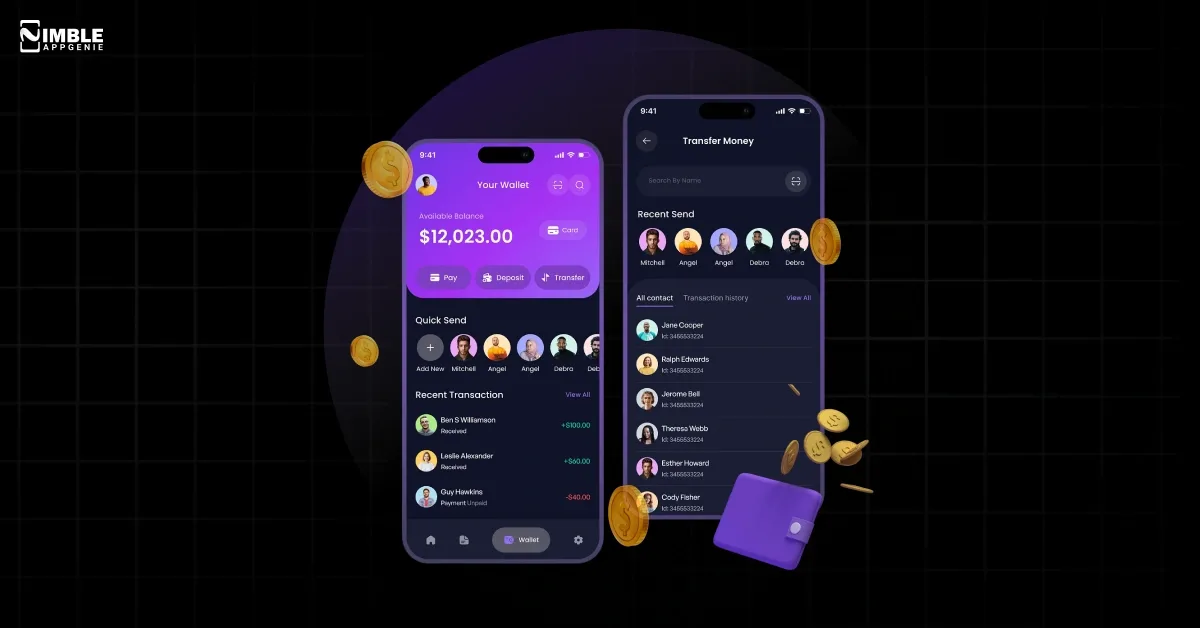
This surge in demand has pushed companies across every sector — retail, transportation, hospitality, even government services — to build or upgrade their own digital payment infrastructure. That's fueled a boom in ewallet app development, as businesses look to launch secure, branded payment experiences rather than relying solely on third-party apps. Owning the wallet experience means owning more of the customer relationship: more data, more loyalty touchpoints, and fewer fees paid out to external processors.
The ones moving fastest aren't treating their wallet as a side feature bolted onto an existing app. They're treating it as core infrastructure — investing in fraud detection, seamless onboarding, and integrations with banks and card networks from the start, because a clunky or insecure wallet can undo years of brand trust in a single bad transaction.
Security Improvements Removed a Major Objection
For years, one of the biggest reasons people stuck with cash was trust — cash can't be hacked, frozen, or stolen through a data breach. That objection has weakened considerably as wallet providers invested heavily in biometric authentication. tokenization, and real-time fraud monitoring.
Losing a phone no longer means losing access to funds the way losing a wallet full of cash once did; most systems let you freeze or wipe access remotely within seconds.
This matters because trust, not just convenience, is what ultimately determines whether people move their financial lives onto a platform. As security has improved, the psychological barrier that once kept cautious users tied to cash has eroded right along with it.
What's Still Holding Cash On
Cash hasn't disappeared everywhere. Rural regions with patchy connectivity, older populations less comfortable with mobile tech, and privacy-conscious users who prefer untraceable transactions are keeping it alive in pockets. Power outages, network failures, and device loss also remain real vulnerabilities that cash simply doesn't have — a paper bill works whether or not the internet does.
But these are shrinking exceptions rather than the rule. Even in regions where cash usage remains higher, the trend line points in one direction, and infrastructure gaps are closing faster than most expected just a few years ago.
The Bottom Line
eWallets didn't win because cash failed — they won because they solved real friction for consumers and merchants alike, faster than infrastructure planners expected. Convenience, smartphone reach, merchant economics, pandemic-era habits, government policy, and improved security all pointed in the same direction at roughly the same time, and the result was an adoption curve nobody quite modeled correctly.
The businesses paying attention aren't asking whether this shift is happening anymore. They're asking how quickly they can build for it — and the ones that move now will be the ones defining what digital payments look like for the next decade.