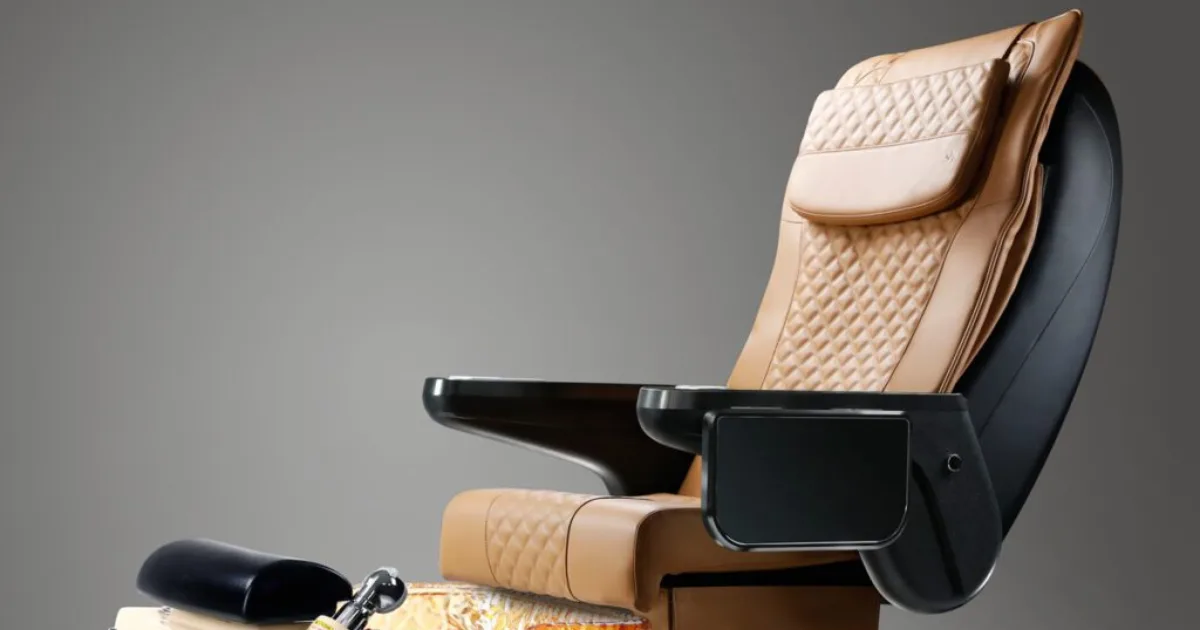
Brow services are precision work. Threading, waxing, tinting, and lamination all demand steady hands, close focus, and a client who stays perfectly still for fifteen to forty minutes at a time. The chair the client sits in shapes every one of those conditions.
A well-designed brow chair keeps the client comfortable and stable, positions the technician for controlled, repeatable movements, and accommodates clients of every size and mobility level. A poorly designed one does the opposite, and the results show up as fatigue, inconsistent work, and clients who don't come back. Here is why ergonomics should drive your purchase decision, and which features actually matter.
Ergonomics Is a Service Quality Issue, Not a Comfort Perk
Salon owners often treat ergonomics as a nice-to-have. For brow work, it is closer to a technical requirement. Precision depends on the technician’s ability to hold a consistent working position over the client’s face, with clear sightlines and both hands free. That position is only achievable when the client is reclined to the correct angle, the head is supported so it does not drift, and the chair height puts the brow line where the technician’s hands rest naturally. Get those three variables wrong, and the technician compensates by hunching, twisting, or bracing an elbow against the chair. Over a full day of appointments, that compensation costs accuracy. Over a career, it costs the technician’s back and shoulders.
Recline Range and Headrest Design
A dedicated eyebrow chair reclines far enough to bring the client’s face close to horizontal, which lets the technician work from above rather than leaning in from the side. Look for a smooth, controlled recline that locks securely at multiple angles, because different services call for different positions. Threading often works best with the client more upright, while tinting and lamination benefit from a fuller recline.
The headrest matters as much as the recline. An adjustable, cushioned headrest cradles the skull and keeps the head from rolling, which is the difference between a clean arch and a shaky one. Removable or repositionable headrests let you dial in support for tall and short clients alike. Several chairs built specifically for threading, such as the Pibbs Cosmo, Lambada, and Loop threading models, are designed around this exact requirement.
Hydraulic Height Adjustment for Technician Posture
Technicians vary in height. Clients vary in torso length. A fixed height chair forces everyone to adapt to it. A hydraulic base lets the technician bring the client’s brow line to their own ideal working height, whether they prefer to stand or sit on a stool. This single feature does more to protect technician posture than any other. The best hydraulics move smoothly under load, hold position without drift, and are rated for constant daily adjustment. An oversized or weighted base keeps the chair planted while the technician works close, since even slight wobble is magnified when tweezers are millimeters from skin.
Armrests, Seat Width, and Client Stillness
A client who is fighting for comfort will fidget, and fidgeting is the enemy of precision brow work. Padded armrests that support the arms in a relaxed position reduce shoulder tension. Telescoping or adjustable arms accommodate broader clients without squeezing. Wide, deeply cushioned seats let clients settle in for the duration of a lamination or a full brow mapping session. Comfort here is not indulgence. A relaxed client is a still client, and a still client gets a better result.
Accessibility for Every Client
Brow services attract clients across every age group and mobility level. A parlor chair that sits too high, lacks a footrest, or requires a step up excludes clients who use walkers or have limited flexibility. Look for models with a low entry height that can then be raised hydraulically, sturdy armrests clients can use for support when sitting and standing, and a footrest that can be positioned or retracted. Some all-purpose reclining chairs are built specifically with accessibility in mind, and pairing one with a dedicated threading chair gives your brow bar options for every guest. Accessibility widens your client base and reflects well on your brand.
Durability and Cleanability
Brow bars run high appointment volumes, and every client means contact with tints, waxes, and cleansers. Upholstery should be a commercial-grade vinyl that resists staining and wipes clean between appointments. Frames should be steel, with hydraulics and recline mechanisms backed by parts availability from the manufacturer. Established brands such as Pibbs, Collins, Italica, and Takara Belmont build reclining and threading chairs to commercial standards, and choosing a supplier who stocks replacement parts protects your investment for years rather than seasons.
Budget With the Full Picture in Mind
Quality brow and all-purpose reclining chairs typically range from a few hundred dollars for in-stock essentials to roughly two thousand for premium models, with many professional threading chairs falling in the middle. Weigh that against the cost of technician injury, inconsistent work, and clients lost to discomfort. An ergonomic chair pays for itself in throughput and retention.
Find a Brow Chair Built for Precision
The right brow chair supports the client, protects the technician, and welcomes every guest who walks in. Explore the reclining and threading chairs available at American Beauty Equipment to compare recline ranges, headrest designs, hydraulic bases, and accessibility features across dozens of commercial-grade models. When the chair does its job, your technicians can do theirs.