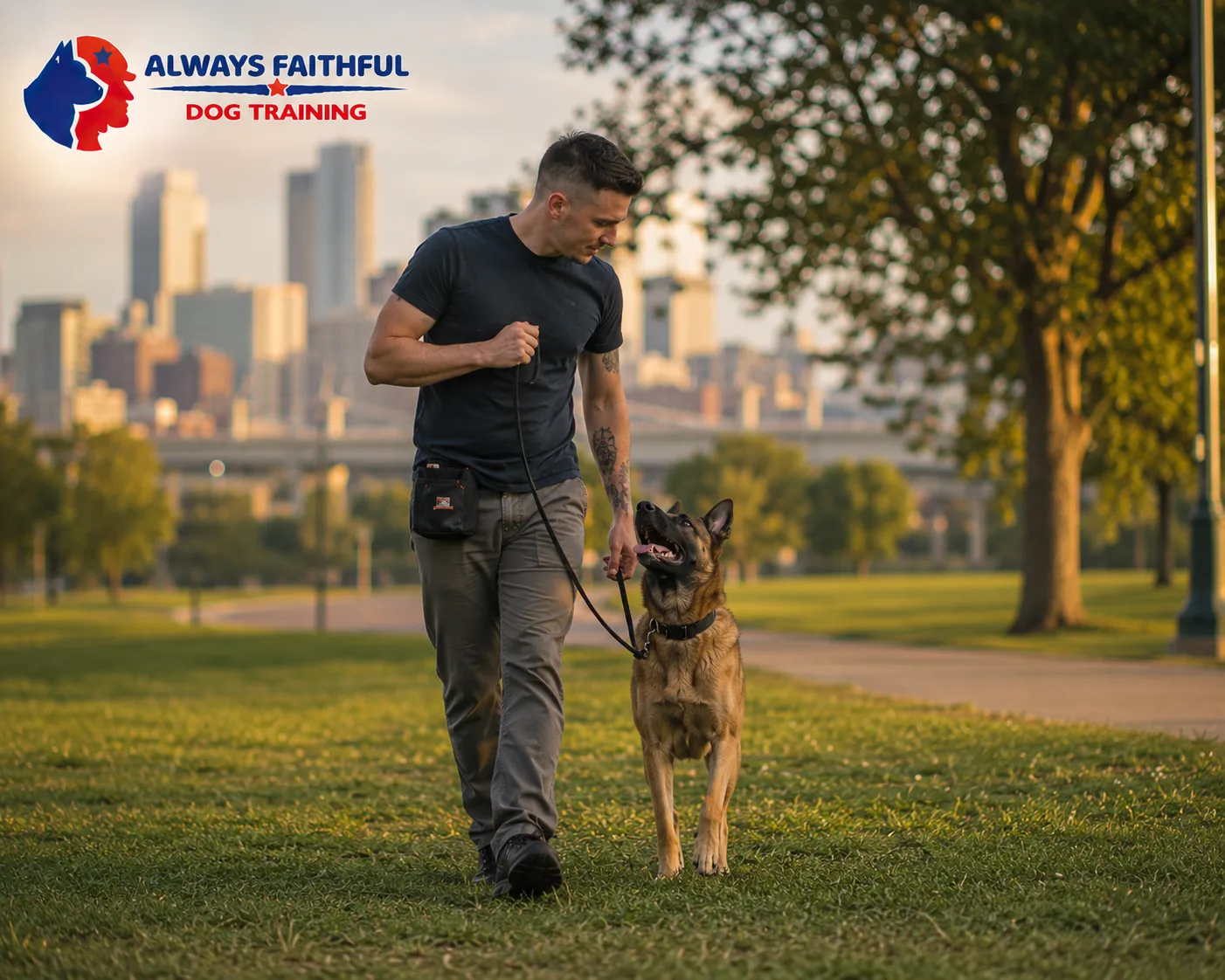
Dog training is often viewed as a collection of commands that a dog needs to memorize. In reality, successful training depends heavily on consistency, timing, communication, and the environment in which a dog learns. A dog may understand a behavior during a structured lesson but still struggle to follow the same expectation in the kitchen, backyard, neighborhood, or around visitors. This does not necessarily mean the dog is being stubborn. It often means the training expectations have not yet become part of the dog's everyday routine.
Dogs Learn From Repeated Experiences
Dogs continuously learn from what happens around them. Everyday interactions can reinforce calm behavior, excitement, attention-seeking, or unwanted habits without owners realizing it. For example, if a dog receives attention whenever it jumps on someone, jumping can become a repeated strategy for getting interaction.
Effective dog training helps replace these accidental lessons with clear and predictable expectations. Instead of focusing only on formal sessions, owners can use ordinary moments throughout the day to reinforce appropriate behavior.
Meal preparation, entering the home, putting on a leash, greeting family members, and settling down in the evening can all become opportunities for practical training.
Why Routine Matters More Than Occasional Practice
A long training session once a week cannot always compete with dozens of daily experiences. Dogs benefit when expectations remain consistent throughout their normal schedule.
A simple routine might involve asking for calm behavior before opening a door, encouraging controlled movement before going outside, and expecting the dog to settle before receiving attention. These small interactions may seem insignificant individually, but repeated consistently, they can help establish predictable patterns.
The objective is not to turn every moment into a formal lesson. Instead, the goal is to make appropriate behavior part of normal life.
Changing the Environment Can Change the Difficulty
One common reason a dog appears well-trained in one setting but difficult in another is environmental distraction. A quiet living room provides very different conditions from a busy sidewalk or a home filled with visitors.
Dogs may need time to generalize what they have learned. A behavior that is reliable in a familiar room may become harder when new smells, sounds, people, animals, or movement are introduced.
This is why progressive practice is important. Owners can begin in a relatively calm environment and gradually introduce additional distractions as the dog's understanding improves.
Clear Communication Reduces Confusion
Dogs respond better when household expectations are easy to understand. If one person allows a behavior while another consistently corrects it, the dog may receive mixed information.
For instance, if jumping is discouraged with some family members but tolerated with others, the dog has little reason to understand that jumping is always inappropriate.
Good dog training requires people in the household to agree on basic expectations. Consistent communication allows the dog to recognize patterns instead of trying different behaviors to discover what works.
Timing Has an Important Role
Timing can influence how effectively a dog connects an action with its consequence. When feedback happens immediately after a behavior, the connection is easier for the dog to understand.
Delayed reactions can create confusion. If a dog walks calmly for several seconds and then receives feedback after beginning to pull, the dog may not clearly understand which behavior prompted the response.
Owners should therefore pay attention to what is happening immediately before and after a behavior. This helps make communication clearer and prevents accidental reinforcement of unwanted habits.
When Searching for Dog Training Near Me, Look Beyond Basic Commands
People searching for Dog Training near me often begin by looking for help with sit, stay, come, or leash walking. These skills are valuable, but a useful training program should also consider how a dog behaves during everyday situations.
A dog may know basic commands and still struggle with door manners, household boundaries, greeting people, settling after excitement, or responding when distractions are present.
When evaluating a training service, it can be helpful to consider whether the approach addresses the dog's behavior in realistic situations rather than focusing exclusively on memorizing commands.
Household Rules Should Be Practical
Training becomes easier to maintain when expectations fit naturally into a family's lifestyle. Complicated routines may be difficult to follow consistently, especially in busy households.
Practical rules can be simple. A dog might be expected to remain calm before going outside, wait rather than rush through an open doorway, or settle while family members are occupied.
The purpose of these expectations is not to control every movement. It is to establish boundaries that help the dog understand what behavior is appropriate in different situations.
Puppies Need Structure From the Beginning
Puppies are constantly developing habits. Their curiosity naturally leads them toward chewing, exploring, jumping, following people, and investigating unfamiliar objects.
Early training provides opportunities to guide those behaviors before they become deeply established. Puppies can gradually learn how to respond to household routines, interact appropriately with people, and remain comfortable with new experiences.
Early guidance does not require perfection. Puppies are still developing physically and mentally, so training should progress according to their individual stage and ability.
Older Dogs Can Continue Learning
Training is not limited to puppies. Adult and senior dogs can also develop new habits and improve existing behaviors.
An older dog may have years of experience with a particular routine, but that does not mean change is impossible. Consistent expectations, appropriate pacing, and clear communication can help dogs adjust to new household rules or behavioral goals.
Owners should focus on achievable progress rather than expecting a complete transformation overnight.
Recognizing the Difference Between Energy and Disobedience
A dog that struggles to settle may simply have difficulty managing excitement. High energy can make it harder for a dog to respond to instructions, particularly when the environment is stimulating.
Rather than assuming that every unwanted behavior is deliberate disobedience, owners can look at what is happening before the behavior begins.
Identifying triggers, distractions, and patterns can reveal why a dog is struggling. Once those factors are understood, training can become more targeted and productive.
Progress Should Be Measured in Real-Life Situations
Training progress is not always reflected by how many commands a dog can perform. A more meaningful measure may be how the dog responds during ordinary situations.
Can the dog remain calmer when someone enters the home? Can it walk with better control? Can it disengage from an interesting distraction? Can it settle after an exciting activity?
These practical improvements show that training is becoming part of the dog's daily behavior rather than remaining limited to a practice session.
Building Better Habits Takes Patience
Every dog learns at a different pace. Some behaviors may improve quickly, while others require repeated practice and adjustments.
Owners can support progress by remaining patient and avoiding constantly changing expectations. Consistency gives dogs a clearer framework for understanding what is expected from them.
The strongest results often come from small improvements repeated over time. When training becomes part of everyday communication, dogs have more opportunities to understand and practice appropriate behavior.
Final Thoughts
Successful Dog training Near me is about much more than teaching a list of commands. Consistent routines, clear communication, appropriate timing, environmental practice, and realistic expectations all contribute to better learning.
Whether someone is beginning with a young puppy or addressing established behaviors in an adult dog, everyday interactions provide valuable training opportunities. A consistent approach can help transform individual lessons into practical habits that work throughout the dog's normal life.