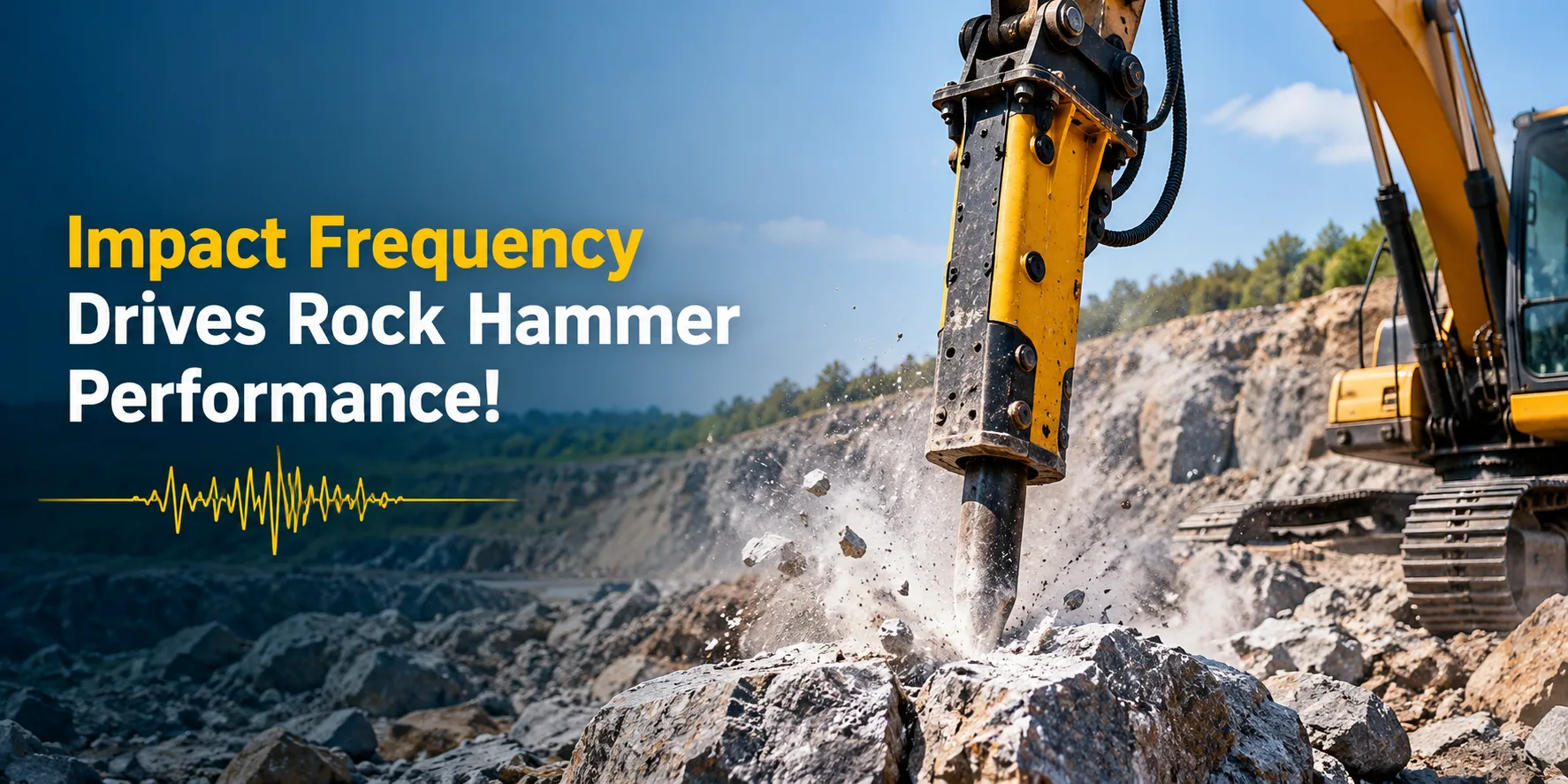
When a hydraulic rock hammer works on concrete, rock, asphalt, or other hard material, every blow transfers energy from the attachment into the material. The number of blows delivered in a minute is known as impact frequency.
For construction contractors, impact frequency is more than a specification listed on a hydraulic rock hammer. It affects how the attachment responds to different materials, how quickly a job progresses, how much energy reaches the work surface, and how the excavator handles the attachment.
A higher impact frequency does not automatically mean better breaking performance. The right frequency depends on the material, hammer size, excavator capacity, and type of work.
What Is Impact Frequency in a Hydraulic Rock Hammer?
Impact frequency refers to the number of piston strikes delivered by a hydraulic rock hammer within one minute. Manufacturers usually express this figure as blows per minute, or BPM.
For example, a hammer rated at 500 BPM can deliver up to 500 piston impacts per minute under the specified operating conditions.
The piston moves inside the hammer body and transfers hydraulic energy into mechanical impact energy. That energy passes through the tool, such as a chisel, and reaches the material being broken.
Impact frequency and impact energy work together. Frequency tells you how many impacts the hammer delivers. Impact energy tells you how much energy each individual blow carries.
This distinction is important when selecting a hammer for construction work.
Why Does Impact Frequency Affect Breaking Performance?
Different materials respond differently to repeated impacts.
Hard rock may require powerful individual blows to create cracks. Concrete may respond well to repeated impacts when the hammer transfers energy efficiently into the structure. Asphalt and softer materials may require a faster impact cycle to break and remove material without excessive force.
If the impact frequency is too high for the application, the hammer may deliver many blows without producing useful penetration. If the frequency is too low, the attachment may take longer to break the material.
The objective is not to achieve the highest possible BPM. The objective is to match impact frequency with the material and job requirements.
Impact Frequency and Material Type
Material hardness, density, structure, and thickness all affect hammer performance.
Hard and compact rock can resist surface impacts. A hammer with suitable impact energy and a controlled frequency can create cracks that spread through the material.
Fractured rock can behave differently. Existing cracks give impact energy paths through the material, so the hammer may break it with less effort.
Concrete also varies widely. A thin concrete slab, reinforced concrete wall, bridge component, and foundation block do not respond in the same way.
Reinforcement adds another challenge. Steel bars can absorb and redirect some of the force from the impact. In such cases, the operator may need to change the working technique rather than simply increasing hammer frequency.
Asphalt generally requires a different approach because it is less rigid than natural rock. A suitable impact rate can help break the material into manageable sections for removal.
How Impact Frequency Affects Productivity
Impact frequency has a clear relationship with work cycles.
A hammer that delivers too few impacts for a particular application may require more time to create cracks and separate material. This can increase machine hours and delay material removal.
A higher frequency can help when the material responds well to repeated impacts. The hammer can create and extend small cracks through successive blows.
However, productivity does not depend on BPM alone.
Consider two hammers working on the same rock. One may deliver more blows per minute, while the other delivers fewer but heavier impacts. The second hammer may break the rock faster if each impact transfers more useful energy into the material.
This is why contractors should evaluate impact energy, frequency, tool diameter, excavator hydraulic flow, and material conditions together.
Impact Frequency and Hydraulic Flow
Hydraulic rock hammers depend on the excavator's hydraulic system. Oil flow and pressure control the hammer's operating cycle.
If the excavator cannot supply the required hydraulic flow, the hammer may not reach its intended operating performance. Excessive flow can also create problems if it exceeds the hammer's specified range.
The hydraulic circuit must match the hammer's requirements.
Operators should check the attachment specifications and the excavator's auxiliary hydraulic circuit before installation. The correct flow range allows the hammer to operate within its designed cycle and helps prevent unnecessary hydraulic stress.
Impact Frequency and Tool Wear
The working tool takes repeated impacts throughout the job. A chisel or moil point can experience thousands of strikes during a long shift.
Impact frequency therefore has a connection with tool loading and wear.
Higher frequency means more impact cycles over a given period. If the tool contacts the material correctly and the hydraulic system operates within specification, this can support productive breaking. Poor operating technique creates a different result.
Blank firing is one example. It occurs when the hammer fires without the tool being firmly pressed against the material. The impact energy has no material to absorb it properly. Repeated blank firing can increase stress on internal components and the tool.
Incorrect positioning can also place side loads on the tool. The operator should keep the hammer aligned with the working surface and avoid using the attachment as a pry bar.
Choosing the Right Impact Frequency
Contractors should consider several factors before selecting a hydraulic rock hammer.
First, identify the material. Granite, limestone, reinforced concrete, demolition concrete, asphalt, and fractured rock can require different hammer characteristics.
Next, check the excavator's operating weight and hydraulic specifications. The hammer must fall within the machine's recommended attachment range.
Then compare impact energy and impact frequency together. Looking at BPM alone can give an incomplete picture of performance.
Tool diameter also matters. A larger tool can suit heavier breaking applications, while a smaller tool may provide better control for lighter work.
The working environment also affects the selection. Urban demolition may require controlled breaking to limit vibration and protect nearby structures. Quarry and excavation work may prioritize production and penetration.
Why Maximum Frequency Is Not Always Better
It is easy to assume that more impacts equal faster production. Construction equipment does not work that simply.
A hammer that operates at a very high frequency may produce rapid surface impacts without enough energy per blow for dense rock. A slower hammer with stronger impacts may perform better in that situation.
The operator's technique also affects results. Holding the hammer at the correct angle, applying suitable down pressure, and maintaining proper contact can improve energy transfer.
The hammer should work with the material rather than simply strike it as quickly as possible.
What Contractors Should Check Before Work
Before starting a breaking job,
- Inspect the hydraulic connections, tool, retaining components, and lubrication system.
- Confirm that hydraulic pressure and flow match the hammer specifications.
- Check the tool for cracks, excessive wear, or deformation.
- During operation, keep the hammer perpendicular to the working surface where the application requires it.
- Avoid prolonged firing on material that does not break. Move the hammer when the current impact point stops producing useful results.
Final Thoughts
Impact frequency is one part of hydraulic rock hammer performance, but it should never be considered alone. The right balance between impact energy, frequency, hydraulic flow, tool size, material type, and operating technique determines how effectively the hammer performs.
A properly matched hammer can turn hydraulic power into useful breaking work while limiting unnecessary machine time and component wear.