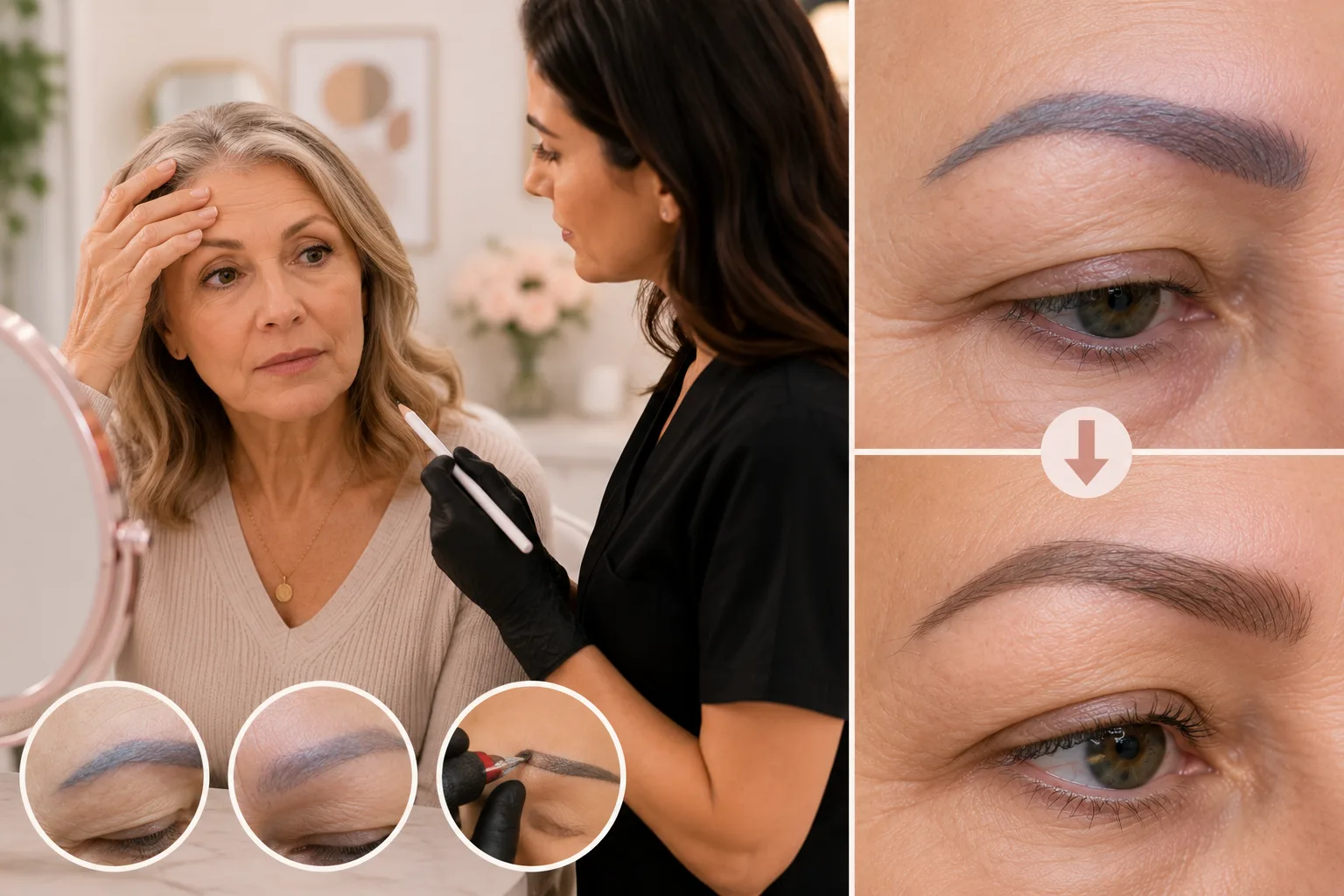
Short answer: If your microblading has turned blue, gray, or ashy over time, it's almost always caused by pigment oxidation — a natural chemical shift that happens as the warmer tones in your pigment (reds, yellows, browns) break down faster than the cooler ones (blues, blacks). What's left behind is a cool, muddy undertone that was never meant to be the final result. The good news: this is one of the most common and most fixable problems in permanent makeup. With the right corrective approach, brows that have gone gray or blue can be brought back to a soft, natural, warm tone.
If you've been staring in the mirror wondering what went wrong with brows you once loved, you're not imagining it, and you're not alone. It's one of the most common questions permanent makeup artists hear — and it has real, understandable answers.
Why Does Microblading Turn Blue or Gray in the First Place?
Microblading and other cosmetic tattoo pigments aren't like paint sitting on top of your skin — they're implanted into it, which means your body's biology plays a role in how they age. Here's what's actually happening underneath the surface.
1. Pigment Oxidation
Most brow pigments are built from a blend of red, yellow, and brown particles layered over a cooler base. Red and yellow molecules are smaller and break down faster than the rest. As they fade first, the cooler, more stable undertone — often gray or blue — is the only thing visible in the skin. This is a slow, gradual process, which is why brows that looked warm and natural in year one can look noticeably cooler by year two or three.
2. Pigment Placed Too Deep
Skill and technique matter enormously here. When pigment is implanted too deep into the dermis rather than the upper layers of skin, it scatters and appears cooler and duller from the surface, similar to how a vein looks blue through skin even though blood itself isn't blue. This is one of the most common causes of "gray brow syndrome," especially in older or lower-quality microblading work.
3. The Wrong Pigment for Your Skin's Undertone
Pigment isn't one-size-fits-all. A pigment that leans too cool for your natural skin undertone is more likely to fade toward gray or ashy rather than a soft brown. Choosing pigment is genuinely a color-theory skill, not a guessing game — and it's a step that separates an experienced artist from a rushed one.
4. Sun Exposure and Skin Cell Turnover
UV exposure accelerates pigment breakdown, and unprotected sun exposure over months and years can cause uneven fading — which is part of why sunscreen is so often emphasized in aftercare for permanent eyebrows. Skin also naturally regenerates and sheds over time, which gradually shifts how pigment sits and reflects light.
Is This Your Fault?
No. In almost every case, a gray or blue shift isn't caused by anything you did wrong. It's a combination of how pigment chemistry behaves over time, how deep the strokes were placed, and whether the original pigment was suited to your skin. Understanding why it happened matters less than knowing that it's correctable — often beautifully so.
Can Blue or Gray Microblading Actually Be Fixed?
Yes — and this is the part most people don't realize until they ask. Correction is one of the most requested services in permanent makeup right now, and there are a few proven paths depending on how much pigment is left in your skin and how cool the tone has become.
Color Correction with Warm Pigment
For brows that are mildly to moderately gray or ashy, a skilled artist can layer a warm, corrective pigment — often with orange or red undertones — directly over the cooled area. This neutralizes the blue-gray cast the same way a color wheel works: warm tones cancel out cool ones. This is usually the fastest and least invasive fix.
Saline Removal
For brows that are heavily saturated, too deep, or too gray to correct with pigment alone, saline solution can be used to gently lift pigment out of the skin through osmosis. This lightens the old work in stages, creating a cleaner canvas before any new pigment is applied. Multiple sessions are sometimes needed, depending on how much pigment is sitting in the skin and how deep it was originally placed.
A Full Powder or Ombré Refresh
Many clients who come in with gray, oxidized microblading choose to transition to ombre powder brows once the old pigment has been corrected or lightened. Powder technique deposits pigment in a way that tends to hold color more evenly over time and is often more resistant to the same oxidation issues that affect strokes.
What You Shouldn't Do
Please don't attempt to lighten or fix discolored brows at home. Picking, scrubbing, or using at-home lightening products can scar the skin, push pigment deeper, and make future correction far more difficult and expensive. If your brows have shifted color, the safest and most effective next step is a consultation with an experienced permanent makeup artist who can assess exactly how much pigment remains and which corrective path fits your skin.
How to Avoid This the Next Time Around
If you're getting brows corrected — or booking permanent makeup for the first time — a few things dramatically lower your odds of ending up with a gray or blue result down the line:
Choose an artist with real color theory training, not just technical stroke skill. Undertone matching is what prevents cool shifts later.
Ask what depth the pigment will be placed at. Correct depth is one of the biggest predictors of how your brows will age.
Wear sunscreen on your brows once healed, since UV exposure speeds up pigment breakdown unevenly.
- Follow your aftercare instructions closely during the healing window, since improper care in the first few weeks affects how pigment settles long-term.
It's worth noting that permanent makeup pigments fall under FDA cosmetic regulations, and the agency has published consumer guidance on how tattoo and permanent makeup pigments behave in skin over time — it's a useful read if you want to understand the science a little more deeply before your next appointment (see the FDA's official fact sheet on tattoos and permanent makeup).
What to Expect at a Correction Consultation
A good correction consultation isn't a glance and a price quote. It should include a close look at how much pigment remains, what depth it's sitting at, your natural skin undertone, and a realistic conversation about whether one session will do it or whether a phased approach — lightening first, then rebuilding — makes more sense. You can get a sense of what healed, corrected results actually look like by browsing real client before-and-after photos, which is often the most reassuring step before booking.
Frequently Asked Questions
Is it normal for microblading to turn gray eventually? It's common, especially in work done a few years ago with older pigment formulations, but it isn't something you have to live with. It's a fixable, well-understood issue.
How long does color correction take? It depends on how much pigment needs to be neutralized or lifted. Mild cases can sometimes be corrected in one session; more saturated or deeper pigment may need two or more sessions spaced weeks apart.
Does color correction hurt more than the original microblading? No — the sensation is comparable to the original procedure, and topical numbing is used the same way.
Can I go straight to a new brow shape, or do I need to fix the color first? In most cases, correcting the color and depth issues first gives new pigment a cleaner, more predictable base to sit on, which leads to a better final result.
- How do I know if my brows need saline removal or just color correction? This really depends on how much pigment is present and how deep it sits — which is exactly what an in-person consultation is for
Ready to Fix Your Brows for Good?
Gray or blue microblading isn't a life sentence — it's a solvable problem with the right technique and the right eye for color. With 22+ years of experience, training under Anastasia of Beverly Hills, and a reputation as one of Dallas's most trusted permanent makeup artists, Silvia Young has helped countless clients turn tired, oxidized brows into soft, natural, warm-toned results they're excited to see in the mirror again.
If your brows have shifted color and you're ready for a real fix, BrowLady offers personalized correction consultations in Dallas — and new clients receive $100 off their first visit. Reach out to schedule your consultation and take the first step toward brows that finally look right again.