Nerve pain can affect almost every part of daily life. A simple walk, holding a cup, or getting a good night's sleep can become difficult when the nerves are not working properly. Many people experience burning, tingling, numbness, or sharp pain in their hands, feet, legs, and other parts of the body. These symptoms can make everyday activities uncomfortable and stressful.
Traditional treatments can help manage nerve pain, but some people also explore natural and supportive therapies. Acupuncture for neuropathy is one option gaining attention for its possible role in pain management. It is an ancient treatment that uses very thin needles at specific points on the body. Today, researchers are studying how this approach may help people living with nerve-related conditions.
Let's explore how acupuncture works, its possible benefits, and what people should know before considering this treatment.
Understanding Neuropathy and Its Common Symptoms
Neuropathy is a condition that affects the nerves outside the brain and spinal cord. These nerves carry messages between the brain and different parts of the body. When they become damaged, the messages may not travel correctly.
This can lead to unusual feelings, pain, weakness, or problems with movement. Some people notice symptoms slowly, while others experience changes over a shorter period.
Common symptoms of neuropathy include:
- Burning sensations: A hot or burning feeling in the hands, feet, or legs.
- Tingling: A pins-and-needles feeling that may come and go.
- Numbness: Reduced feeling in certain parts of the body.
- Sharp pain: Sudden discomfort that may feel like an electric shock.
- Muscle weakness: Difficulty walking, standing, or holding objects.
- Balance problems: Feeling unsteady while moving or walking.
- Sensitivity: Pain or discomfort from light touch or normal pressure.
Several health conditions can contribute to nerve damage. Diabetes is one common cause. Other causes include certain infections, vitamin deficiencies, injuries, alcohol-related nerve damage, and some cancer treatments.
Finding the cause is an important first step because the right treatment depends on what is affecting the nerves.
What Is Acupuncture and How Does It Work?
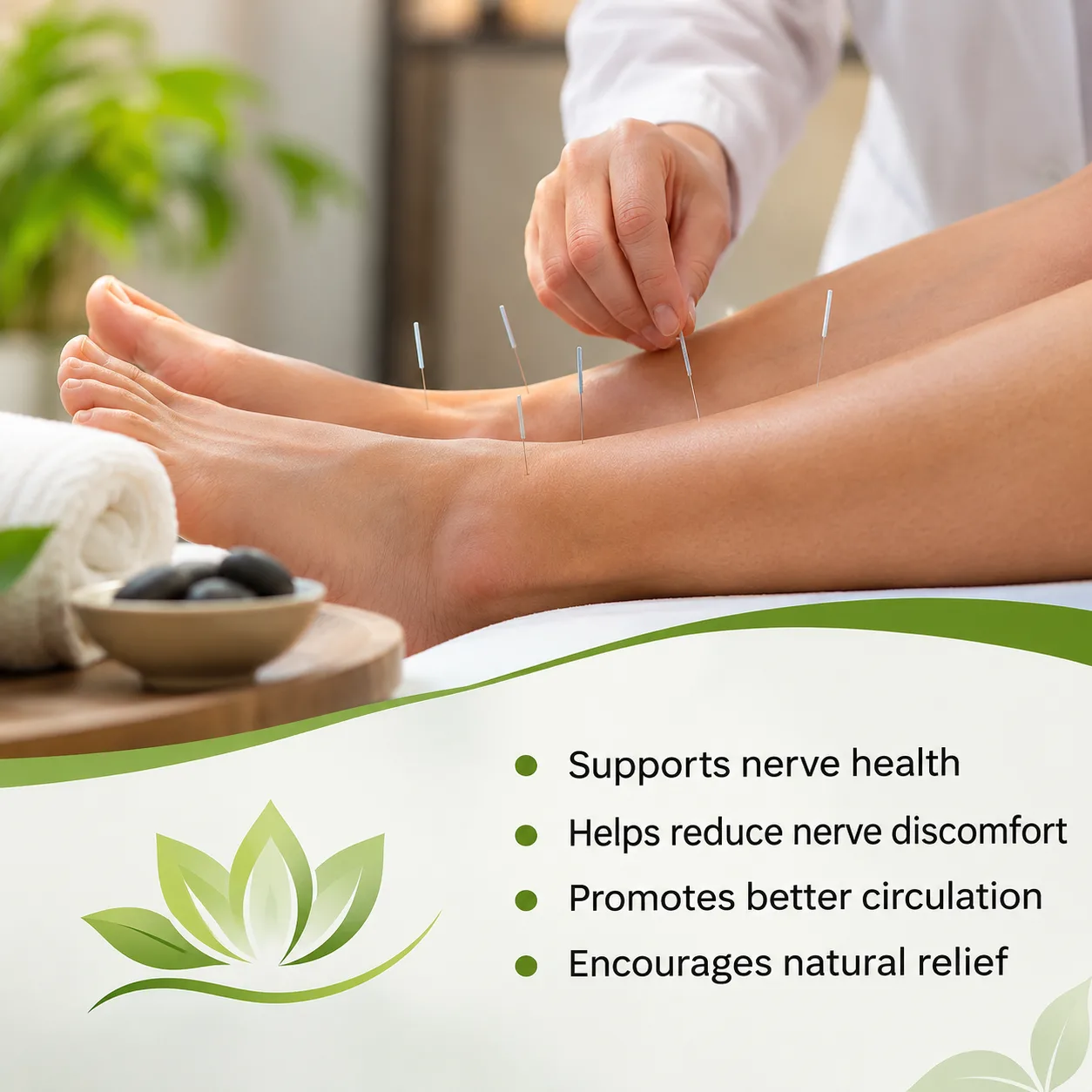
Acupuncture is a treatment that involves placing very thin, sterile needles into selected points on the body. A trained practitioner chooses these points based on the person's symptoms and health needs.
The treatment comes from traditional Chinese medicine. In modern healthcare, researchers are also studying how acupuncture may affect the nervous system, body tissues, and pain signals. Although scientists do not fully understand how it works, research suggests that acupuncture may influence the body's natural pain-control systems.
Some possible ways it may help include:
- Supporting pain control: It may influence how the brain and nervous system process pain signals.
- Affecting nerve activity: Research suggests that acupuncture can affect certain nervous system functions.
- Promoting relaxation: Some people feel calmer and more relaxed after a session.
- Supporting comfort: It may help some people manage discomfort as part of a wider care plan.
- Improving daily well-being: Reduced discomfort may make certain everyday activities easier.
However, results can vary from person to person. Acupuncture should not be considered a guaranteed way to repair damaged nerves.
Exploring Acupuncture for Neuropathy as a Supportive Treatment
Many people look for additional ways to manage nerve discomfort when their symptoms continue despite regular care. This is where acupuncture may become an option worth discussing with a healthcare professional.
Research has explored its use for different types of neuropathy, including nerve problems related to diabetes and cancer treatment. Some studies have reported improvements in pain and other symptoms. However, the overall quality of evidence is still limited, and researchers need larger, better-designed studies to understand who may benefit most.
Possible reasons people consider this treatment include:
- Looking for additional support with ongoing nerve discomfort.
- Managing burning or tingling sensations.
- Supporting relaxation and general comfort.
- Exploring options alongside an existing medical treatment plan.
- Finding ways to improve daily activities and sleep.
- Reducing the impact of pain on everyday routines.
It is important to understand that acupuncture works differently for each person. A treatment that helps one individual may not provide the same results for someone else.
How Acupuncture May Help Manage Nerve Pain
Nerve pain can feel different from ordinary muscle or joint pain. It may continue even when there is no visible injury. This happens because damaged or irritated nerves can send unusual signals to the brain.
Acupuncture for nerve pain is being explored as a supportive approach because it may influence how the nervous system responds to discomfort. During a session, the practitioner places fine needles at selected points. The number of needles, their location, and the length of treatment depend on the person's needs.
People considering this approach should understand the following points:
- Individual assessment: The practitioner should review symptoms and health history before starting.
- Treatment planning: Sessions should be planned according to the person's condition and response.
- Comfort during treatment: Most people feel little discomfort, although mild pressure or a brief sensation may occur.
- Progress monitoring: Changes in pain, sleep, movement, and daily activities should be recorded.
- Medical support: Acupuncture should work alongside appropriate medical care rather than replace it.
The main goal is to explore whether treatment can improve comfort and quality of life without creating unrealistic expectations.
What to Expect During an Acupuncture Session
For someone trying acupuncture for the first time, the process may seem unfamiliar. However, a professional session usually follows a simple process.
Here is what a typical appointment may involve:
- Initial discussion: The practitioner asks about symptoms, medical history, and current treatments.
- Health assessment: They identify the areas of discomfort and discuss possible treatment goals.
- Needle placement: Very thin, single-use needles are placed at selected points.
- Rest period: The needles remain in place for a short period while the person relaxes.
- Needle removal: The practitioner carefully removes the needles.
- Follow-up: The practitioner discusses how the person felt and whether further sessions may be appropriate.
The number of sessions depends on the condition, treatment goals, and individual response. There is no single schedule that works for everyone.
Tips for Choosing the Right Acupuncture Practitioner
Choosing a qualified practitioner is an important part of having a safe and comfortable experience. Before booking an appointment, consider these helpful tips:
- Check qualifications: Look for appropriate training, credentials, and professional experience.
- Ask about neuropathy experience: Choose someone familiar with nerve-related conditions.
- Check hygiene standards: Needles should always be sterile and used only once.
- Discuss medical conditions: Share information about diabetes, circulation problems, bleeding disorders, and current medications.
- Understand the treatment plan: Ask about session length, expected costs, and possible results.
- Avoid unrealistic promises: Be careful of anyone claiming to cure neuropathy completely.
- Stay connected with your doctor: Keep your healthcare provider informed about complementary treatments.
If you are searching online for acupuncture near me, take time to compare practitioners instead of choosing only by price or location. A professional consultation can help you decide whether the treatment is suitable for your needs.
Safety and Important Things to Know
Acupuncture is generally considered safe when performed by a properly trained practitioner using sterile, single-use needles. However, like other treatments, it may have side effects.
Possible minor side effects include:
- Mild soreness around the needle areas.
- Small amounts of bleeding or bruising.
- Temporary tiredness.
- Lightheadedness.
- Minor skin irritation.
Serious complications are uncommon but can occur when treatment is performed incorrectly or hygiene standards are poor. People with bleeding disorders, reduced immunity, or other health concerns should discuss acupuncture with their healthcare provider before starting. Those with reduced feeling in their feet should also take extra care because they may not notice injuries or excessive pressure.
Simple Ways to Support Nerve Health Every Day
Acupuncture is only one possible part of a wider approach to nerve health. Everyday habits can also play an important role in managing symptoms and supporting overall well-being.
Consider these practical steps:
- Stay physically active: Choose suitable activities such as walking or gentle exercise after medical advice.
- Manage blood sugar: People with diabetes should follow their recommended blood sugar care plan.
- Eat balanced meals: Include vegetables, fruits, whole grains, and suitable sources of protein.
- Protect your feet: Check for cuts, blisters, or changes in skin regularly.
- Get enough sleep: A regular sleep schedule may support better daily comfort.
- Avoid smoking: Smoking can affect blood flow and overall nerve health.
- Attend medical checkups: Regular appointments can help identify changes and manage the cause of neuropathy.
Small, consistent habits can make a meaningful difference in long-term health management.
Final Thoughts
Living with nerve pain can be challenging, but exploring suitable treatment options may help people find better ways to manage their symptoms. Acupuncture offers an additional approach that researchers continue to study for different types of neuropathy.
While some studies show encouraging results, the evidence is not strong enough to promise the same benefits for everyone. It is best viewed as a possible supportive treatment rather than a replacement for medical diagnosis or standard care.
Before starting, speak with a qualified healthcare professional, understand the possible benefits and risks, and choose a trained practitioner. With the right guidance, a balanced treatment plan, and healthy daily habits, people can take practical steps toward better comfort and an improved quality of life.