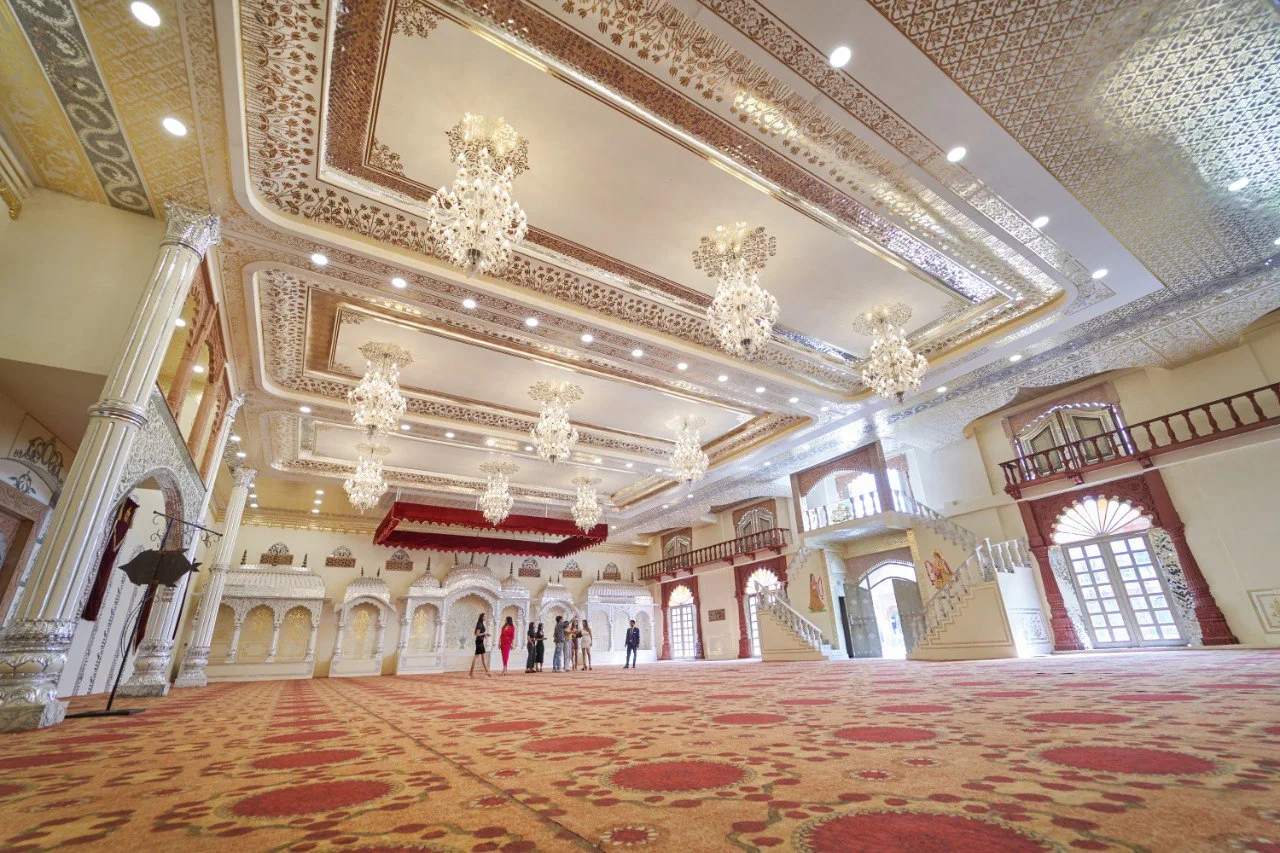
A destination wedding involves much more movement than guests usually notice. People travel between accommodation, dining areas, ceremony venues, photography locations and recreational spaces throughout the celebration. Meanwhile, decorators, caterers, photographers, performers and service teams must complete their work without interrupting the guest experience. Lohagarh Fort Resort’s expansive campus gives families multiple options, but those spaces must be connected through a clear movement plan.
For a Destination Wedding Resort in Jaipur, successful movement is not simply about showing guests where a function will happen. It requires careful timing, route planning, signage, mobility support and separation between public and operational areas.
What Is Guest Movement Engineering?
Guest movement engineering is the process of planning how people will move through a wedding from arrival to departure. It considers the number of guests, their age groups, venue locations, function timings, walking distances and likely crowd behaviour.
The plan should answer practical questions. Where will arriving vehicles stop? How will luggage reach the rooms? Which route will guests use for the sangeet? How will senior relatives reach the ceremony? Where will the baraat gather without blocking other movement?
When these questions are addressed early, the wedding feels organised even if guests never see the planning behind it.
Why Does Resort Layout Affect a Wedding?
A large resort campus allows different functions to have distinct atmospheres. A mehndi can feel intimate, a sangeet can have a performance-focused setting and the wedding ceremony can use a grand outdoor or indoor venue.
However, multiple spaces also create responsibility. Guests must understand where each event is located and how long it will take to reach it. A schedule that allows only five minutes for a transition may fail if people first need to return to their rooms and change.
Venue selection should therefore consider not only appearance and capacity but also access, nearby support areas and its relationship with the previous and next function.
How Should Guest Arrival Be Managed?
Arrival movement begins before guests enter the resort. Vehicles need a clearly identified drop-off point that does not conflict with vendor loading or décor installation.
A welcome team should direct guests towards registration while luggage is labelled according to room allocation. Large family groups should not be expected to stand together at reception while every room is processed separately.
The accommodation list, identification requirements and room keys should be prepared as far as possible before arrival. This reduces crowding and helps guests settle into their rooms without delaying the first function.
Why Should Guests and Vendors Use Different Routes?
Wedding vendors move equipment throughout the celebration. Caterers transport food and service materials, decorators move structures, and production teams handle lighting, sound and electrical equipment.
If vendors use the same paths as guests, service activity becomes visible and may create congestion. Heavy equipment can also increase safety risks near children or senior relatives.
Separate service routes and loading periods should be planned wherever the resort layout permits. When complete separation is impossible, vendor movement should be scheduled during low-traffic periods and monitored by an operations coordinator.
How Can Signage Reduce Confusion?
Guests should not need to call the couple’s family every time they move to another function. Clear signage can direct them towards venues, accommodation areas, dining spaces and help desks.
Signs should remain easy to read at night and be positioned before decision points rather than after them. A wedding schedule placed inside the room can also include simple directional information.
Digital messages are useful, but they should not be the only system. Some senior guests may not check group messages regularly, while others may have limited connectivity or battery power. Physical signage and human assistance remain important.
What Should Be Planned for Senior Guests?
Senior relatives may require shorter routes, seating during transitions and vehicle assistance between distant areas. Their rooms should be allocated with accessibility and function locations in mind.
Movement plans should also consider stairs, uneven surfaces, nighttime visibility and weather conditions. A route that appears manageable during a daytime inspection may become difficult after dark or during rain.
A dedicated family representative can help senior guests without requiring them to repeatedly explain their needs. Their comfort should be built into the plan from the beginning rather than managed only when a problem arises.
How Can Children Move Safely Around the Campus?
Children may become excited by open spaces and move away from their families, particularly during long wedding functions. Parents remain responsible for supervision, but the event plan can reduce avoidable risks.
Service routes, production areas and electrical installations should be kept away from guest circulation wherever possible. Lighting should be sufficient along the paths used after dark, and access to restricted operational areas should be controlled.
Families should also know where children’s activities or rest areas are located. Clear boundaries make it easier for parents to participate in ceremonies while remaining aware of their children’s movement.
How Should Baraat Movement Be Planned?
The baraat is one of the most energetic movements within an Indian wedding. Its route must support music, dancing, photography and guest participation without blocking essential resort operations.
The assembly point, start time, route, duration and final entry should be agreed upon by the family, resort team, planner, band and production team. Vehicle access and sound restrictions should also be confirmed.
A realistic duration is important because a delayed baraat can affect the bridal entry, ceremony, dinner service and vendor schedules. An assigned coordinator should monitor its progress and communicate updates to the venue team.
Why Does the Bridal Entry Need a Protected Route?
The bridal entry is highly emotional and visually important. Its route should remain private before the entrance and free from equipment, service staff and unnecessary guest traffic.
Photography and video teams need sufficient space to work without blocking the bride or her family. The final lighting conditions should be tested in advance so technical adjustments are not made during the entry.
A separate holding area can protect privacy and timing. Coordination between the bridal team, ceremony manager and photographer helps ensure that the entry begins only when the path and venue are ready.
How Can Dining Movement Be Improved?
Dining areas should be accessible without requiring guests to cross the main ceremony or performance zone. Poor placement can create continuous movement through important rituals and interfere with photography.
Food counters should be arranged to distribute guests rather than create one crowded queue. Water and basic refreshments can be placed where they are easy to reach without interrupting the primary dining service.
Families should also consider different eating patterns. Children and senior guests may eat earlier, while other guests may wait until a performance or ceremony finishes. Dining access should support both groups comfortably.
What Happens When Two Functions Use Different Venues?
Using different venues creates visual variety, but the transition must include enough time for movement, clothing changes and venue preparation. Guests should receive the next location and start time before the current function ends.
The operations team must also manage the movement of personal items, performers and essential family members. The couple may follow a different route and timing from the general guest group.
At a Wedding Resort in Jaipur, the best venue plan is not necessarily the one using the maximum number of spaces. It is the one that allows each transition to happen naturally and on schedule.
How Does Weather Change Movement Planning?
Rain, strong wind, heat and cold can affect routes even when the function venue remains usable. An uncovered pathway may become slippery, while a long outdoor walk can be uncomfortable during extreme temperatures.
Covered alternatives, umbrellas, vehicle support and additional lighting may be required according to the season. The backup venue must also have a clearly planned guest route.
If a venue shift becomes necessary, guests should receive one consistent instruction. Conflicting messages from family members, vendors and planners can cause more confusion than the weather itself.
Who Should Control Movement During the Wedding?
One central operations team should coordinate movement across functions. Separate representatives can manage accommodation, transportation, venues, dining, vendors and family requirements, but they need a shared communication structure.
Each person should know what decisions they can make and what must be escalated. A written contact sheet prevents people from calling the wrong team during a time-sensitive transition.
The couple and their parents should not become the default coordination centre. Their role is to participate in the wedding, while the operations team manages movement behind the scenes.
How Can a Pre-Wedding Walkthrough Prevent Problems?
Before the wedding, key decision-makers should walk through the campus in the same sequence guests will follow. This reveals practical issues that may not be visible on a floor plan.
The team should inspect drop-off points, room routes, signage locations, venue entrances, service paths, dining access and emergency movement. The walkthrough should also be repeated after dark when evening functions are planned.
Testing the complete flow helps identify unrealistic transition times, poor lighting or conflicting routes before guests arrive.
Why Is Integrated Movement a Major Resort Advantage?
When accommodation, dining and event venues are located at different properties, every transition depends on external transport and traffic. Guests may arrive late, vehicles may become separated and the wedding schedule can lose momentum.
Lohagarh Fort Resort allows important parts of the celebration to remain within one expansive campus. This does not remove the need for planning, but it gives the operations team greater control over routes, timing and assistance.
For families comparing a Resort for Wedding in Jaipur, integrated movement can be as important as décor, accommodation or venue appearance.
What Does Successful Guest Movement Feel Like?
Successful movement is almost invisible. Guests know where to go, transitions feel comfortable and service activity does not interrupt the celebration. Senior relatives receive assistance, children remain within safe guest areas and the couple reaches each ceremony without operational confusion.
At Lohagarh Fort Resort, movement planning connects the entire wedding experience. Rooms, venues, dining and hospitality do not function as separate departments; they work together as one coordinated system.
When the movement is organised correctly, guests remember the celebrations and atmosphere rather than the distance between functions or the effort required to reach them.