Many travellers return from holidays with hundreds of photographs but very few moments they can clearly remember. This often happens because the itinerary was so busy that there was no time to absorb the destination.
Jaisalmer offers a different possibility. Its desert landscape encourages slower travel—a style of holiday in which visitors observe more, rush less and allow the destination to unfold naturally.
Lohagarh Desert Resort provides a suitable setting for this kind of journey by combining comfortable hospitality with the open atmosphere and cultural identity of Rajasthan’s desert region.
Quick Answer: What Is Slow Desert Travel?
Slow desert travel means experiencing Jaisalmer without trying to fill every available hour. It focuses on:
- Spending meaningful time in fewer places
- Watching the landscape change naturally
- Allowing time for conversation and rest
- Experiencing local culture in its setting
- Avoiding unnecessary travel between multiple locations
- Treating the resort as part of the holiday
- Remembering experiences rather than completing a checklist
Choosing a desert stay in Jaisalmer makes it possible to experience the region through its atmosphere, not only through its major attractions.
Why Do Packed Holidays Often Feel Exhausting?
A tightly organised itinerary can appear efficient. In reality, it may leave travellers physically tired and mentally distracted.
A typical rushed day may include early departure, several monuments, shopping, repeated vehicle journeys, photographs, restaurant stops and a late return. Guests may technically visit many places but have little time to understand or enjoy any of them.
This creates three common problems:
- Every experience begins to feel similar.
- Family members become tired at different times.
- Travellers concentrate more on reaching the next location than enjoying the present one.
Slow travel does not mean avoiding sightseeing. It means creating enough space around each experience for it to become meaningful.
Why Is Jaisalmer Well Suited to Slow Travel?
Jaisalmer is shaped by strong contrasts.
The city offers historic architecture, narrow lanes and active marketplaces. Beyond the city, the desert opens into a spacious landscape where time appears to move differently.
Travellers can experience:
- Golden architecture in changing sunlight
- Open desert horizons
- Quiet mornings
- Warm sunset colours
- Local cultural expressions
- A calmer atmosphere after dark
These experiences do not need to be rushed. Their appeal often becomes stronger when travellers remain present and allow the details to emerge.
What Can Travellers Notice When They Slow Down?
A slower itinerary changes the way people observe a destination.
Instead of quickly photographing a view and leaving, travellers may notice how sunlight changes the colour of the landscape. They may hear the difference between the city and desert soundscapes. They may understand how local music feels more connected to its surroundings.
They may also remember smaller personal moments:
- A child’s reaction to seeing the desert
- A quiet conversation near sunset
- The first view of a broad horizon
- The atmosphere before a cultural programme
- A peaceful morning away from traffic
- A shared meal after an unhurried day
These details often remain in memory longer than the number of attractions visited.
Can Slow Travel Work for Families?
Yes. In fact, families may benefit more from a slower schedule than solo travellers.
Different generations have different energy levels. Children may want movement and novelty, parents may want a balanced experience, and grandparents may require more time to rest.
A slow itinerary allows the family to remain flexible. Instead of forcing everyone through the same demanding schedule, it can alternate between exploration, relaxation and shared experiences.
This makes the holiday more inclusive and reduces the possibility that one person’s tiredness disrupts the entire plan.
Is Slow Travel Suitable for Couples?
Slow travel is particularly suitable for couples because it creates space for meaningful time together.
A romantic holiday does not need constant activities. Couples may find greater value in watching the sunset, enjoying an evening cultural atmosphere, sharing a relaxed meal or simply sitting together in a place completely different from their daily environment.
The desert removes many familiar distractions. This allows the trip to feel personal without requiring an elaborate programme.
How Can a Resort Become Part of the Destination?
In a rushed itinerary, accommodation functions mainly as a place to sleep. In slow travel, the resort becomes one of the central experiences.
Guests may spend time appreciating:
- The design and atmosphere of the property
- The transition between day and night
- Local hospitality
- Cultural elements
- Comfortable private time
- The surrounding landscape
- Meals that are not squeezed between sightseeing stops
A well-chosen luxury resort in Jaisalmer can therefore contribute as much to the memory of the trip as an individual tourist attraction.
What Makes Lohagarh Desert Resort Suitable for Slow Travel?
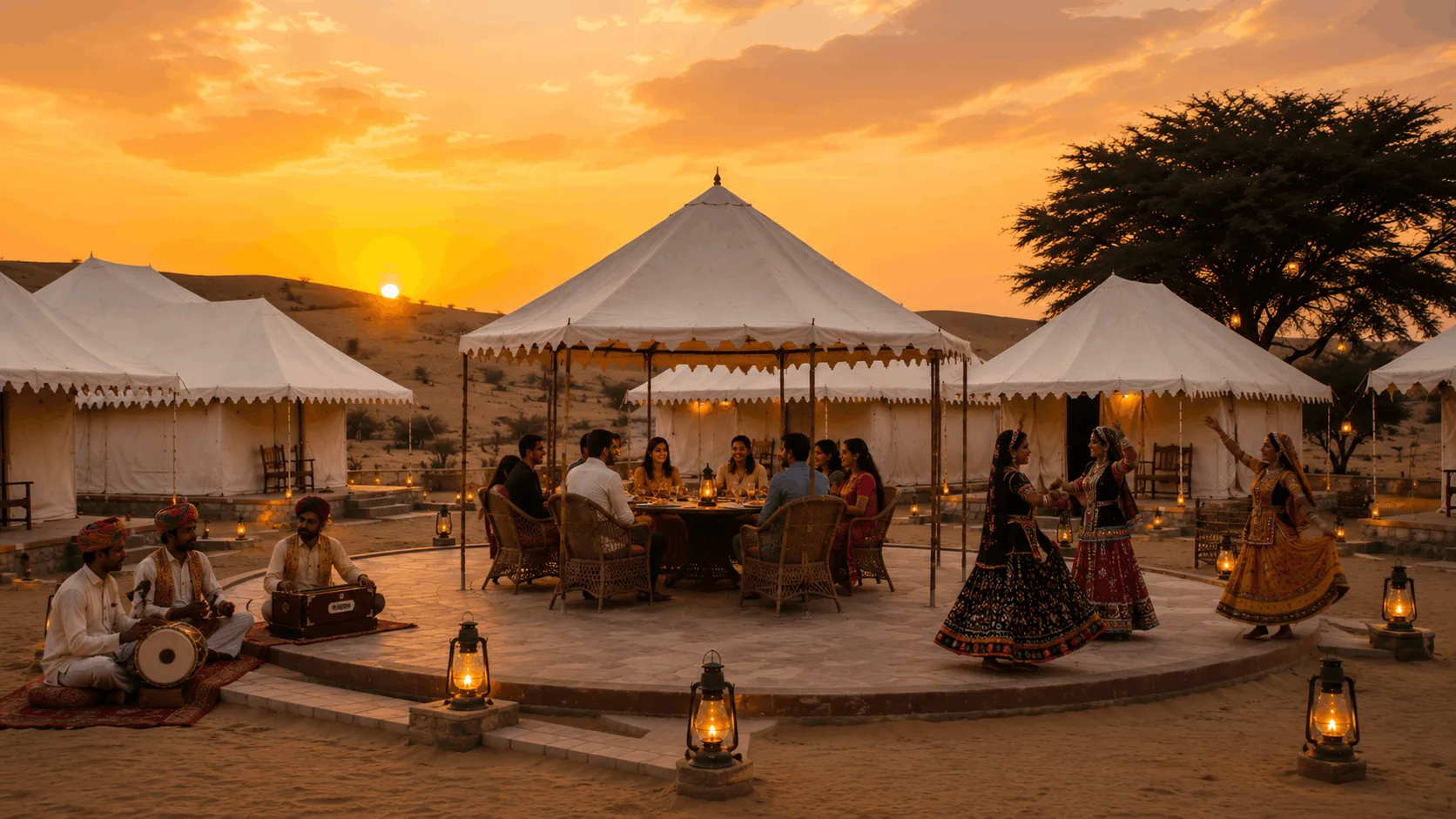
Lohagarh Desert Resort gives travellers a setting in which they can temporarily step away from an urban rhythm.
The property brings together:
- Comfortable accommodation
- Desert atmosphere
- Rajasthan-inspired hospitality
- Cultural character
- Space for relaxation
- A setting suitable for couples, families and groups
Guests do not need to leave the property continuously to make the stay worthwhile. They can build their day around a few selected experiences and preserve enough time to relax.
This makes the resort particularly relevant for travellers who want to experience Jaisalmer rather than merely pass through it.
How Should Travellers Build a Slow Jaisalmer Day?
A slow day should have structure without becoming rigid.
Begin Without Rushing
Start the morning comfortably rather than treating breakfast as a quick stop. The early part of the day can be used for a selected city or heritage experience.
Choose One Main Experience
Instead of combining several distant attractions, select one primary focus. This provides time to understand the place and reduces repeated travel.
Leave the Afternoon Flexible
The afternoon can include rest, a relaxed meal or time at the resort. This is particularly useful before an evening desert experience.
Give Sunset Enough Time
Sunset should not be treated as a five-minute photography stop. Arriving with enough time allows travellers to notice how the light, temperature and atmosphere gradually change.
Keep the Evening Unhurried
Cultural experiences and dinner become more enjoyable when guests are not worried about the next scheduled activity.
Does Slow Travel Mean Spending More Days?
Not always. Slow travel is more about how time is used than the total number of days.
Even a short trip can follow a slower rhythm if travellers:
- Select fewer priorities
- Avoid unnecessary transfers
- Keep part of the schedule open
- Stay at a property that contributes to the experience
- Allow time for rest
- Focus on quality rather than quantity
A carefully planned two-day holiday can feel more satisfying than a longer but exhausting itinerary.
How Does Slow Travel Improve Photography?
When travellers rush, they often photograph whatever appears immediately in front of them. Slowing down allows them to observe light, movement and composition.
The desert changes continuously. Colours become warmer near sunset, shadows grow longer and the sky develops different tones.
Travellers who remain in one place for longer can create more thoughtful photographs. More importantly, they can enjoy the scene before viewing it through a screen.
Photography then becomes a way of recording the experience rather than replacing it.
Can Slow Travel Support Responsible Tourism?
Yes. A slower journey can encourage visitors to develop greater respect for the destination.
When people spend more time in one environment, they are more likely to observe local customs, appreciate cultural performances and understand the sensitivity of desert landscapes.
They may also make more considered choices about waste, water use and respectful behaviour.
Responsible travel begins with recognising that the destination is not merely a background for photographs. It is a living cultural and natural environment.
What Should Travellers Avoid During a Slow Desert Holiday?
To preserve the experience, travellers should avoid:
- Scheduling every hour
- Treating sunset as a hurried stop
- Spending the entire evening on their phones
- Comparing the holiday only by the number of attractions visited
- Ignoring the need for rest
- Moving between distant places without a clear reason
- Expecting every family member to follow the same pace
The objective is not to do nothing. It is to make each selected experience count.
Why Is Comfort Still Important?
Slowing down is enjoyable only when basic comfort is handled well.
Travellers want to experience the desert, but they also appreciate dependable accommodation, a restful private space, thoughtful service and an environment in which they can relax after the day’s experiences.
Lohagarh Desert Resort helps create this balance. Guests can connect with Jaisalmer’s desert character without making the entire holiday physically demanding.
Who Should Consider This Style of Holiday?
A slow desert stay may suit:
- Couples seeking quality time
- Families travelling with children
- Multi-generation groups
- Busy professionals needing a break
- Photographers interested in changing light
- Travellers who dislike packed itineraries
- Visitors returning to Jaisalmer
- Guests who want cultural depth rather than rushed sightseeing
It is also valuable for travellers who have previously returned from holidays feeling that they needed another break to recover.
Is Lohagarh Desert Resort a Good Base for a Meaningful Jaisalmer Break?
Yes. Guests comparing a resort near Jaisalmer should assess whether it offers more than accommodation.
Lohagarh Desert Resort allows the property, desert environment and cultural atmosphere to become connected parts of the journey. It supports a holiday in which travellers can explore Jaisalmer while protecting enough time for relaxation and genuine engagement.
Frequently Asked Questions
What is the main benefit of slow travel in Jaisalmer?
Slow travel helps visitors experience the city, desert and culture with greater attention. It reduces exhaustion and makes individual moments easier to remember.
Does a slow holiday mean avoiding Jaisalmer sightseeing?
No. Travellers can visit important attractions while choosing fewer locations per day and leaving sufficient time for rest and the desert experience.
Can families with children follow a slow itinerary?
Yes. A flexible schedule can be particularly helpful for children because it balances exploration with meals, relaxation and age-appropriate experiences.
How can couples make a desert holiday feel more personal?
Couples can keep part of the itinerary unscheduled, give sunset enough time, enjoy relaxed meals and focus on experiences they can share without rushing.
Why should the resort be treated as part of the holiday?
A desert resort contributes atmosphere, hospitality, accommodation and cultural context. Spending time at the property allows guests to enjoy more than an overnight stop.
Final Thoughts
The quality of a holiday is not measured by how many places travellers manage to visit. It is measured by how deeply they experience the places they choose.
Lohagarh Desert Resort supports a slower and more thoughtful Jaisalmer journey. By combining comfort, desert atmosphere and cultural character, it gives travellers the freedom to pause, observe and create memories that remain clear long after the trip has ended.