A couple’s holiday is often imagined as a schedule in which both people participate in every activity together. Shared experiences are important, but constant togetherness does not automatically create a better journey.
Two people can love each other while having different energy levels, interests and ways of relaxing. One may enjoy early mornings and photography, while the other prefers a slower start. One may want a full sightseeing schedule, while the other needs quiet time between activities.
A meaningful private getaway in Jaisalmer should make room for both connection and individuality. The objective is not to remain together every minute, but to ensure that the time shared feels voluntary, attentive and enjoyable.
Why do couples sometimes experience holiday stress?
Everyday responsibilities do not automatically disappear after reaching a destination.
Couples may still need to manage:
- Transport
- Luggage
- Budgets
- Dining decisions
- Sightseeing schedules
- Photography
- Phone calls
- Work messages
- Different sleep routines
- Weather-related changes
Stress can increase when one person becomes responsible for planning everything or when both partners expect the other to enjoy the holiday in exactly the same way.
Discussing preferences before departure can prevent minor differences from becoming repeated disagreements.
What should couples discuss before planning?
A useful conversation should cover:
- Preferred holiday pace
- Essential places each person wants to visit
- Interest in early mornings or late evenings
- Comfort with outdoor conditions
- Approximate daily budget
- Food preferences
- Photography expectations
- Need for rest
- Phone and work boundaries
- Desired amount of unplanned time
The purpose is not to create a strict contract. It is to identify differences before they begin affecting the experience.
What counts as a shared experience?
A shared experience is an activity receiving genuine attention from both partners.
It could be:
- Watching the changing desert light
- Visiting a historical place
- Sharing an unhurried meal
- Taking a quiet walk
- Learning something about local culture
- Planning photographs together
- Discussing the day without phones
- Trying an available activity
- Observing the night sky under suitable conditions
The experience does not need to be expensive or elaborate. Its value comes from participation.
Why can too many scheduled activities weaken connection?
A full itinerary may keep couples physically together while leaving little time for meaningful interaction.
If both travellers are continuously checking departure times, maps and bookings, they may spend the day completing tasks rather than enjoying one another’s company.
An overloaded schedule can also increase tiredness. Small delays become frustrating because they threaten the next activity.
Leaving open intervals allows couples to change plans according to their mood, energy and weather.
Is personal time healthy during a couple’s trip?
Yes. Personal time can help each partner recharge and follow an individual interest.
One person may want to:
- Read
- Rest
- Edit photographs
- Take a short walk
- Call family
- Enjoy quiet observation
- Spend additional time preparing
- Sit without conversation
Personal time is not rejection. It can reduce pressure and help both people return to shared activities with greater attention.
How much personal time should couples plan?
There is no fixed amount. It depends on the length of the trip and the personalities involved.
Couples can begin with small periods, such as thirty minutes after lunch or an hour before the evening schedule. The time does not need to be formally announced as separation; it can naturally become part of rest.
The important requirement is mutual understanding. Neither partner should feel abandoned or forced into continuous activity.
How can a desert destination support this balance?
Desert travel naturally encourages changes of pace.
Softer morning and evening hours may support shared outdoor experiences, while stronger daytime conditions can provide an opportunity for rest or personal time.
This rhythm allows couples to build a day containing:
- A shared morning
- Individual preparation or rest
- A meal together
- Flexible afternoon time
- A common evening experience
- An unhurried conversation before the day ends
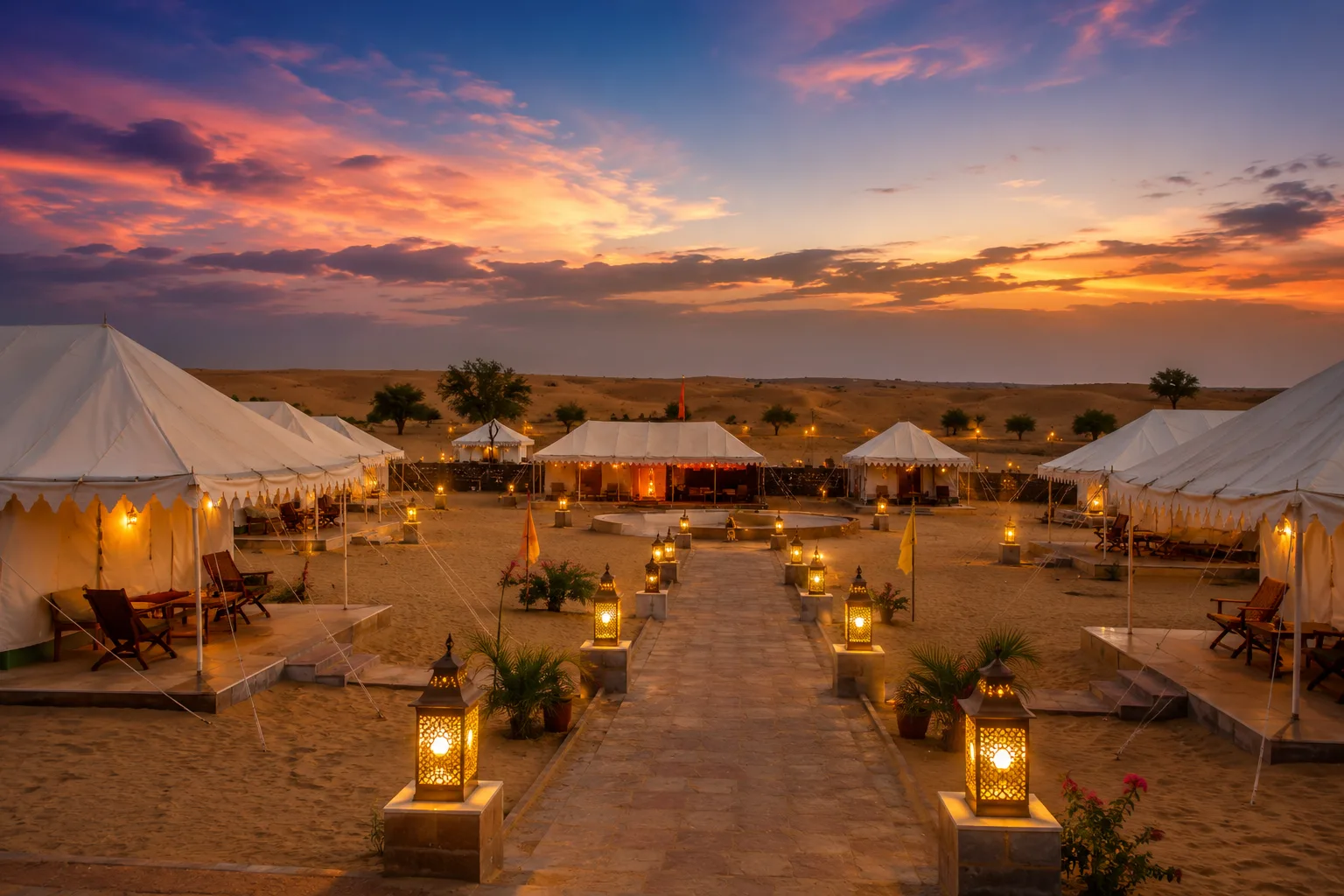
A thoughtful stay near the Jaisalmer desert can provide a base for this balanced itinerary.
Why should couples avoid planning around social media?
Online images can create unrealistic expectations about what a romantic holiday should look like. Couples may feel pressured to produce perfect clothing, photographs, sunsets and continuous happiness.
This can turn the trip into content production rather than a shared experience.
Photographs are valuable, but couples can establish limits:
- Choose one or two planned photography periods
- Avoid retaking every moment repeatedly
- Keep phones away during selected meals
- Do not compare the trip continuously with another couple’s journey
- Accept weather and light as they are
- Preserve some moments without recording them
A genuine memory does not require public evidence.
How should couples manage different photography interests?
One partner may enjoy photography much more than the other.
They can agree upon:
- Which locations deserve dedicated photography time
- How long the session will last
- When the camera will be kept away
- Whether both partners want individual photographs
- Which moments should remain private
- Whether professional equipment requires permission
This prevents one person from feeling like the trip has become a continuous photo shoot.
Why is a quiet meal important?
Meals provide natural opportunities to reconnect.
Instead of discussing only the next destination, couples can ask:
- What was your favourite moment today?
- Was any part of the day tiring?
- What would you like to change tomorrow?
- Which experience should we repeat?
- Do we need more rest?
- What surprised you about Jaisalmer?
A meal becomes meaningful when it helps both travellers adjust the journey together.
How should couples handle disagreements?
Minor disagreements are normal during travel. Heat, tiredness, unfamiliar food, delays and budget concerns can affect mood.
A practical response is to identify the immediate cause rather than treating every disagreement as a relationship problem.
Couples can:
- Pause the discussion if either person is exhausted
- Drink water and rest
- Separate the problem from personal criticism
- Adjust the itinerary
- Cancel a nonessential activity
- Discuss spending calmly
- Accept that preferences can differ
Protecting the quality of the holiday may be more important than completing every plan.
Can couples enjoy a holiday without a special occasion?
Yes. A trip does not need to be connected with a honeymoon, birthday or anniversary.
Travelling together can be valuable because it provides:
- Time away from routine
- New shared references
- Space for conversation
- Opportunities to understand preferences
- Memories independent of work and responsibilities
- A reason to slow down together
Waiting for a major occasion can unnecessarily limit these experiences.
What should couples verify before choosing accommodation?
They should confirm:
- Location
- Available room category
- Privacy expectations
- Dining arrangements
- Current amenities
- Seasonal activities
- Transportation requirements
- Check-in and check-out policies
- Cancellation terms
- Any special request
Couples should avoid assuming that every feature shown in general content is included with every booking.
What makes a couple’s holiday feel restorative?
A restorative holiday does not require complete silence or inactivity. It creates distance from the pressures dominating everyday life.
This may involve:
- Fewer work interruptions
- Less travel coordination
- Comfortable rest
- Shared meals
- Natural surroundings
- Flexible plans
- Meaningful conversations
- Personal breathing space
A slow-travel experience for two becomes successful when both partners return feeling that their needs and interests were considered.
Final Thoughts
A couple’s holiday should create closeness without turning togetherness into an obligation.
Shared experiences build common memories. Personal time protects individual comfort. Flexible planning allows both partners to respond to energy, weather and changing interests.
Jaisalmer offers strong visual and cultural experiences, but couples do not need to complete everything to make the trip worthwhile.
The quality of the journey lies in attention: attention to the destination, attention to each other and attention to when one person needs a different pace. Balance, rather than a perfectly full itinerary, is what helps two people return with memories they genuinely share.