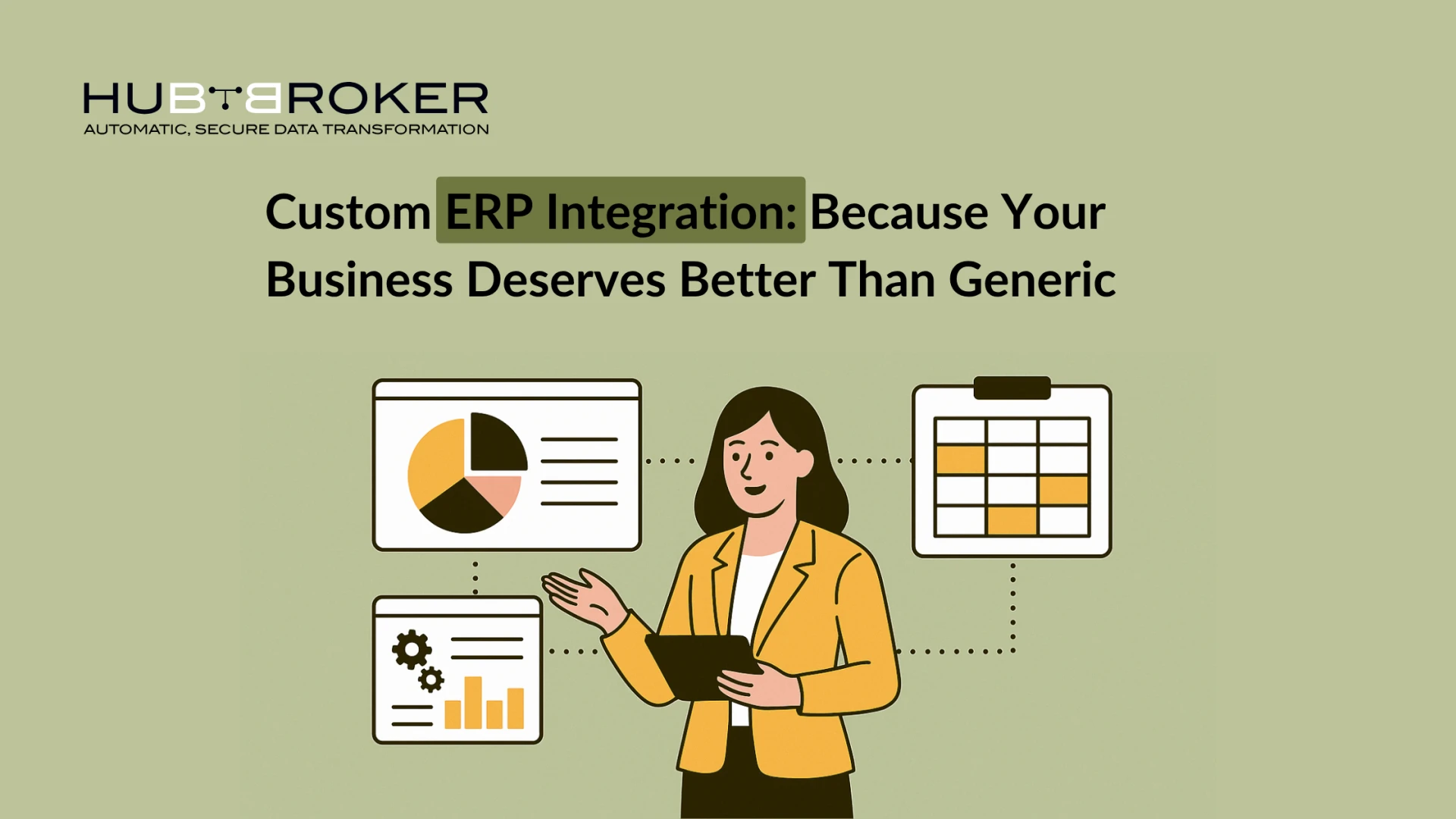
In today's fast-changing business world, no two companies operate the same way. Your workflows, data structure, team processes, and customer expectations are all uniquely yours. So why should your ERP system be built for someone else? That's where custom ERP integration comes in — it's how modern businesses make sure their technology works for them, not the other way around.
The One-Size-Fits-All Myth
Off-the-Shelf ERP vs. Custom ERP Integration
Many companies start with off-the-shelf ERP systems, thinking they'll handle everything. And to a point, they do. But these "plug-and-play" solutions are built to fit the most generic version of a business — not your business.
Custom ERP integration, on the other hand, adapts to the way you work. Whether you need to sync systems, automate niche tasks, or connect specific tools, customization allows you to create an ERP environment that's aligned with your operations.
When "Standard" Doesn't Cut It
Think of it like this: You wouldn't run your customer service, logistics, or inventory on someone else's playbook. So why let a standard ERP dictate your workflows?
When the "standard version" causes extra manual work or forces your team to adjust their routines, that's a clear sign it's time to investigate customization.
What Is Custom ERP Integration?
Definition & Key Characteristics
Custom ERP integration involves tailoring an ERP system to fit the requirements of your unique business. Instead of forcing your team around an inflexible solution, a custom ERP integrates your tools, apps and platforms so they work harmoniously together.
Components Typically Customized
Here are a few examples of what companies often customize:
- Data fields and forms
- Automated workflows
- Reporting and dashboards
- APIs for third-party software
- User roles and access control
Integration with Existing Systems & Workflows
Chances are, you already have systems like CRM, e-commerce, shipping software, or inventory tools. ERP integration brings them together, allowing data to flow smoothly without switching screens or re-entering information.
Top Reasons Why Businesses Need Custom ERP Integration
Tailored for Industry-Specific Workflows
No two industries operate identically. Manufacturers, retailers, healthcare providers and logistics companies all possess individual processes which need to be accommodated when building environments specific to each business model. Through customized ERP integration, you can design an environment tailored specifically for your business model.
Flexibility to Scale as You Grow
What works for you today might not work tomorrow. Custom integration ensures your ERP can scale with your business — whether that means adding new modules, connecting more systems, or expanding globally.
Improved Data Accuracy and Real-Time Visibility
Disconnected systems lead to duplicate entries, delays, and human error. Integration removes the silos so you can rely on clean, real-time data to make decisions faster and with more confidence.
Enhanced User Experience & Productivity
When the ERP system mirrors how your teams work, it reduces training time, lowers resistance to change, and boosts efficiency across departments.
Real-World Scenarios Where Custom ERP Integration Wins
Manufacturing with Complex Supply Chains
Manufacturers juggling multiple suppliers, production lines, and shipping processes need a system that tracks everything end-to-end. Custom integration ensures materials planning, inventory, and production scheduling are always in sync.
Retailers Needing Real-Time Inventory & CRM Sync
For retailers, inventory visibility and customer engagement are critical. With custom ERP integration, sales data updates your inventory instantly while your CRM reflects customer behavior in real time.
Service-Based Companies Managing Remote Teams
If you're in a service business with remote teams or mobile workforces, custom ERP can integrate scheduling, time tracking, project management, and billing — making your backend as agile as your frontline.
The Hidden Costs of Not Customizing Your ERP
Operational Inefficiencies & Bottlenecks
When systems don't talk to each other, simple tasks take longer, mistakes happen more often, and decision-making slows down. These friction points cost time, money, and customer satisfaction.
Higher Manual Work & Error Rates
Manual data entry is time-consuming — and prone to errors. A lack of integration forces teams to repeat the same actions across systems, which wastes valuable hours and increases risk.
Poor User Adoption & ROI
If your ERP doesn't fit how your people work, they won't use it to its full potential. That leads to lower ROI and delayed outcomes, often requiring additional investments in workarounds or fixes.
How to Approach Custom ERP Integration the Smart Way
Define Clear Business Goals First
Before jumping into customization, get crystal clear on your goals. What do you want the integration to achieve? Better reporting? Automated workflows? Increased efficiency?
Choose the Right ERP Integration Partner
Working with the right partner makes all the difference. Look for experience, industry understanding, and a collaborative approach — like what you'll find with HubBroker.
Priorities Scalable & Future-Ready Architecture
Don't just build for today. Choose solutions and integrations that will support your business two, five, or ten years down the road.
Test, Train, and Optimize Continuously
Launch is just the beginning. Ensure proper testing, involve your end users in training, and continuously refine the system based on feedback.
Final Thoughts
Custom ERP integration doesn't add unnecessary complications; instead, it helps your business operate more smoothly. By having an ERP system tailored specifically for you and meeting all of your unique business requirements, you unlock greater levels of efficiency, accuracy, and growth potential in your operations.
In a market where flexibility and responsiveness are key, the ability to tailor your ERP platform can be the competitive edge that sets you apart.