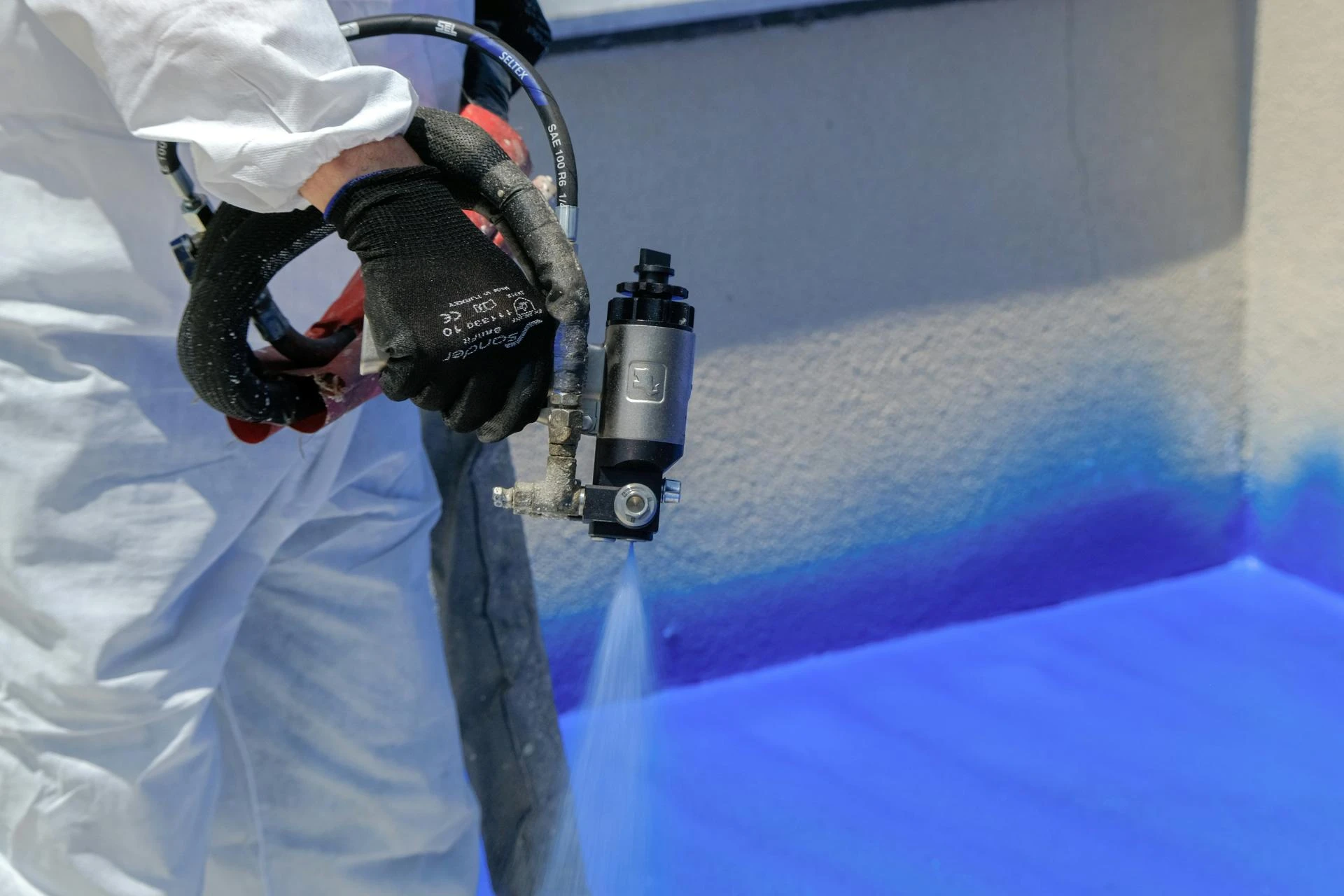
Commercial insulation helps control moisture in metal buildings primarily by preventing condensation. Because metal panels are highly conductive, they quickly become cold in cooler weather. When warm, humid air inside the building comes into contact with these cold surfaces, the moisture in the air condenses into water droplets, a phenomenon often called "sweating." The right insulation, particularly closed-cell spray foam, stops this process by creating a continuous thermal break that keeps the interior surface of the building warm and above the dew point. It also acts as a vapor barrier, blocking moisture-laden air from ever reaching the cold metal shell.
Uncontrolled moisture is one of the biggest threats to the integrity and function of a metal building. This article, based on the experience of commercial insulation professionals, will explain the science behind condensation, why it’s such a problem for steel structures, and how modern insulation provides a permanent solution.
The Science of Sweating Metal Buildings
Condensation is a simple process of physics. Air contains water vapor, and warm air can hold more water vapor than cold air. The "dew point" is the temperature at which the air becomes saturated and that water vapor turns back into liquid water.
In a metal building, this process is on constant display:
- Activities inside the building, such as operating machinery, the presence of people, or even curing concrete, generate heat and humidity.
- The thin, uninsulated metal roof and wall panels cool down quickly to match the outside temperature.
- When the warm, humid interior air touches the cold metal surface, the air is rapidly cooled below its dew point.
- The water vapor in the air condenses into liquid water directly onto the metal panels.
This isn't just a minor annoyance. This constant moisture can lead to significant problems, including rusted structural supports, mold growth, damaged inventory, slippery floors, and ruined traditional insulation that has become saturated with water.
The Superior Solution of Closed-Cell Spray Foam
While several types of insulation can be used in metal buildings, closed-cell spray polyurethane foam (SPF) is widely regarded by professionals as the most effective for moisture control. This is because it addresses the problem in multiple ways simultaneously.
- It Creates a Thermal Break: Spray foam is applied directly to the interior of the metal panels. This separates the cold metal from the warm interior air. The surface of the foam stays warm, preventing the air that touches it from reaching its dew point.
- It Forms a Vapor Barrier: Closed-cell spray foam insulation has a very low permeance, meaning water vapor cannot pass through it. This creates a perfect seal that stops humid air from ever making contact with the cold metal substrate.
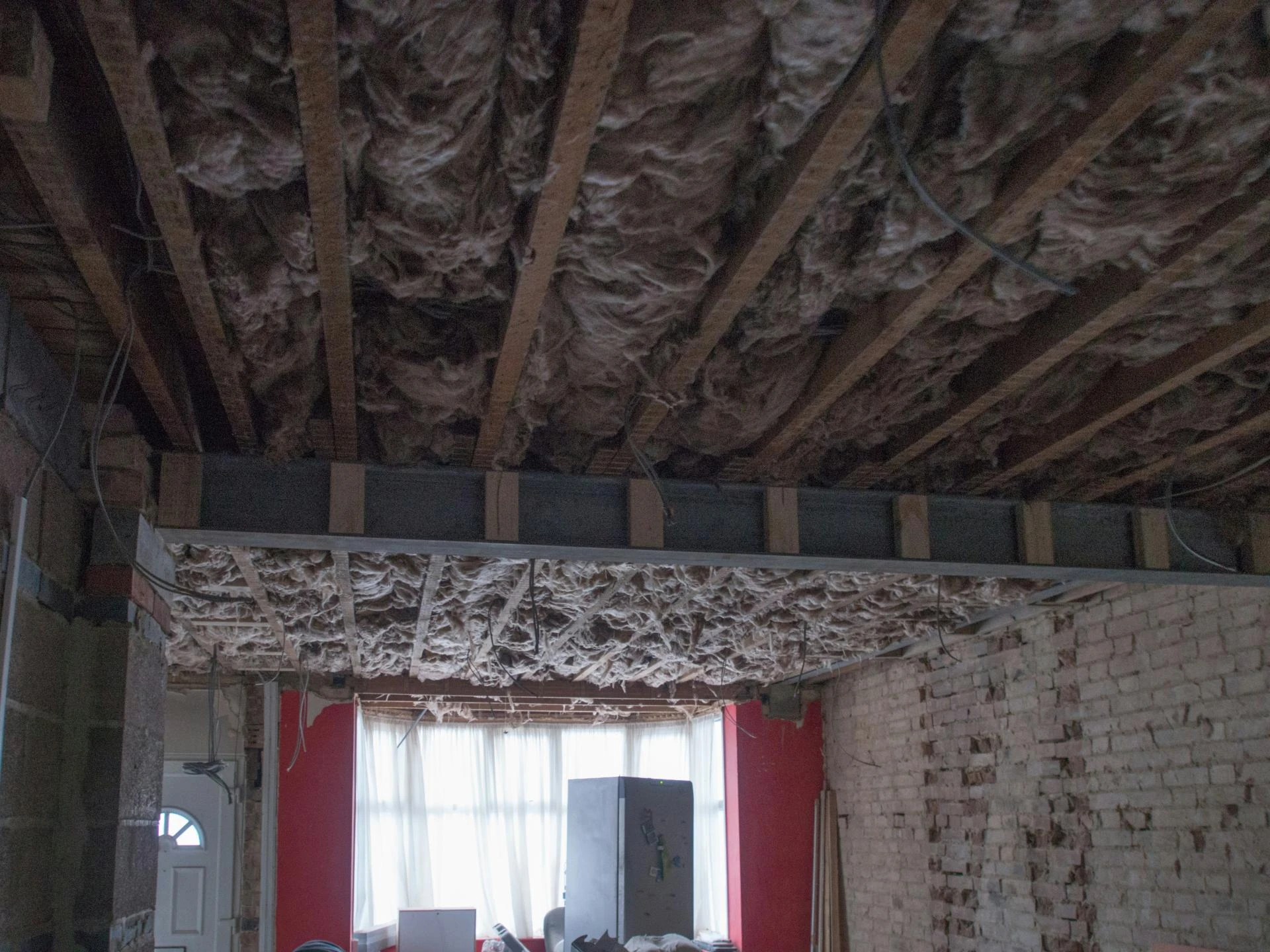
- It Leaves No Gaps: Because it’s applied as a liquid that expands and hardens, spray foam adheres to every surface and fills every gap. It seals perfectly around purlins, girts, and fasteners, eliminating the small air channels where condensation often starts. This monolithic seal is something that traditional insulation methods, like fiberglass batts with a separate vapor barrier, cannot replicate. Uncontrolled moisture in commercial buildings is estimated to cause billions of dollars in damage annually.
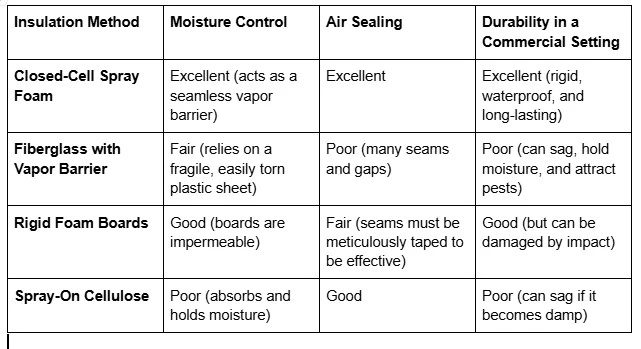
A Comparison of Insulation Options
Business owners have several choices for insulating a metal building, but their effectiveness at controlling moisture varies significantly.
- Bonus Tip: When spray foam is applied, the surface of the metal panels must be clean, dry, and free of any oils or residues to ensure a permanent bond. A professional installer will always include surface preparation as a critical first step of the job.
Beyond Moisture: Other Gains from Proper Insulation
While controlling condensation is often the primary driver for insulating a metal building, the benefits don't stop there.
- Drastic Energy Savings: A properly insulated and air-sealed building requires significantly less energy to heat in the winter and cool in the summer. This can lead to a substantial reduction in monthly utility costs, with some building owners reporting savings of 40% or more.
- Improved Structural Integrity: Closed-cell spray foam is very dense and rigid. As it adheres to the metal panels and structural supports, it acts like a high-strength glue, which can increase the racking strength and wind resistance of the entire building.
- Sound Dampening: The sound of rain or hail on an uninsulated metal roof can be deafening. Spray foam is an excellent sound absorber, creating a much quieter and more productive work environment.
Things to Consider Before Insulating Your Metal Building
Making the right choice for your commercial property requires careful consideration of its specific use and condition.
- The Building's Purpose: How will the space be used? A workshop that generates a lot of humidity from welding or washing will have different needs than a dry storage warehouse. This will influence the type and thickness of the insulation required.
- Condition of the Structure: Is there any existing rust or damage that needs to be addressed before insulation is applied? It’s important to repair any leaks in the roof or walls first.
- Ventilation Plan: A very airtight building may require mechanical ventilation to control indoor air quality and manage humidity generated inside the space. This should be considered as part of the overall project.
- Hiring an Experienced Contractor: Applying spray foam in a metal building is a technical job. It's important to work with a commercial insulation contractor who understands the physics of steel structures and has the right equipment and training to prepare the surface and apply the foam correctly.
- Bonus Tip: For agricultural buildings like barns or livestock facilities, the moisture control provided by closed-cell spray foam is essential for maintaining animal health and preventing the rapid corrosion of metal components.
Questions People Ask About Metal Building Insulation
Can I insulate my existing metal building?
Yes. Spray foam insulation is an ideal solution for retrofitting existing metal buildings. It can be applied directly to the interior of the walls and roof deck, even in buildings with complex layouts.
How do you insulate around the large roll-up doors?
While the doors themselves aren't typically insulated with spray foam, sealing the perimeter of the door frames is critical. Spray foam can be used to create a perfect air seal around the opening, stopping major drafts.
Will spray foam stop my roof from leaking?
Spray foam is not a roofing product and should not be considered a solution for a leaking roof. Any active leaks must be properly repaired before the insulation is installed. However, because closed-cell foam is waterproof, it can provide a secondary line of defense against minor drips.
Is spray foam a fire hazard in a commercial building?
Like many building materials, spray foam will burn if exposed to a sufficient heat source. For this reason, building codes often require it to be covered by a thermal or ignition barrier, such as drywall or a special fire-retardant coating, especially in occupied spaces.
How thick does the spray foam need to be?
For moisture control in a typical commercial building, a 1.5 to 2-inch layer of closed-cell spray foam is usually sufficient to prevent condensation. If higher levels of thermal insulation are desired for energy savings, the thickness can be increased.
A Permanent Solution for a Common Problem
Moisture and condensation are inherent challenges in metal buildings, but they are not unavoidable. By applying a modern commercial insulation solution like closed-cell spray foam, business owners can permanently solve the problem. This protects their building, their assets, and their bottom line, creating a more durable and efficient commercial space.
Get a Professional Assessment for Your Building
The most effective insulation strategy depends on the specific use and condition of your commercial property. A professional evaluation can determine the best course of action to control moisture and improve energy efficiency. For business owners seeking a detailed assessment, the commercial insulation experts at FOAMWORX Spray Foam Insulation can provide a comprehensive consultation. They can be reached by phone at (507) 407-0678 or by email at [email protected] to discuss project requirements.
Reviewer: Jacob Wright has 6 years of experience in spray foam insulation. He reviewed this content and made sure it focused on the real decisions small business owners deal with every day.