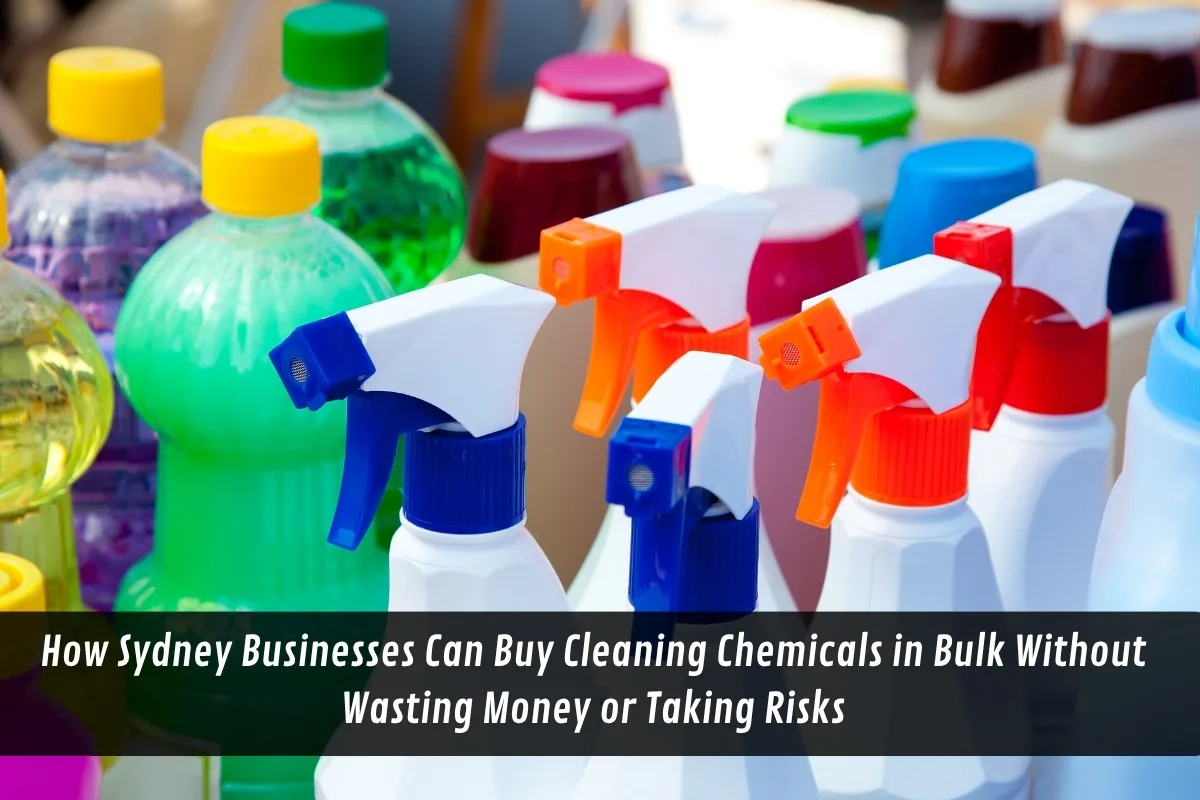
Bulk purchasing can cut costs and reduce last-minute runs, but it can also amplify waste if products, dilution, and storage aren’t standardised.
The goal isn’t “bigger containers”—it’s a repeatable system that keeps results consistent across shifts and sites.
This guide outlines how to buy bulk chemical cleaning supplies in a way that’s practical for Sydney operators and still sensible if you expand later.
What “good” bulk buying looks like
Good bulk buying usually means a short approved list (by category, not brand), one clear dilution method, and a predictable reorder cadence.
It also means every container is labelled, stored properly, and understood by the people using it.
The trade-off is less “custom” at each site.
In most small and mid-sized operations, that’s worth it, because consistency is what prevents waste.
Decision factors that matter most
Cost-per-use beats unit price
A cheaper product can cost more if it drives over-pouring, re-cleaning, or surface damage risk.
Cost-per-use improves when staff use the right amount, every time, with minimal judgement calls.
Standardise categories before products
Start with the categories you actually need (for example: washroom, neutral floors, degreaser, glass, dishwashing where relevant, disinfectant where appropriate).
Then choose one “default” product per category and only add exceptions when there’s a clear reason.
Once the categories are agreed, it can help to scan a structured range like the bulk chemical cleaning supplies to sanity-check what you’re standardising across sites.
Compatibility with surfaces and tools
Bulk buying locks you in longer, so incompatibility gets expensive fast.
Check what you’re cleaning (sealed timber, stone, stainless, grout, painted surfaces) and how you’re cleaning it (mops, trigger bottles, foamers, autoscrubbers, dilution stations).
Safety and compliance you can actually execute
Keep SDS accessible, labels readable in wet areas, and storage sensible (especially around segregation and ventilation where required).
If your system relies on perfect behaviour under time pressure, it won’t survive a busy week.
Delivery cadence and storage footprint
The best bulk plan is the one that fits your storage and staff turnover.
Sometimes “slightly smaller, more frequent deliveries” beats a quarterly drop that creates clutter, leaks, and confusion.
Common mistakes that make bulk chemicals more expensive
Mistake 1: Too many variants. Staff hesitate, improvise, or use the wrong thing, and half-used containers multiply.
Mistake 2: Uncontrolled dilution. Over-strong mixes waste product and can create residue; weak mixes cause rework.
Mistake 3: Unlabelled decants. It’s a safety issue and a cost issue—unknown bottles often get dumped.
Mistake 4: One list for every site without exceptions rules. Kitchens, workshops, and offices don’t soil the same way.
Mistake 5: “Train once and done.” Short refreshers beat one long session that nobody remembers.
Operator Experience Moment
I’ve seen teams “upgrade” chemicals without changing the method.
Within weeks, there are multiple similar products under a sink, labels are peeling, and everyone mixes by feel.
Bulk buying didn’t create the mess—it just made it cheaper to scale the mess.
A simple 7–14 day plan (no drama)
Days 1–2: Quick site audit
List every chemical in use, where it lives, and what it’s used for.
Flag duplicates, unknown bottles, and products with no clear purpose.
Days 3–4: Set your approved categories
Define the few categories that cover 90% of tasks.
Limit each category to one default product, with rare, documented exceptions.
Days 5–7: Lock dilution + labelling
Pick a dilution method people can follow on a hectic shift (marked bottles, measured caps, or controlled stations).
Standardise labels that survive wet areas and are readable at a glance.
Days 8–10: Fix storage like an operator
Assign a home for concentrates, a home for mixed-ready bottles, and a rule for returns and spills.
Hard rule: never decant into food or drink containers, ever.
Days 11–14: Train in short loops + spot-check
Do 10-minute refreshers on the few products used most.
Spot-check dilution, correct bottle, correct use-case, and correct storage—not just stock levels.
Local SMB mini-walkthrough: Sydney, NSW
A small Sydney cleaning team often has limited storage and staff rotating across buildings.
Start with three high-rotation categories (washrooms, floors, glass) before adding specialists.
Choose pack sizes that fit safely in a service vehicle without risky stacking or leaks.
Set a fortnightly reorder point so you’re not doing emergency runs in peak traffic.
Keep SDS access digital plus a printed backup in the vehicle folder.
If floor finishes differ by site, define one “default” cleaner and one “exception” cleaner with a clear label rule.
Practical Opinions
Standardise categories first, then products.
If dilution isn’t controlled, bulk buying won’t save money.
Fewer products, trained well, beats more products, used randomly.
Key Takeaways
- Bulk buying works when products, dilution, and storage are standardised—not when volume simply increases.
- Compare options by cost-per-use and compatibility, not just unit price and packaging size.
- Most waste comes from uncontrolled dilution, too many variants, and unclear labelling.
- A 7–14 day reset (audit → categories → dilution/labelling → storage → training) is usually enough to see improvement.
Common questions we hear from Australian businesses
How do we know which chemicals to standardise first?
Usually the best starting point is the 2–3 products used on every shift, because that’s where inconsistency compounds fastest.
Next step: list your top tasks and pick one default product per task for a short trial, then remove duplicates.
In Sydney, teams moving between sites often benefit from fewer “exceptions” so casual staff don’t improvise.
Is buying bigger containers always better value?
It depends on whether storage, handling, and usage controls prevent leaks, spoilage, and overuse.
Next step: compare cost-per-use (including typical dilution) and factor in time spent refilling and re-cleaning.
In most cases, limited storage in NSW sites pushes businesses toward steadier delivery cadence rather than oversized drops.
What’s the safest way to manage dilution across different staff members?
In most cases the safest approach removes judgement calls: measured dilution plus clear labels beats “eyeballing it”.
Next step: choose one dilution method and reinforce it with short refreshers and quick spot-checks.
For NSW workplaces, keep SDS accessible and ensure labels remain legible in wet areas.
How do we keep compliance simple without slowing operations?
Usually you can keep it light by focusing on a small approved list, consistent labels, and storage rules that match the site layout.
Next step: assign one person to do a monthly 10-minute check of labels, storage, and expired/unknown bottles.
In Australian workplaces, visibility and consistency prevent the biggest headaches.